https://truthout.org/articles/amid-starvation-people-in-gaza-are-choosing-death-at-home-over-displacement/?utm_source=Truthout&utm_campaign=375bed1d78-EMAIL_CAMPAIGN_2025_05_13_09_00&utm_medium=email&utm_term=0_bbb541a1db-375bed1d78-650158541
https://truthout.org/articles/republicans-sneak-nonprofit-killer-bill-into-reconciliation-package/?utm_source=Truthout&utm_campaign=375bed1d78-EMAIL_CAMPAIGN_2025_05_13_09_00&utm_medium=email&utm_term=0_bbb541a1db-375bed1d78-650158541
~~ recommended by collectivist action ~~
Amid Starvation, People in Gaza Are Choosing Death at Home Over Displacement
Only two bags of infested flour are left in my house. I interviewed others also facing starvation and ground invasion.

Israel’s blockade on humanitarian aid has entered its third month, pushed Gaza to the grip of starvation. Food supplies are dwindling rapidly, shops are stripped bare — even of the most basic essentials – and bakeries have shut down. Finding anything to quiet our growling stomachs has become a daily struggle, especially as the prices of basic food supplies continue to soar. Flour, one of the most essential and irreplaceable ingredients in our diet, has become nearly impossible to obtain: a single bag now costs $300, far beyond what most families can afford.
In our home, there is no food left — only two bags of flour that we managed to store for these dark days, both spoiled and infested with worms and insects. We ration the flour carefully, hoping it will last as long as possible. Each person gets just two small loaves of bread a day, with nothing to eat alongside them Though the bread tastes awful and causes us diarrhea or stomach cramps, we still consider ourselves among the “lucky” ones — simply because we can still eat bread.
Across the Gaza Strip, many families have no flour left; for them, bread has become a forgotten luxury. In desperation, they turned to rice and lentils, which can be cheaper than flour, even though the price of a single kilogram of rice is currently $12, and the price of a kilogram of lentils has at times been fluctuating as high as $10. Many families began grinding them into flour to make makeshift bread. But as demand surged, even these basic staples began to vanish completely from the markets.
Amid our desperate suffering with daily bombardment and this suffocating starvation — one that drains our strength and leaves us frail, dizzy and too exhausted to carry out even the simplest tasks — on May 5 we were jolted by devastating news: the Israeli security cabinet had approved a new plan to expand the military operation in Gaza.
Israel’s new plan aims once again to depopulate the north of its residents under the looming threat of bloody invasions, forcing people to flee to the south. Unlike in recent months, under the plan, the Israeli military would not withdraw after the ground operation; instead, it would remain in any area it seizes, preventing Palestinians from returning. According to reports from Israeli officials, the plan is meant to be implemented after Donald Trump’s visit to the Middle East ends; even as rhetoric around potential negotiations has picked up, Israeli Prime Minister Benjamin Netanyahu has vowed that the preparations for the increased escalation will continue.
News of the plan has triggered a wave of panic across Gaza, robbing people of sleep as the pain of hunger now intertwines with the fear of massacres and forced displacement. For many, this plan is not merely seen as a continuation of the war but the beginning of a new, even more desperate phase — one that feels more terrifying than the atrocities we are already enduring.
Most people in the north have begun to recall the early days of the war, when they were forced to flee to the south — an area designated by the Israeli military as a “safe zone.” Instead, they encountered mass displacement, relentless bombardment, bloody massacres and deepening hunger. Families were crammed into small tents, stripped of their dignity and denied basic necessities, left exposed to the searing heat of summer and the biting cold of winter.
We long for peace and stability. We long to live with dignity, without being forced to choose between fleeing or being killed.
Hamdi Hammoda, 45, told me that on October 20, 2023, he and his family fled to the south in search of safety as Israeli military operations escalated in their neighborhood, Tal al-Hawa. He believed that heading south might offer some protection from the bombardment. However, Hammoda described Israel’s designation of the south as a safe zone as “the worst lie he had ever heard.”
“We survived death by a miracle multiple times, as we were displaced four times under heavy bombardment from tanks, aircraft and artillery,” he said.
Hammoda described his experience of living in a tent in Al-Mawasi, Khan Younis, as “hell.” He said that the camp was severely overcrowded and deprived of the basic necessities of life. “Going to the south was a big mistake I will never repeat,” he said. “I am not leaving the north again. Death is much better for me than reliving that humiliating life over again.”
Talal Al-Harazeen, 50, told me that he and his family refused to leave the north from the beginning, fearing they might never return back to it. He shared that they have endured unimaginable horrors to remain in the north. “The Israeli threats to displace us once again will fail,” he said. “I would rather die over the rubble of my home than live without it.”
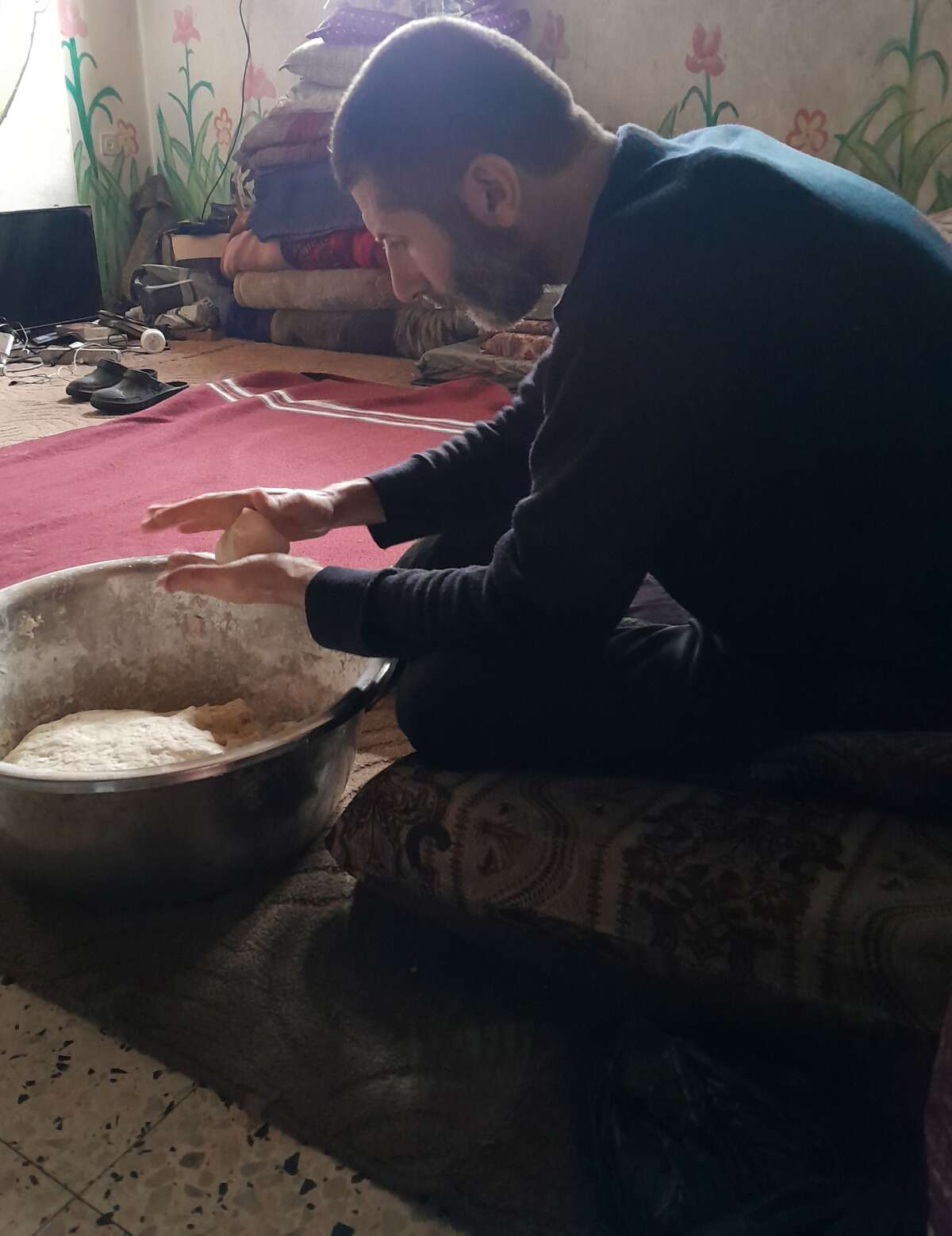
Al-Harazeen and Hammoda are just two among hundreds of thousands in the north who are firmly opposed to being forcibly displaced to the south again, with many preferring death over displacement. People here are exhausted by the endless cycle of exile, with no safe place left to go. How many times must we abandon the places we love — filled with our memories and our lives — only to be cast into the unknown?
We long for peace and stability. We long to live with dignity, without being forced to choose between fleeing or being killed. Despite the overwhelming despair we are living through, many still cling to a fragile hope: that international pressure and ongoing diplomatic efforts will succeed in halting Israel’s devastating plan.
The world must act before it’s too late. What Gaza needs is not more invasions, but an end to the siege, the violence and the systematic deprivation. We need bread, not bombs. Shelter, not fear. And above all, the right to live in our homes with dignity.
Help Truthout resist the new McCarthyism
The Trump administration is cracking down on political dissent. Under pressure from an array of McCarthy-style tactics, academics, activists and nonprofits face significant threats for speaking out or organizing in resistance.
Truthout is appealing for your support to weather this storm of censorship. We’ve launched a fundraising campaign to find 500 new monthly donors in the next 10 days. Will you be one?
As independent media with no corporate backing or billionaire ownership, Truthout is uniquely able to push back against the right-wing narrative and expose the shocking extent of political repression under the new McCarthyism. We’re committed to doing this work, but we’re also deeply vulnerable to Trump’s attacks.
Your support during our fundraiser (9 days left) will help us continue our nonprofit movement journalism in the face of right-wing authoritarianism. Please make a tax-deductible donation today.
xxxxxxxxxxxxxxxxxxxxxxxxxxxxxxxxxxxx
Republicans Sneak “Nonprofit Killer” Bill Into Tax Package, Giving Trump Tool to Quash Dissent
Opponents say the bill “threaten[s] the foundational rights of free speech,” especially targeting pro-Palestine speech.

Republicans have revived an effort to pass legislation deemed the “nonprofit killer” following warnings from left-wing and civil society groups that the move would give President Donald Trump broad leeway to crush dissent and attack his political opponents.
The proposal was tacked onto the end of Republicans’ tax proposal, unveiled on Monday, which Republicans are planning to pass via reconciliation in the coming months. This means that the bill could pass via a simple majority vote in the House and the Senate.
The legislation would give presidential administrations the ability to revoke groups’ nonprofit status by deeming them “terrorist supporting organizations” with virtually no recourse or due process. This would deal a killing blow to many nonprofit groups, not just taking away a crucial source of tax savings but also damaging relationships with donors.
The bill, known in the last congressional session as H.R. 9495, passed the House as standalone legislation in November in a 219 to 184 vote. Fifteen Democrats joined nearly all Republicans in voting “yes.” Civil society groups and experts have said that the bill is not only blatantly unconstitutional, but also represents a major threat to first amendment free speech rights.
Republicans who introduced the bill have said that it is aimed at groups advocating for Palestinian rights. This means that the bill would likely particularly target Muslim and Arab advocacy groups, advocates have said, which have already long faced suppression.
The legislation “would threaten the foundational rights of free speech, due process, and nonprofit independence,” said the Council on American-Islamic Rights (CAIR) in a statement. “It would allow the federal government to silence and financially dismantle organizations, particularly Muslim, Palestinian, and human rights groups, that dare to criticize U.S. foreign policy or call out Israel’s genocide in Gaza and attacks on civilians the West Bank, Syria, Lebanon, and Yemen.”
CAIR pointed out that the legislation is just the latest in a long string of attacks on pro-Palestine protesters and advocates, including a recently introduced bill that would prohibit Americans from boycotting Israel.
Experts have also warned, however, that Trump could use the new powers to crush any group that disagrees with him on issues like the climate crisis, racism and police brutality, and more. Trump has already threatened to revoke the tax-exempt status of Harvard University, after the institution said it would resist his efforts to control their hiring practices and scour departments for supposed “antisemitism,” which the administration uses as a code word for pro-Palestine sentiment.
“This is a five-alarm fire for nonprofits nationwide,” Lia Holland, campaigns and communications director for Fight for the Future, told Common Dreams. “If the text of last autumn’s H.R. 9495 is passed in the budget, any organization with goals that do not line up with MAGA can be destroyed with a wink from Trump to the Treasury.”
Over a hundred civil liberties and human rights groups signed and sent numerous letters to congressional leaders urging them to oppose the legislation last year. They warned that the mere passage of the bill could result in a huge chilling effect on advocacy groups across the country.
“The executive branch could use this authority to target its political opponents and use the fear of crippling legal fees, the stigma of the designation, and donors fleeing controversy to stifle dissent and chill speech and advocacy,” read a letter from a coalition of nearly 350 groups last year.
“And while the broadest applications of this authority may not ultimately hold up in court, the potential reputational and financial cost of fending off an investigation and litigating a wrongful designation could functionally mean the end of a targeted nonprofit before it ever has its day in court,” the groups went on.

No comments:
Post a Comment