Written anonymously
~~ recommended by newestbeginning ~~
https://substack.com/app-link/post?publication_id=7677&post_id=153538818&utm_source=post-email-title&utm_campaign=email-post-title&isFreemail=true&r=rovhk&token=eyJ1c2VyX2lkIjo0NjUxMDE4NCwicG9zdF9pZCI6MTUzNTM4ODE4LCJpYXQiOjE3MzQ5ODA3MjIsImV4cCI6MTczNzU3MjcyMiwiaXNzIjoicHViLTc2NzciLCJzdWIiOiJwb3N0LXJlYWN0aW9uIn0.O__0eN5a09zdqklkZu7-iTQ5CO44kBIhJHLWjwe3uRE ~~ recommended by newestbeginning ~~ |
https://open.substack.com/pub/paulstreet/p/its-not-about-what-class-youre-from
~~ recommended by collectivist action ~~
https://www.counterpunch.org/author/rwolff0998/
~~ recommended by newestbeginning ~~
https://newrepublic.com/article/173808/media-cares-titanic-sub-drowned-migrants
~~ recommended by collectivist action ~~
*https://imhojournal.org/
~~ Article written by collectivist action ~~
~~ written by dmorista ~~
http://isj.org.uk/sexism-the-
~~ recommended by emil karpo ~~
https://redflag.org.au/
~~ recommended by emil karpo ~~
https://redflag.org.au/
https://mronline.org/2022/07/14/understanding-the-middle-class/
~~ recommended by collectivist action ~~
https://www.hamptonthink.org/read/from-black-wall-street-to-black-capitalism
~~ posted for collectivist ~~
“As word of what some would later call the “Negro uprising” began to spread across the white community, groups of armed whites began to gather at hastily-arranged meeting places, to discuss what to do next.”
Tulsa Race Riot: A Report by the Oklahoma Commission to Study the Tulsa Race Riot of 1921
“For far too long, Black liberal, you have been allowed to domesticate Black radicalism. Because our oppressors prefer you to us and at any sign of trouble, rush out to find you to speak on behalf of all Black people, you have eagerly taken the chance to hog all of the mics and silence us. You weaken our revolt with your narration.”
- Yannick Giovanni Marshall, Black liberal, your time is up
“Black capitalism is still capitalism.” – Terrell
The Tulsa Massacre began 100 years ago on May 31st, 1921 when an angry white mob accused a 19-year-old Black man, Dick Rowland, of raping a 17-year-old white girl, Sarah Page. Flustered by the perceived “Negro Uprising” of Black men armed to defend and protect Dick Rowland outside the Tulsa courthouse, the inflamed white mob, sanctioned by the state, responded with brute terror — burning down the Black segregated neighborhood of Greenwood destroying 1,256 homes, nearly 191 Black businesses and the death of roughly 300 (likely more) people by the morning of June 1st, 1921.
100 years since these 16 hours of white barbarism occurred, suppressive forces have steadily worked to delete this tragedy from scribing its crimson pages into the books of American history. But, as history shows, bloodstains prove difficult to remove. Recently, decorating over these stains as “blemishes” of an otherwise promising American Dream towards Black capitalism has proven to be a more sufficient means to quell dissent. What has materialized is an emphasis on what was destroyed over who was destroyed. Effectively, redeeming the state — the combined authority of government (elected), the bureaucracies (positions), corporate control, and private interests — in the process.
As the summer of 2020 was steaming from protests against continued racialized state violence, the attention economy suddenly rediscovered the blood of 1921 by pivoting to what Booker T. Washington reportedly called “Negro Wall Street” or what is now known as Black Wall Street — the historic Black business district of the segregated Greenwood neighborhood destroyed in the massacre. According to Google Trends, the term “Black Wall Street” was googled more in June of 2020 than within the last 5 years.
Posited within 3-4 Blocks of the Greenwood neighborhood, this business district, disparagingly referred to by Tulsa whites as “Little Africa,” was the home to a number of Black-owned enterprises including a fifty-four room hotel, a public library, two newspapers, a seven-hundred, and fifty seat theater, multiple cleaners, and two dozen grocery stores among more. Through these efforts, Black Wall Street produced a prosperous Black business class fancying “some of the city’s more elegant homes” and successful Black businesses in the state.
Faced with only these facts, it’s understandable why one would view Black Wall Street as a wealthy “self-sustaining” utopia violently interrupted by a white vigilante mob as it’s widely reported to have been. However, a much more complicated narrative scrubbed from decorated legend lies underneath the folklore of a Black American Wakanda.
Although Black Wall Street certainly brought pride to the Black residents of Greenwood, that pride failed to translate to a prosperous economic status for most. A report by the American Association of Social Workers on the living conditions of Black folks in Tulsa at the time stated, “95 percent of the Negro residents in the Black belt lived in poorly constructed frame houses, without conveniences, and on streets which were unpaved and on which the drainage was all surface.” Furthermore, most Greenwood residents were not only living in substandard housing but were employed outside of Black Wall Street according to the Oklahoma Commission study on the Tulsa Race Riot:
“Despite the growing fame of its commercial district, the vast majority of Greenwood’s adults were neither businessmen nor businesswomen but worked long hours, under trying conditions, for white employers [emphasis added]. Largely barred from employment in both the oil industry and from most of Tulsa’s manufacturing facilities, these men and women toiled at difficult, often dirty, and generally menial jobs — the kinds that most whites consider beneath them—as janitors and ditch-diggers, dishwashers, and maids, porters and day laborers, domestics and service workers. Unsung and largely forgotten, it was, nevertheless, their paychecks that built Greenwood, and their hard work that helped to build Tulsa. [Emphasis added]“
Truthfully, as the report makes clear, Tulsa and Black Wall Street were both consequences of de jure segregation. Segregation operated as a public policy purposely made to suppress Black wages for the benefit of white capital while simultaneously limiting where those suppressed wages could be spent — inadvertently creating a monopoly for a petite Black professional class. Put differently, it was the super-exploitation of poor Black labor that facilitated both the function of Tulsa as a whole and the Black Wall Street District. Neither could have existed without the presence of poor Black people. Yet, their presence is rarely acknowledged in the revisionist plot. The suffering of the Black poor typically only matters when it can be used to bolster the class position of the Black Elite — the appointed political, cultural, and social representative and a moneyed class of Black people — and reinforce the state.
As previously indicated, last summer, while police precincts became bonfires illustriously lighting up the night sky, the terms “Black Wall Street” and “Black business” were receiving more Google searches than ever before. The presuppositions of the searches call for questioning: Will a world on fire be resolved by the memory of a business district burnt down by a white mob? What is the correlation between a cop kneecapping a poor Black man’s neck and buying Black? How can I buy my way out of a chokehold? Do corporate pledges to “support Black business” deflect the oncoming bullets of State violence?
All Black people are subject to a degree of state violence but in today’s post-civil rights era, those flung to the bottom of the capitalist ladder *George Floyd* experience the worst fate — police murders, stop and frisk, incarceration, poverty, homelessness, and worse. In essence, LeBron James’ sons could not be Kalief Browder because not only can LeBron afford to bail his sons out of jail but Brentwood, CA is far from the overpoliced neighborhood Browder was originally profiled in. Despite her same race and gender, Oprah is not Breonna Taylor. No knock warrants are unheard of in Montecito, CA, and gentrification does not work in reverse.
The point here is not to diminish the racism experienced by the Black Elite but to challenge the universalizing of Blackness. Universalizing Blackness as a flat experience allows Amazon to proclaim #BlackLivesMatter, create a Black-owned business page but crush the unions organized by its Black workers. It allows the NBA to paint BLM on its hardwoods, highlight Black business during the NBA finals but pay its predominantly Black and temp workers dirt wages. Universalizing Blackness distorts Blackness itself. It is decorating at its worst.
A repercussion of universalizing Blackness is elite capture — what philosopher Olúfẹ́mi O. Táíwò defines as “how political projects can be hijacked—in principle or effect—by the well-positioned and resourced.” This begins to explain how a radical demand such as abolishing the police either becomes dismissed or co-opted while the state offers its full cosmetic support behind Black business and representation. The class of Black people most well-positioned to make demands upon the state is better situated to benefit from Black business creation and corporate diversity hires than police abolition or the unionization of Amazon. They are considerably less afflicted by the problems of the people they claim to represent.
Universalizing Blackness collapses the interests of Black people as if we’re all equally invested in the same solutions. It’s precisely how the knees of killer cops on Black necks correlate with buying Black because as Táíwò notes, “When elites run the show, the “group’s” interests get whittled down to what they have in common with those at the top.” It’s how the poverty of Greenwood ceases to appear in documentaries or presidential speeches when the Black wealth of a few needs attention. Commenting on sociologist E. Franklin Frazier’s groundbreaking 1954 text The Black Bourgeoisie, Táíwò observes how two seemingly opposing ideas continue to find continuity, “Why did the myth of a Black economy as a comprehensive response to anti-Black racism survive when it was never a serious possibility? In Frazier’s telling, it did because it furthered the class interests of the Black bourgeoisie.” The class interests remain.
The elite capture of a movement requires a series of decorative myths — ideas that obscure the nature of the problem for the maintenance of the status quo. Last Summer Black capitalism emerged once again as the most decorated myth. The revisionism of Black Wall Street, as an extension of Black capitalism, neatly fits the narrative of universal Blackness. It utilizes the universality of a tragedy suffered by an entire Black population to advocate for a solution (Black capitalism) that has shown to primarily benefit a particular class of Black people.
Black capitalism is a concatenation of propaganda. It relies on complementary myths such as Black buying power and Black dollar circulation that are premised upon shaming Black people, particularly the poor ones, for their alleged frivolous spending. Besides the fact that Black people spend their money no more recklessly than anyone else, Black capitalism feeds on stereotypes of broke Black people foolishly buying Jordans and weaves they cannot afford to justify its existence. The saying typically goes “if we spend with our own then we can have our own” as if Black people’s spending habits are moral barometers.
This decorative myth is exemplified in the creation of the Greenwood banking app. Popularized by rapper Killer Mike and actor Jesse Williams this app is “inspired by the early 1900’s Greenwood District, where recirculation of Black wealth occurred all day, every day, and where Black businesses thrived.” The website, littered with unsubstantiated claims of Black dollar circulation, conveniently fails to discuss the rampant Black poverty in the “1900’s Greenwood District” they claim to want to recreate. To highlight such a contradiction would ruin their business model.
Businesses such as Greenwood use the history of how collective Black wealth has been systematically destroyed by capitalism to leverage (guilt) white investors for funding. In the case of Greenwood, receiving 40 million dollars from banking institutions including JP Morgan Chase, Bank of America, and Trust among others. The billions of corporate dollars injected into “racial equity” campaigns this last year were all sparked by the militant response to the blatant murder of a poor Black man who was allegedly arrested for purchasing items with a counterfeit bill. Disturbingly, the death of poor Black people is a lucrative fundraising drive for everybody but the ones experiencing death.
What rests at the heart of these issues is the Black Elite’s general unwillingness to confront the state and all the violence it subsumes. As a class, they are much more invested in collaborating — either for perceived survival and/or personal gain. What tends to go unsaid is that when they collaborate with the state they often lose even on their terms. The police still confuse them for poor “thugs.” They remain underrepresented and underpaid in their respective fields. Laws that sustain their lifestyle are constantly eroded. Yet, historically, they have made the most “progress” in periods where the masses of Black people dissented. Due to their economic instability, they are unable to exist as a class by themselves — hence the need for the symbolic support of the masses analogous to how Black Wall Street needed the paychecks of the Black poor to thrive as a business district.
The state uses these decorators of empire, knowingly or not, to maintain its legitimacy. White supremacy may have obliterated Black Wall Street — 1st through violence, 2nd through policy — nevertheless “if that massacre never happened who knows how that shapes America today.” The bloodshed of the past is decorated by the false promise of “a more perfect union.” Organizing for a world beyond American hegemony is scolded as unrealistic and sophomoric. The most moderate of Black radical demands such as “defund the police” are derided and blamed unfairly for costing congressional seats as if Democratic party success is synonymous with Black liberation.
Decorators of empire must corral dissent. This type of agency reduction has a footprint leaping back to the Cold War and much further. Dr. Charisse Burden-Stelly, assistant professor of Africana Studies and Political Science at Carleton College, thoroughly documents how the Black Elite of the time — Black Cold War liberals, “reduced the collective agency of other African Americans by marginalizing or maligning the panoply of liberation strategies emanating from the Black left.” This was a necessary strategy because the Black Cold War Liberals “formed important relationships with powerful Whites to procure goods and services for the Black community while offering no challenge to exploitative economic and social relations.” Modes of thinking outside of these brokered relationships threatened to bring backlash from the state. Faced with the mounting repression of the anti-communist McCarthy era,
“…Black Cold War liberals began to distinguish themselves from the left by rejecting militant agendas that might align them with those deemed “communist fronts,” including the Council on African Affairs (CAA), the Peace Information Center (PIC), and the National Negro Labor Council. Black Cold War liberals signaled such rejection by casting their platform in anti-communist terms and by constructing Black people as loyal, trustworthy Americans who deserved to be recognized as full citizens.”
Consistent with elite capture, Black Cold War liberals corralled the ideologies of the Black masses. “Seditious” communist ideas and “backward” social behavior would not earn the acceptance of the state. Irrespective of the oppression they faced, Black people of the time were corralled to focus their aspirations on proving to the state they were just as American as everyone else.
Today, building on a similar logic, Black American suffering is promoted as a badge of honor — a “justice claim” made because “we built this country.” Black people are “the Soul of the Nation” who “saved American democracy.” Again, the bloodshed of the past is used to redeem the present. President Biden, in his speech for the 100th anniversary of the Tulsa Massacre, leveraged this Black American exceptionalism to bolster the empire, “we should know the good, the bad, everything. That is what great nations do. They come to terms. With their dark side. We are a great nation.” Only in America can a nation be “great” for acknowledging a single massacre 100 years later with no reparations to show — decorating at its finest.
Remembering the Tulsa Massacre not as a violent white response to Black self-defense and determination but instead as the destruction of property and mythical Black wealth favorably leaves space for American redemption. It reduces the violence to a tragic interruption of the American dream and Black capitalism while minimizing other race massacres that did not include a well of black business class.
Wall Street is a parasitic model we should not emulate — still, I empathize with Black people’s desire for Black ownership and self-determination. There’s nothing inherently wrong with this desire. However, positioning slogans like #BuyBlack and #SupportBlackBusinness as the respectable alternative to radical transformative demands is decorating for the state — particularly when these slogans are attached to faulty concepts like trickle-down economics and universal Blackness. Black ownership is elite capture without the correct redistribution and collective ownership of the wealth we create.
Lastly, it need not be stated that the victims of the Tulsa Massacre — as well as their descendants and all African people — deserve their reparations. That is not in question. We should question the state’s legitimacy to define our collective goals. We must be vigilant towards the state’s attempts to use the atrocities committed against us as a means to redeem itself by decorating its crimes. The world we deserve is irreducible to a Black Wall Street and abundantly superior to anything America currently has to offer. It’s on us and those in solidarity to fight for it.
Too Black is a poet, writer, and host of The Black Myths Podcast based in Indianapolis, Indiana. He can be reached at tooblack8808@gmail.com or @too_black_ on Twitter.
https://mronline.org/2021/04/20/the-classes-of-capitalism/
~~ posted for collectivist ~~
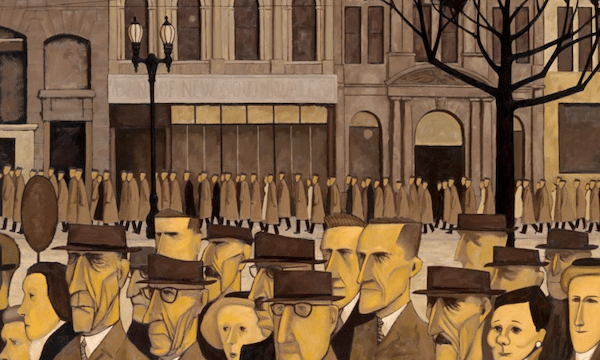
Capitalist society is divided into different classes, and the relationships between those classes shape the production of wealth, the dissemination of ideas and the nature of politics.
In 1848, Marx and Engels wrote that “society as a whole is more and more splitting up into two great hostile camps, into two great classes directly facing each other: bourgeoisie and proletariat”. By bourgeoisie they meant the capitalist class, those who made their living by owning capital, which means both factories and other equipment used in the production process, and the money used to invest in production. By proletariat they meant the modern working class—wage-earners who don’t own land or equipment, and who have to make money by selling their time to capitalists.
At the time that Marx and Engels wrote those words, capitalists and workers were still an emerging minority of the world population. Capitalism hadn’t yet totally transformed the social structures inherited from medieval society; much of the world’s population was still made up of peasants, nobles, and others who lived mostly in pre-capitalist class relationships. In our time, just as Marx and Engels predicted, the production of wealth all around the world is almost totally determined by the interactions of wage-earning “proletarians” and the profit-making “bourgeoisie”: workers and capitalists.
To be a capitalist is to live by owning the means of production. But in capitalism, nobody can live purely by owning factories, mines, office blocks or farms. The process of producing wealth is too complex, its production facilities are too vast, and the output of any facility is too specialised for anyone to live just by their ownership of wealth-producing technology. A medieval peasant might have been able to live mostly on the things they produced from their own little farm, but their capitalist equivalent, the corporate master of the agribusiness sector, can’t live by operating enormous mechanised dairy farms and drinking the billions of litres of milk they produce. Bosses must hire workers to operate the machinery, so that they can sell the products and make a profit.
So capitalists need a pool of potential workers to hire—people who are compelled by poverty to sell their capacity to labour in exchange for hourly pay, and who have to keep coming back to survive day by day. In short, capitalists can’t exist as a class without most of the population being relatively impoverished and unable to survive without selling themselves to bosses. And the day-to-day existence of capitalists consists of transmitting orders to workers, dominating the labour process to make sure that workers produce maximum profits.
A glance at Australia’s rich list gives a sense of who the most successful capitalists are, and how they live through owning and controlling the key wealth-producing resources. Gina Rinehart is perhaps one of the most famous capitalists in the country. She makes a living by owning and controlling mines, particularly those producing iron ore. Anthony Pratt’s Visy company produces packaging materials needed to store, organise and distribute goods—from cardboard boxes and glass bottles to fibre pallets used to stack products in warehouses. Harry Triguboff and Frank Lowy control the construction of the buildings in which we live and work: apartment blocks and commercial shopping centres. These four individuals together have accumulated around $40 billion through their control of capital.
By picturing each capitalist and their industry, we can also picture their opposite: the workers, who don’t own the production equipment, but whose labour produces the goods sold for profit. Rinehart’s mines need miners, engineers and transport workers to operate and maintain the equipment, dig the iron ore from the earth and to help transport it to refineries. Pratt’s container business requires thousands of factory workers turning raw materials into containers. Triguboff and Lowy’s real estate companies need construction workers pouring cement, operating cranes and fitting out the shops and flats.
These are just a few of the most prominent and successful capitalists in Australia. But almost all the wealth of modern society is produced under the control of people like them, who use their control of the means of production to dominate the labour of workers they hire. Modern capitalism produces intricate relationships between working-class people all around the world, but their interactions are limited and determined by whether they produce profits for capitalists—we produce without controlling our work, without knowing each other and without being able to consciously coordinate the process beyond an extremely limited range.
The production and sale of a McDonald’s burger in a cardboard container requires the coming together of tens of thousands of workers around the world. There are the McDonald’s workers themselves, who we see putting the finishing touches on the product and serving it. But before that takes place, we need the labour of agricultural workers who rear the cattle, and who grow and harvest the vegetables; the workers in the abattoirs and meat plants slaughtering the cows and processing them into ground beef; the manufacturing workers producing the flavouring agents and sauces, as well as the industrial dyes and cardboard packaging; the workers in all the mines and power plants providing raw materials for the processes, shipping the outputs to the next destination in the web of production; and many others.
Although they are mostly invisible in the corporate media, working-class people doing jobs like these are the majority of the population in most countries. Wage labourers heal the sick in hospitals, raise children in nurseries and teach them in schools, build homes and produce the wealth we all need to live.
The relationship between workers and bosses is the most important one in our society. Most of us live by producing wealth under the control of others, earning an hourly wage and cooperating with our workmates. A small minority experience the opposite: they accumulate wealth by controlling our labour, giving orders and competing against other bosses, both domestically and internationally.
These different experiences create different interests, and when the different classes assert their power, they fight for different things. Privatisation of healthcare, education and other vital services obviously harms workers, forcing them to pay market rates for the things they need to survive. But it’s often good for capitalists—privatisation opens more options for them to buy and control wealth-producing equipment, which they can use to make profits, while making workers even more dependent on their job in order to pay for the necessities of life.
The spread of racist and nationalistic ideas confuses and disorganises workers, making it harder for them to unite with other workers to fight for their own interests. But patriotism is great for capitalists, as it convinces at least some of their oppressed employees that the bosses are on their side, and the real enemy is foreign workers.
To promote their interests and convince workers that what’s good for the bosses is good for everyone, capitalists establish think tanks, media outlets and political parties, like Australia’s Liberal party. Organised and funded by society’s wealthiest elites, they promote the most ignorant and backwards ideas: climate denial, racism, sexism and extreme nationalism. While trying to confuse the population with these capitalist superstitions, they strengthen the powers of police and spies, and undermine the rights of workers to organise and resist their bosses at work.
Classes reveal themselves most clearly when they fight for more power. More power for capitalists means a divided working class with fewer rights in a society riddled with more prejudice and ignorance. When workers fight to assert their power, they push society in the opposite direction. The most basic but important form of workers’ resistance—going on strike for higher pay—requires a spirit of cooperation and solidarity among people who might have little material wealth, but who are willing to risk their livelihoods to stand in solidarity with one another and achieve a better standard of living for their fellow workers. The capitalist production process requires the linking-up of dozens, hundreds and, in some cases, thousands of workers. So when workers go on strike and organise together, they create a spirit of solidarity and grassroots democracy that cuts against the individualism and isolation of capitalist society.
In most media depictions, the class dynamics of capitalism are invisible. The media tends to focus more on the middle classes, the intermediaries who sit somewhere between capitalists and workers. Capitalism constantly creates people with one foot in each class, and despite them being a minority of the population, they are massively over-represented in the media. Some are intellectuals, such as academics and journalists: they don’t own the means of production, but they are allowed quite a lot of independence and autonomy in their jobs, and they often feel like part of an elite with a responsibility for producing important and far-sighted ideas. Others are owners of small businesses, who aren’t as rich and powerful as their bigger capitalist rivals, and who might resent big business influence and dominance in their industry—like the corner store owners who can’t compete with the big supermarkets. Then there are middle managers, who might be poorly paid, but live by giving orders to workers on behalf of the capitalist bosses.
These middle classes will always exist in capitalism, but when a major class struggle breaks out, they are relatively powerless. Unlike the capitalist class, they don’t decide what happens on a grand scale. Unlike the working class, they can’t usually affect the economy by going on strike, and they have no collective power to create a new, better society. The politics of the middle classes can veer wildly towards anything that seems to promise them power, or to protect them from other, more powerful classes. They can easily fall for the pro-capitalist lies of right-wing parties, believing that they could get rich if only the free market were unleashed and trade unions were crushed. Others are attracted to elitist politics that emphasise the importance of educated intellectuals rather than ignorant mobs; that often goes hand-in-hand with supporting a powerful and dictatorial capitalist state.
Two particularly important middle classes are generated directly from the struggle between workers and bosses: cops and the bureaucrats who hold paid positions in trade unions. Both are often made up of people with working-class backgrounds and are usually presented as blue-collar workers on TV.
But cops are essentially mobile, armed bosses. Bosses can control us at work, and fire us if we disobey them. But when we’re in the streets, the ruling class need another way to control us. Cops have the power to discipline and brutalise working-class people even when they aren’t at work; their daily life consists of wielding power over others with the threat of violence.
Union bureaucrats emerge out of workers’ organisations. When workers strike and organise, they build unions to harness their collective power. As those unions grow, they develop paid bureaucracies. But because those bureaucracies exist only because of the struggle between workers and bosses, they have an interest in stabilising the system to maintain their own important role within it. That’s why the paid officials of trade unions often want to limit the radicalism of workers’ struggles, channelling them into “respectable” and legal paths that promote collaboration with bosses, often selling-out workers’ struggles or promoting the electoral interests of centre-left parties like the Australian Labor Party as an alternative to workers’ struggles.
But despite the influence these middle classes wield in political and intellectual life, it is the struggle between the bosses and the workers that will decide the fate of humanity. Capitalism is shaped by the interaction between the capitalists, who own the means of production, and the working class, who live by producing all of society’s wealth. Capitalists control our working lives, our politics and the ideas that dominate society. Beneath the capitalists are an array of noisy middle classes, who are presented in the mainstream media as representing ordinary, everyday people, and whose beliefs and opinions often pass for the most enlightened and interesting on offer. But the entire system depends on the labour of the working class, and that gives the working class the power to not only strike back at the bosses, but to create a new world based on collective solidarity and cooperation, rather than domination and competition.
http://www.thepeoplesvoice.org/TPV3/Voices.php/2010/08/19/the-middle-class
Capitalism does not elevate… it expropriates and impoverishes. Its urban slums and shanty towns are a step down from the rural, quasi-capitalist material it begins with. Worldwide, it expropriates wealth from the many instead of creating “prosperity”.
The original American reference to a "middle class" probably comes from Britain. It referred, as on the continent, to the propertied but untitled yeomanry of the countryside, the rising burghers in the cities, and the mercantile classes as a whole. It was an accurate naming. Originally, what was to become the bourgeoisie really did stand between the aristocracy and the property-less classes.
The Middle Class in Great Britain and the Continent
The next stage in this evolution was the rise of the absolute monarchies with the former middle class becoming a major, and sometimes equal, pillar of the state, alongside the aristocracy (the "Third Estate" in France, as an example). In Britain, this evolution was stillborn in many ways because the British bourgeoisie came to power much earlier than in many other countries (in the Civil War of 1648). The English bourgeoisie followed regicide with a “restoration” of a slavish monarchy, and then merged the old aristocracy with itself. Large estates became alienable, titles could be bought and sold, and the monarchical institutions became largely ceremonial. In turn, the middle class "gentlemen" of the 18th century really were an income tier - possessing enough property to avoid the coarser trades but lacking the wherewithal to buy title and transcendence. The Americas were colonized by such... or at least the local power descended from such.
At this point, the meaning of middle-class diverges. On the Continent, the middle-class came to be a description of the mass of small property holders, owning their own means of production but typically employing only their own labor or perhaps a handful of others and even that, often seasonally. This is the infamous "petite-bourgeoisie" and it owed its infamy to its instability. Aspiring to raise itself within the ranks of the property owners on the one hand, it was continuously expropriated and diminished in numbers on the other. The story of the next 100 years of European history is precisely that story.
In Britain, a similar process transpired, but with two counteracting influences. Just as in Europe, the lands were "cleared" and the small holders were expropriated, but at the same time the British mercantile monopolies bore fruit. A worldwide colonial empire was transformed into the engine of capital accumulation and its essential product was the industrial revolution. In both cases, it was not just a vast army of proletarians who were created but also a sea of unusually skilled “labor aristocrats”, specialists, managers, colonial officials, minor civil servants, and professionals of every type and description. This was more a new social stratum than a class, but it echoed some of the perspectives of that which came before it, and it was dependent on and wedded to the social system of Empire. It was not so much that the proceeds of Indian labor went to London bank clerks, as it was that Indian banks were located in London… certainly their management and their hierarchy of favored positions was located in London. This is the genesis of the transformation of the British middle-class, from a continental to an Imperial definition.
That British middle-class, the source of endless political stability and social philistinism, lasted as long as the Empire and industrial ascendancy did. The bankruptcy of that Empire after WW2 and its rapid dismantling also ended the rein of middle-class politics. Politics, in turn, was just a reflection of the decomposition of the “class”, itself. While middle-class nostalgia was producing Thatcher Tories, the British standard of living was falling to the same level as that of Italy or Portugal. Today, few such illusions remain, although a “New” Britain has risen in the nexus of EU and American economics.
The American Middle Class
With this allegory in mind, it is possible to look at America. While, the origin of the term may be British, for most of its history, the American middle-class went by a Continental definition. America was a “middle-class” country from its inception… built on “free” land (in the dual sense… i.e. also “freed” from its former inhabitants). As late as the decades after the Civil War, 70% of the population owned their own means of production, even if it was modest in most cases. The subsequent transformation of that status was partly the operation of the very same forces as we have already described and partly the result of the flood of European immigrants, recently freed from their property. Daveparts has referred to the backwardness of rural America in the 1930s. On this, he is quite right. In approximately 60 years, the population of freeholders fell from 70% to less than 10%. It is less than 5% today, once the various tax schemes and contractor rackets are abstracted away. The story of America before the War is the story of The Grapes of Wrath and in no way could the U.S. be accurately described as a “middle-class country”.
So what has changed, since? Was it FDR, the New Deal, Democrats … a new “Enlightenment” perhaps? In fact, it was a positive outcome to the Second World War. What Britain lost, the U.S. inherited. And among that inheritance was a new definition for “middle-class”, adopted from the English. Social mobility, the movement up the division of labor, a certain level of prosperity, advancement through education… and all of it made possible from industrial ascendancy and the fact that Indian banks were now located in New York. The end of that era comes with globalization. It makes little difference whether the new era produces a new capitalist competition or whether the very success of American Empire relocates Indian banks to India. The inevitable result will be the decomposition of the American middle-class and there is not a single political perspective which promises otherwise. It is the division of misery in the decline that is in question.
I don’t agree ... that there is a shortage of physical material which prevents a generalization of middle-class prosperity worldwide. But, once past that disagreement, the argument is moot because he might as well be right. Capitalism does not elevate… it expropriates and impoverishes. Its urban slums and shanty towns are a step down from the rural, quasi-capitalist material it begins with. Worldwide, it expropriates wealth from the many instead of creating “prosperity”. It is only in microcosm that it appears otherwise.
On Populist Independent, there are some charts on postwar income in the U.S. They divide U.S. income into a hierarchy of 10 tiers, each representing 10% of the population, and then project that income forward from WW2. For something like 20 years, the top seven or eight of the ten reach upwards… until they stall in the 1960s and 70s. After that, one after another, the next highest tier stagnates… sometimes even falls… until only a couple of tiers continue to advance. Meanwhile, the “lifestyle” is temporarily maintained through two incomes, and then through huge debt and home equity loans, followed by the first general drop in home ownership and the first general reversal of “liquidity” in a generation. The story is straightforward.
All attempts to paint the existence of the middle-class as an aspect of “politics” or policy, positively or negatively, are simply wrong. The "middle-class" is a historically created, changing, and ultimately decomposing social structure which is no more a permanent part of America than Conestoga Wagons or the railroads.