consortiumnews.com/2023/12/04/georgia-frames-cop-city-protest-as-criminal-conspiracy/
and
~~ recommended by Existential Dread ~~
This is Part 3 of a 4 part series written by Collectivist Action
Please refer to Part 1 here:
https://ongoingclassstruggle.blogspot.com/2023/05/the-new-confederacy-collectivist-action.html
and Part 2 here:
https://ongoingclassstruggle.blogspot.com/2023/05/the-new-confederacy-collectivist-action_22.html
~~ written by collectivist action ~~
https://www.youtube.com/watch?v=LMufnCCdghk
~~ recommended by collectivist action ~~
~~ Written by and posted for collectivist action ~~
(The following originated as a comment I submitted to Organizing Upgrade in response to an OPed by Ethan Young. A link to the article is below)
https://jacobinmag.com/2021/11/afeni-shakur-took-on-the-state-and-won
~~ posted for collectivist action ~~
(NB note - I would like to draw attention to the fantastic discussion of violence in this piece)
From the book Stokely Speaks: From Black Power to Pan Africanism, 1969
Whenever one writes about a problem in the United States, especially concerning the racial atmosphere, the problem written about is usually black people, that they are either extremist, irresponsible, or ideologically naive.
What we want to do here is to talk about white society, and the liberal segment of white society, because we want to prove the pitfalls of liberalism, that is, the pitfalls of liberals in their political thinking.
Whenever articles are written, whenever political speeches are given, or whenever analyses are made about a situation, it is assumed that certain people of one group, either the left or the right, the rich or the poor, the whites or the blacks, are causing polarization. The fact is that conditions cause polarization, and that certain people can act as catalysts to speed up the polarization; for example, Rap Brown or Huey Newton can be a catalyst for speeding up the polarization of blacks against whites in the United States, but the conditions are already there. George Wallace can speed up the polarization of white against blacks in America, but again, the conditions are already there.
Many people want to know why, out of the entire white segment of society, we want to criticize the liberals. We have to criticize them because they represent the liaison between other groups, between the oppressed and the oppressor. The liberal tries to become an arbitrator, but he is incapable of solving the problems. He promises the oppressor that he can keep the oppressed under control; that he will stop them from becoming illegal (in this case illegal means violent). At the same time, he promises the oppressed that he will be able to alleviate their suffering—in due time. Historically, of course, we know this is impossible, and our era will not escape history.
The most perturbing question for the liberal is the question of violence. The liberal’s initial reaction to violence is to try to convince the oppressed that violence is an incorrect tactic, that violence will not work, that violence never accomplishes anything. The Europeans took America through violence and through violence they established the most powerful country in the world. Through violence they maintain the most powerful country in the world. It is absolutely absurd for one to say that violence never accomplishes anything.
Today power is defined by the amount of violence one can bring against one’s enemy—that is how you decide how powerful a country is; power is defined not by the number of people living in a country, it is not based on the amount of resources to be found in that country, it is not based upon the good will of the leaders or the majority of that people. When one talks about a powerful country, one is talking precisely about the amount of violence that that country can heap upon its enemy. We must be clear in our minds about that. Russia is a powerful country, not because there are so many millions of Russians but because Russia has great atomic strength, great atomic power, which of course is violence. America can unleash an infinite amount of violence, and that is the only way one considers America powerful. No one considers Vietnam powerful, because Vietnam cannot unleash the same amount of violence. Yet if one wanted to define power as the ability to do, it seems to me that Vietnam is much more powerful than the United States. But because we have been conditioned by Western thoughts today to equate power with violence, we tend to do that at all times, except when the oppressed begin to equate power with violence—then it becomes an “incorrect” equation.
Most societies in the West are not opposed to violence. The oppressor is only opposed to violence when the oppressed talk about using violence against the oppressor. Then the question of violence is raised as the incorrect means to attain one’s ends. Witness, for example, that Britain, France, and the United States have time and time again armed black people to fight their enemies for them. France armed Senegalese in World War II, Britain of course armed Africa and the West Indies, and the United States always armed the Africans living in the United States. But that is only to fight against their enemy, and the question of violence is never raised. The only time the United States or England or France will become concerned about the question of violence is when the people whom they armed to kill their enemies will pick up those arms against them. For example, practically every country in the West today is giving guns either to Nigeria or to Biafra. They do not mind giving those guns to those people as long as they use them to kill each other, but they will never give them guns to kill another white man or to fight another white country.
The way the oppressor tries to stop the oppressed from using violence as a means to attain liberation is to raise ethical or moral questions about violence. I want to state emphatically here that violence in any society is neither moral nor is it ethical. It is neither right nor is it wrong. It is just simply a question of who has the power to legalize violence.
It is not a question of whether it is right to kill or it is wrong to kill; killing goes on. Let me give an example. If I were in Vietnam, if I killed thirty yellow people who were pointed out to me by white Americans as my enemy, I would be given a medal. I would become a hero. I would have killed America’s enemy—but America’s enemy is not my enemy. If I were to kill thirty white policemen in Washington, D.C. who have been brutalizing my people and who are my enemy, I would get the electric chair. It is simply a question of who has the power to legalize violence. In Vietnam our violence is legalized by white America. In Washington, D.C., my violence is not legalized, because Africans living in Washington, D.C., do not have the power to legalize their violence.
I used that example only to point out that the oppressor never really puts an ethical or moral judgment on violence, except when the oppressed picks up guns against the oppressor. For the oppressor, violence is simply the expedient thing to do.
Is it not violent for a child to go to bed hungry in the richest country in the world? I think that is violent. But that type of violence is so institutionalized that it becomes a part of our way of life. Not only do we accept poverty, we even find it normal. And that again is because the oppressor makes his violence a part of the functioning society. But the violence of the oppressed becomes disruptive. It is disruptive to the ruling circles of a given society. And because it is disruptive it is therefore very easy to recognize, and therefore it becomes the target of all those who in fact do not want to change the society. What we want to do for our people, the oppressed, is to begin to legitimize violence in their minds. So that for us violence against the oppressor will be expedient. This is very important, because we have all been brainwashed into accepting questions of moral judgment when violence is used against the oppressor.
If I kill in Vietnam I am allowed to go free; it has been legalized for me. It has not been legitimatized in my mind. I must legitimatize it in my own mind, and even though it is legal I may never legitimatize in in my own mind. There are a lot of people who came back from Vietnam, who have killed where killing was legalized, but who still have psychological problems over the fact that they have killed. We must understand, however, that to legitimatize killing in one’s mind does not make it legal. For example, I have completely legitimatized in my mind the killing of white policemen who terrorize black communities. However, if I get caught killing a white policeman, I have to go to jail, because I do not as yet have the power to legalize that type of killing. The oppressed must begin to legitimatize that type of violence in the minds of our people, even though it is illegal at this time, and we have to keep striving every chance we get to attain that end.
Now, I think the biggest problem with the white liberal in America, and perhaps the liberal around the world, is that his primary task is to stop confrontation, stop conflicts, not to redress grievances, but to stop confrontation. And this is very clear, it must become very, very clear in all our minds. Because once we see what the primary task of the liberal is, then we can see the necessity of not wasting time with him. His primary role is to stop confrontation. Because the liberal assumes a priori that a confrontation is not going to solve the problem. This of course, is an incorrect assumption. We know that.
We need not waste time showing that this assumption of the liberals is clearly ridiculous. I think that history has shown that confrontation in many cases has resolved quite a number of problems – look at the Russian revolution, the Cuban revolution, the Chinese revolution. In many cases, stopping confrontation really means prolonging suffering.
The liberal is so preoccupied with stopping confrontation that he usually finds himself defending and calling for law and order, the law and order of the oppressor. Confrontation would disrupt the smooth functioning of the society and so the politics of the liberal leads him into a position where he finds himself politically aligned with the oppressor rather than with the oppressed.
The reason the liberal seeks to stop confrontation—and this is the second pitfall of liberalism—is that his role, regardless of what he says, is really to maintain the status quo, rather than to change it. He enjoys economic stability from the status quo and if he fights for change he is risking his economic stability. What the liberal is really saying is that he hopes to bring about justice and economic stability for everyone through reform, that somehow the society will be able to keep expanding without redistributing the wealth.
This leads to the third pitfall of the liberal. The liberal is afraid to alienate anyone, and therefore he is incapable of presenting any clear alternative.
Look at the past presidential campaign in the United States between Nixon, Wallace, and Humphrey. Nixon and Humphrey, because they try to consider themselves some sort of liberals, did not offer any alternatives. But Wallace did, he offered clear alternatives. Because Wallace was not afraid to alienate, he was not afraid to point out who had caused errors in the past, and who should be punished. The liberals are afraid to alienate anyone in society. They paint such a rosy picture of society and they tell us that while things have been bad in the past, somehow they can become good in the future without restructuring society at all.
What the liberal really wants is to bring about change which will not in any way endanger his position. The liberal says, “It is a fact that you are poor, and it is a fact that some people are rich but we can make you rich without affecting those people who are rich”. I do not know how poor people are going to get economic security without affecting the rich in a given country, unless one is going to exploit other peoples. I think that if we followed the logic of the liberal to its conclusion we would find that all we can get from it is that in order for a society to become equitable we must begin to exploit other peoples.
Fourth, I do not think that liberals understand the difference between influences and power, and the liberals get confused seeking influence rather than power. The conservatives on the right wing, or the fascists, understand power, though, and they move to consolidate power while the liberal pushes for influence.
Let us examine the period before civil rights legislation in the United States. There was a coalition of the labor movement, the student movement, and the church for the passage of certain civil rights legislation; while these groups formed a broad liberal coalition, and while they were able to exert their influence to get certain legislation passed, they did not have the power to implement the legislation once it became law. After they got certain legislation passed they had to ask the people whom they were fighting to implement the very things that they had not wanted to implement in the past. The liberal fights for influence to bring about change, not for the power to implement the change. If one really wants to change a society, one does not fight to influence change and then leave the change to someone else to bring about. If the liberals are serious they must fight for power and not for influence.
These pitfalls are present in his politics because the liberal is part of the oppressor. He enjoys the status quo; while he himself may not be actively oppressing other people, he enjoys the fruits of that oppression. And he rhetorically tries to claim the he is disgusted with the system as it is.
While the liberal is part of the oppressor, he is the most powerless segment within that group. Therefore when he seeks to talk about change, he always confronts the oppressed rather than the oppressor. He does not seek to influence the oppressor, he seeks to influence the oppressed. He says to the oppressed, time and time again, “You don’t need guns, you are moving too fast, you are too radical, you are too extreme.” He never says to the oppressor, “You are too extreme in your treatment of the oppressed,” because he is powerless among the oppressors, even if he is part of that group; but he has influence, or, at least, he is more powerful than the oppressed, and he enjoys this power by always cautioning, condemning, or certainly trying to direct and lead the movements of the oppressed.
To keep the oppressed from discovering his pitfalls the liberal talks about humanism. He talks about individual freedom, about individual relationships. One cannot talk about human idealism in a society that is run by fascists. If one wants a society that is in fact humanistic, one has to ensure that the political entity, the political state, is one that will allow humanism. And so if one really wants a state where human idealism is a reality, one has to be able to control the political state. What the liberal has to do is to fight for power, to go for the political state and then, once the liberal has done this, he will be able to ensure the type of human idealism in the society that he always talks about.
Because of the above reasons, because the liberal is incapable of bringing about the human idealism which he preaches, what usually happens is that the oppressed, whom he has been talking to finally becomes totally disgusted with the liberal and begins to think that the liberal has been sent to the oppressed to misdirect their struggle, to rule them. So whether the liberal likes it or not, he finds himself being lumped, by the oppressed, with the oppressor—of course he is part of that group. The final confrontation, when it does come about, will of course include the liberal on the side of the oppressor. Therefore if the oppressed really wants a revolutionary change, he has no choice but to rid himself of those liberals in his rank.
Kwame Ture
~~ Written by Collectivist ~~
Despite its revolutionary stance on many issues the Black Panther Party began very much under the influence of traditional mainstream patriarchal culture. In 1968 the Party newspaper stated that the role of female members was to be '"subordinate to the males".
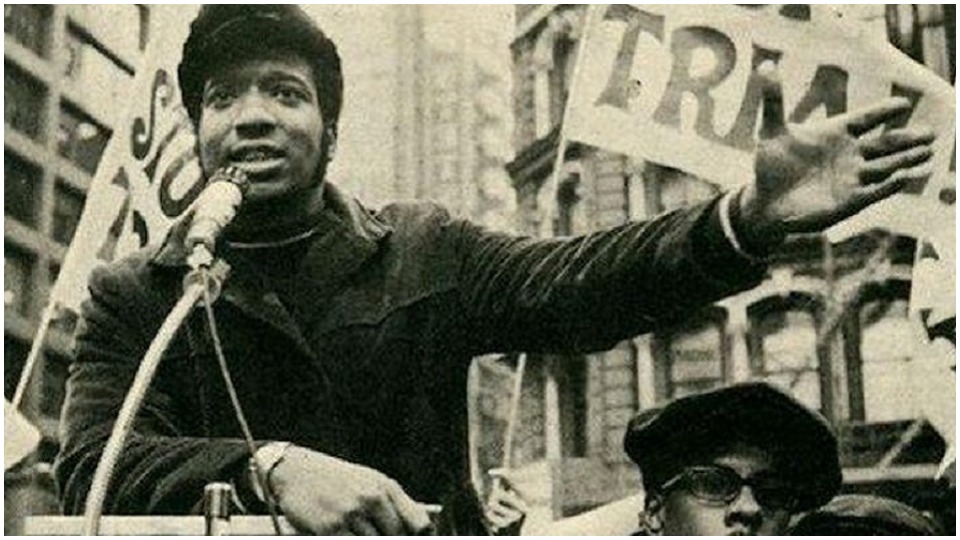 Newly unearthed documents have shed new light on the FBI’s role in the murder of the 21-year-old Black Panther leader Fred Hampton on December 4, 1969, when Chicago police raided Hampton’s apartment and shot and killed him in his bed, along with fellow Black Panther leader Mark Clark. Authorities initially claimed the Panthers had opened fire on the police who were there to serve a search warrant for weapons, but evidence later emerged that told a very different story: The FBI, the Cook County State’s Attorney’s Office and the Chicago police had conspired to assassinate Fred Hampton. FBI memos and reports obtained by historian and writer Aaron Leonard now show that senior FBI officials played key roles in planning the raid and the subsequent cover-up. “It was approved at the highest level,” says attorney Jeff Haas. We also speak with attorney Flint Taylor. Both are with the People’s Law Office and were the lead lawyers in a landmark civil rights case over the deaths of Fred Hampton and Mark Clark.
AMY GOODMAN: This is Democracy Now!, democracynow.org, The Quarantine Report. I’m Amy Goodman, with Juan González.
As Black History Month begins today, we look back at the assassination of Black Panther leader Fred Hampton in Chicago 51 years ago and how new documents reveal more details about the FBI’s role in the murder of the 21-year-old revolutionary.
Fred Hampton was killed December 4th, 1969, when Chicago police raided his apartment and shot and killed him in his own bed. Black Panther leader Mark Clark was also killed by police in that raid. Authorities initially claimed the Panthers had opened fire on the police who were there to serve a search warrant for weapons. Evidence later emerged that told a very different story: The FBI, the Cook County State’s Attorney’s Office and Chicago police had conspired to assassinate Fred Hampton.
Now several hundred pages of FBI memos and reports, obtained by historian and writer Aaron Leonard through a Freedom of Information Act request, document that the director of the FBI’s Domestic Intelligence Division, William Sullivan, and the head of the Extremist Section of the Domestic Intelligence Division, George Moore, both played key roles in planning the raid and the cover-up that followed.
For more on what these documents say, we’re joined by Flint Taylor and Jeff Haas, founding members of the People’s Law Office in Chicago, who were the lead lawyers in the landmark Fred Hampton and Mark Clark civil rights case. Their new piece for Truthout is headlined “New Documents Suggest J. Edgar Hoover Was Involved in Fred Hampton’s Murder.”
Jeff Haas, let’s begin with you. You wrote a book about Fred Hampton. Talk about what these new documents show and what you see as the smoking gun of J. Edgar Hoover’s direct involvement.
JEFF HAAS: Thank you, Amy.
Well, first of all, it’s 51 years after the incident and 40-some years after the trial. We had never gotten these documents before. But what they showed was that Hoover and Sullivan and Moore were following Roy Mitchell, a special agent in charge, very closely with regard to O’Neal. And they were complimenting him and rewarding him from the moment he gave the information and the floor plan to special agent Mitchell. They were congratulating Mitchell on what a wonderful job he did with this informant. Of course, Mitchell got the floor plan, gave it to Hanrahan’s police, and that’s what led to the raid. The floor plan even showed the bed where Hampton and Johnson would be sleeping.
So, we knew much of this. We knew O’Neal had gotten a bonus. We never knew Mitchell got a bonus. And we never knew that Hoover and Sullivan and Moore were starting to watch this in November, 10 days before it happened. They were monitoring exactly what went on. And so it was approved at the highest level. And during the trial, we had sought to go up to Sullivan and Moore and Hoover, but the judge wouldn’t allow us. And we thought perhaps even John Mitchell and Richard Nixon were involved. We didn’t have these documents, so we couldn’t uncover that. This also shows that after the raid, the head of the FBI in Chicago met with and congratulated the informant, O’Neal, thanked him for his information, which led to the success of the raid.
What’s also interesting is, 51 years later, these documents still have redactions. There’s a specific redaction because an FBI agent had been called in front of a grand jury, and he was told, “If you get asked any questions about blank,” which is the FBI, “leave the grand jury and report to your higher-ups.”
A year after the raid, the FBI role and COINTELPRO had never been disclosed. It was only about Hanrahan and the police. So it took us 13 years to uncover that it was COINTELPRO, a program whose objective was to disrupt, destroy and neutralize the Panthers and, specifically, prevent the rise of a Black messiah, like Fred Hampton, who could unify and electrify the masses. It was this FBI program that led to the passing of the floor plan and the 90 shots and Fred Hampton executed in his bed at 2:30 in the morning on December 4th.
JUAN GONZÁLEZ: Now, Jeff, the documents also seem to indicate that there was a plan to cover up the FBI’s involvement in the raid. Could you talk about that aspect of what you’ve uncovered?
JEFF HAAS: Yes. At the grand jury — this was a special state grand jury. Because the Black community was so outraged and there was a lot of pressure, they called a special grand jury, where they allowed the FBI agent who talked about who fired the guns, but they didn’t allow anybody to talk about the floor plan or the role of the informant, William O’Neal, in setting up the raid and getting a bonus for it. So, that was kept quiet. Matter of fact, if there hadn’t been a raid at the Media, Pennsylvania, FBI office, we might never have learned about COINTELPRO.
JUAN GONZÁLEZ: And in terms of why it’s taken so long and there’s still redactions on some of these documents�— I mean, the assassination of President Kennedy, there have been documents released from that. And here we have one radical revolutionary in Chicago, and it’s taken so long just to get information about what actually happened.
JEFF HAAS: Well, yes. I think the cover-up continues, in the fact that many of these pages contain redaction, including the information from O’Neal. So there are things the FBI has still not released, we think showing the involvement of higher-ups. We do have a continuous rewarding of the special agent, Roy Mitchell, referring to the success of the raid, how the raid was critical to the role of the FBI. So, some of these documents are new. But for the next year, Roy Mitchell got congratulated for how well he had handled O’Neal and how important the information he’d gotten. And they continuously internally called the raid a success, while externally they were hiding it.
AMY GOODMAN: I want to bring Flint Taylor into this conversation, co-founder of the People’s Law Office in Chicago. You and Jeff were arrested for protesting what you called in the piece “the outrageous rulings of the judge and the blatant misconduct of the defense.” Can you explain what this trial was, Flint?
FLINT TAYLOR: Well, this was a trial, 18 months on trial, Jeff and I and others in our office, fighting to get these documents out, fighting to establish the role of the FBI. And we had a judge who was very similar to Judge Hoffman in the Conspiracy 8 trial, which many people may remember. And he was dead set against us. He was originally from Alabama. He was a racist. And he did not believe and would not let us get at the evidence that the FBI was involved in this case. But we were developing this evidence along with the Senate select committee, the Church Committee. So we were exposing this evidence both in court and outside of court, and the judge was getting more and more upset with us.
And so, when we protested the unfair rulings that he was making — he was keeping us from putting Hoover in the case. He was keeping us from putting John Mitchell and the others from Washington in the case. And he was keeping us from getting the documents that showed the bonus to O’Neal, the informant. All of this, we were fighting for, day and day after day. And when we protested, both of us, at various times, were held in contempt and sent to the federal lockup here in Chicago.
But we kept fighting it. The judge threw the case out after 18 months of trial, believe it or not. He wouldn’t let the jury decide the case. We fought it to appeal, and we won a remarkable decision in the court of appeals, defended it in the U.S. Supreme Court. And 13 years of litigation and fighting to get the evidence out, we were ultimately able to obtain one of the largest, if not the largest, police violence settlement, for the families of Mark Clark and Fred Hampton and the surviving Panthers, in the history at that time of the federal courts.
JUAN GONZÁLEZ: And, Flint, for the younger members of our audience who really do not, perhaps, understand the role and significance of the Black Panther Party and, for instance, J. Edgar Hoover labeling them the greatest domestic threat to the U.S. government, Hoover was aware, by then, although the public found out later, that there had been polling done, secret polling done, that showed that more than 25% of all African Americans at the time supported the Black Panther Party. Could you talk about the party’s significance?
FLINT TAYLOR: The party was very significant. And its leadership was, as well. And Fred Hampton was not only an up-and-coming leader, but a very charismatic and dynamic leader. And the Panthers had a Ten-Point Program. That program covered the waterfront with all sorts of revolutionary and socialistic programs — a free breakfast program, for example, a free medical clinic, for another example, a newspaper that came out every week and talked about the atrocities of the police and the government.
It was very much an anti-imperialist organization, fought against the War in Vietnam, said people should not go to Vietnam, opposed mass incarceration before there actually was that term, and also was very strong in setting up and fighting for coalitions between Black, Hispanic or — like the Young Lords — of course, you know about that, Juan — and other organizations, revolutionary and radical organizations. And this is another reason why Hoover feared the Panthers so much, because they were bringing together all sorts of different radical and revolutionary groups, groups against the War in Vietnam. And this was very threatening to the government at that time, and they targeted, under the COINTELPRO program, which was focused to destroy the Black Panther Party, on Fred Hampton and the Black Panthers, because they were so successful here in Chicago.
~~Written by collectivist ~~

