~~ and ~~
https://theconversation.com/4-questions-answered-on-sex-trafficking-in-the-us-120098
Sex Trafficking Isn't What You Think: 4 Myths Debunked and 1 Real World Way to Prevent Sexual Exploitation
The idea that sex trafficking is an urgent social problem is woven into American media stories, from reports of Republican U.S. Rep. Matt Gaetz’s alleged trafficking of teenage girls to debunked QAnon conspiracy theories about a sexual slavery ring run through online retailer Wayfair.
The common perception of sex trafficking involves a young, passive woman captured by an aggressive trafficker. The woman is hidden and waiting to be rescued by law enforcement. She is probably white, because, as the legal scholar Jayashri Srikantiah writes, the “iconic victim” of trafficking usually is depicted this way.
This is essentially the plot of the “Taken” movies, in which teenage Americans are kidnapped abroad and sold into sexual slavery. Such concerns fuel viral posts and TikTok videos about alleged but unproven trafficking in IKEA parking lots, malls and pizza shops.
This is not how sex trafficking usually occurs.
Since 2013, I have researched human trafficking in the midwestern U.S. In interviews with law enforcement, medical providers, case managers, victim advocates and immigration lawyers, I found that even these frontline workers inconsistently define and apply the label “trafficking victim” – especially when it comes to sex trafficking. That makes it harder for these professionals to get trafficked people the help they request.
So here are the facts and the law.

What is sex trafficking?
The Victims of Trafficking and Violence Protection Act of 2000 provides the official legal definition for sex and labor trafficking in the United States.
It makes “trafficking in which a commercial sex act is induced by force, fraud, or coercion, or in which the person induced to perform such act has not attained 18 years of age” a federal crime.
In short, to legally qualify as sex trafficking, a sex act involving an adult must include “force, fraud, and coercion.” This could look like someone – a family member, a romantic partner or a market facilitator colloquially described as a “pimp” or “madam” – physically abusing or threatening another adult into sex for money or resources.
With minors, any and all sexual exchanges – that is, trading sex for something of value like cash or food – are considered sex trafficking.
How common is sex trafficking?
Data on human trafficking is notoriously messy and difficult to measure. Survivors may be hesitant to disclose their exploitation out of fear of deportation, if they are undocumented, or arrest. That leads to underreporting.
One way to approximate how many people are being trafficked in the United States is to consult federal grant reports, as suggested by anti-trafficking nonprofit Freedom Network USA.
For example, the federal Office for Victims of Crime served 9,854 total clients – some of whom identified as trafficked, others who showed “strong indicators of trafficking victimization” – between July 2019 and June 2020. The Department of Health and Human Services Office on Trafficking in Persons served 2,398 trafficking survivors during the 2019 fiscal year.
Data from the same office also shows that 25,597 “potential victims” of sex and labor trafficking were identified through calls to the National Human Trafficking Hotline.
Again, this data is incomplete – if survivors have not accessed these particular resources or called these specific hotlines, they are not represented here.
What does sex trafficking look like?
As with other sexual crimes, like rape, sex trafficking survivors often experience violence at the hands of someone they know, not a complete stranger.

A study from Covenant House New York, a nonprofit focused on homeless youth, found that 36% of the 22 trafficking survivors in their survey were trafficked by an immediate family member, like a parent. Only four reported “being kidnapped and held against his or her will.”
Often, trafficking victims are younger transgender people or teens experiencing homelessness who exchange sex with others to meet their basic needs: shelter, economic stability, food and health care. Trafficking frequently looks like vulnerable people struggling to survive in a violent, exploitative world.
“They are creating sexual solutions to nonsexual problems,” says San Francisco-based researcher Alexandra Lutnick.
Under U.S. law, these youth are trafficking victims, because of their age. But they may reject the label, preferring terms like “survival sex work” or “prostitution” to describe their experiences.
Trafficking victims engaged in survival sex may well be arrested rather than offered help like housing or health care. If they cannot prove “force, fraud, or coercion,” or if they refuse to comply in a criminal investigation, they risk shifting from victim to criminal in the eyes of law enforcement. That can mean prostitution charges, felony offenses or deportation.
Such punishments are most commonly used against Black, Indigenous, queer, trans and undocumented sex-trafficking survivors. Black youth are disproportionately arrested for prostitution offenses, for example, even though legally any underage commercial sex is sex trafficking.
What is the difference between sex work and sex trafficking?
Legally and in other meaningful ways, sex work and sex trafficking are different.
Sex work is consenting adults engaging in transactional sex. In almost all U.S. states, it is a criminal offense, punishable with fines and even jail sentences.
Sex trafficking is nonconsensual, and it is generally treated as a more severe crime.
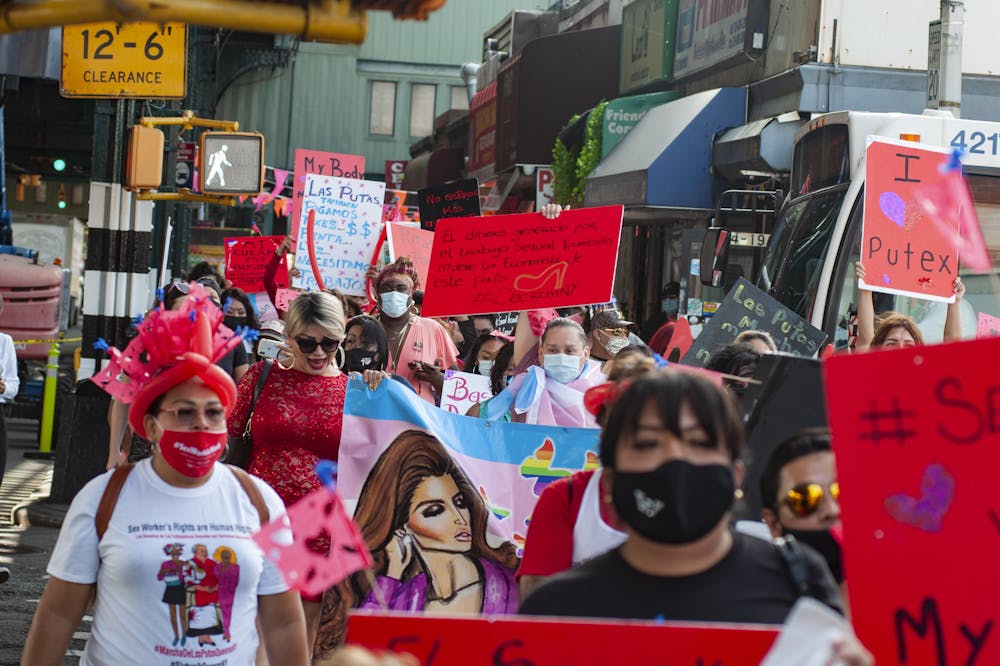
Most sex workers’ groups acknowledge that sex work is not inherently sex trafficking but that sex workers can face force, fraud and coercion because they work in a criminalized, stigmatized profession. Sex workers whose experiences meet the legal standards of trafficking may nonetheless fear disclosing that to police and risking arrest for prostitution.
Conversely, sex workers can be mistakenly labeled by police and advocates as “trafficked” and find themselves in the custody of law enforcement or social service agencies.
What can be done?
Based on my research, reducing sex trafficking requires changes that might prevent it from occurring in the first place. That means rebuilding a stronger, supportive U.S. social safety net to buffer against poverty and housing insecurity.
[Over 100,000 readers rely on The Conversation’s newsletter to understand the world. Sign up today.]
In the meantime, trafficking victims would benefit from efforts by frontline workers to combat the racism, sexism and transphobia that stigmatizes and criminalizes victims who don’t look as people expect – and are struggling to survive.
==========================
4 Questions Answered on Sex Trafficking in the US
The revelations about billionaire Jeffrey Epstein, who is accused of sex trafficking girls, paint a grim picture of sex trafficking in the U.S. The buying and selling of human beings is strong in America more than 150 years since the end of the Civil War.
Sex trafficking, as the federal government defines it, is “the recruitment, harboring, transportation, provision or obtaining of a person for the purpose of a commercial sex act” by means of “force, fraud, or coercion.” This is a form of modern-day slavery.
Found in massage parlors, escort services, residential brothels and street prostitution, some might be victims for weeks and others for years.
As someone who studies human trafficking, I feel that it’s important for the public to understand how it manifests in the U.S. today. While there’s still a great deal that is unknown about sex trafficking, research studies and nonprofits have been able to gather telling data on this industry’s victims and perpetrators.
1. Where does sex trafficking happen?
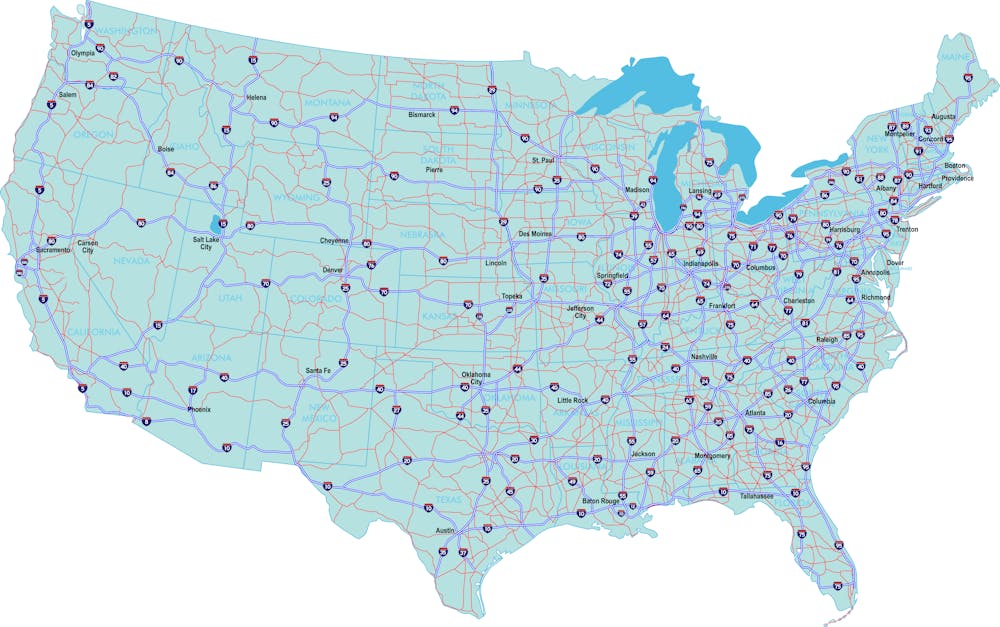
Sex trafficking tends to occur in motels and impoverished neighborhoods along the interstate highway system as well as in major urban centers. Some of the busiest corridors of the interstate include I-5 in the West, I-95 in the East and I-80, stretching from coast to coast.
The nonprofit Polaris operates the National Human Trafficking Hotline, which takes tips on sex and labor trafficking. Although the Polaris data are not from a random-sample survey, they shed light on types of sex trafficking in the U.S. In 2017, Polaris received more than 6,000 hotline tips about sex trafficking across America. Among these data, the top venues for sex trafficking included illicit massage parlors, hotels and motels, and residential brothels.
The National Association of Truck Stop Operators has partnered with the U.S. Department of Homeland Security’s Blue Campaign. The National Association of Truck Stop Operators offers trainings to help truckers, truck stop owners and employees identify the signs of human trafficking, such as malnourishment, lack of eye contact and disorientation.
Hotel chains like Marriott are training their employees as well.
2. Who are the victims?
Reliable data on the number of sex trafficking victims in the U.S. are hard to come by.
In the U.S., studies show that most victims of sex trafficking are young women and girls. They are, on average, 19 years old.
Risk factors for sex trafficking include a history of child abuse, substance abuse, poverty, involvement in child protective services, involvement in juvenile detention and prior sexual exploitation.
Runaway and homeless youth are especially at risk for sex trafficking. A study conducted in Philadelphia, Washington, D.C. and Phoenix found that 14% of homeless youth identified themselves as victims of sex trafficking. Among these sex trafficking victims, 33% identified as LGBTQ.
A young person is more likely to meet her trafficker for the first time online rather than in person, due to the rise of social media.
3. Who are the traffickers and the johns?
Men who purchase commercial sex come from all walks of life.
One comparative study on men and their lifetime history of paying for sex found that 4.9% of men in Tampa, Florida, said they had ever paid for sex. Among those men who paid for sex in Tampa, men aged 41 to 70 were most likely to pay for sex, making up about 13% of the total.
Traffickers include mom-and-pop operations, crime rings, gangs and cartels. Sometimes, when a victim of sex trafficking has been groomed enough, she becomes “the bottom,” helping her trafficker recruit other victims.
Research shows that modern-day slaveholders have a complicated mindset, condescending and paternalistic, not necessarily one of pure evil. Slaveholders can think they are doing a favor to the enslaved, by taking care of them, giving them food and shelter, and even “protecting” them from a world in which they would otherwise be disposable.
4. How much money does the commercial sex economy generate?
A 2014 study of sex trafficking in seven major U.S. cities found that revenues from underground commercial sex ranged from US$39.9 million in Denver to $290 million in Atlanta.
Although many experts suspect that major sporting events, like the Super Bowl, might encourage the demand for commercial sex, preliminary research suggests the effect is negligible.
The breadth of sex trafficking in the U.S. has prompted federal responses. The FBI has organized Operation Cross Country, a collaboration of dozens of field offices and hundreds of local law enforcement organizations. In October 2017, Operation Cross Country XI conducted a nationwide sting leading to the freeing of 84 minors and the arrest of 120 traffickers.
With better data collection methods and a stronger national coordinated effort, the U.S. could eventually come closer to the day when modern slavery is no more.