Thursday, February 4, 2021

GM 1937, Amazon 2021: Which side are you on? ~~ Martha Grevatt

https://www.workers.org/2021/02/54228/

Bessemer, Alabama, sitting on the outskirts of Birmingham and with a population of 26,500 — about 75% African American — has become a central focus for the entire class struggle.
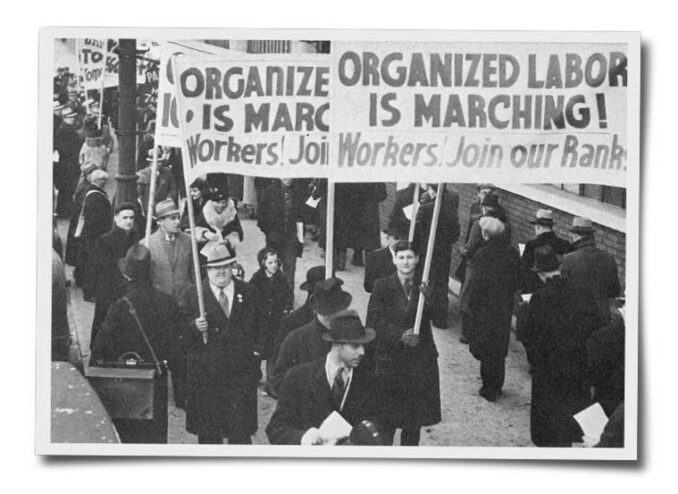
Solidarity with the Flint Sit-down strike inside GM plants

There, at Amazon warehouse BHM1, thousands of workers are fighting for a union. Over Amazon’s strident objections, the National Labor Relations Board is conducting a union representation election by mail. From Feb. 8 until March 29, workers will mail in ballots indicating if they want representation by the Retail, Wholesale, and Department Store Workers Union, which is affiliated with United Food and Commercial Workers.

Not only is this African American majority workforce up against the world’s richest human, Amazon CEO Jeff Bezos, they are facing off with the second-largest company in the U.S. — and the ninth largest in the world. Amazon, including Amazon-owned Whole Foods, has 1.37 million workers in the U.S. alone. This does not count delivery drivers. Amazon has the highest market capitalization — based on stock value and number of outstanding shares — of any corporation anywhere.

Amazon brags on its web site that its workers make $15 an hour — a recent concession to the mass low-wage workers movement, Fight for $15— and have health benefits. Bessemer has a poverty rate of 25%, and 19% of residents do not have health insurance. Alabama is one of 21 states that still have a minimum wage equal to or below the federal minimum of $7.25 an hour.

Given that, landing a job at Amazon could seem like a lucky break. But the pay is not enough to support a family in 2021. Moreover, $15 an hour doesn’t even come close to the value Amazon workers produce for CEO Bezos, whose wealth is expanding at a current rate of $2,537 per second!

Working conditions, described as “back-breaking,” are unbearable. Cameras and spy software developed by Amazon itself are used to monitor worker productivity, bathroom breaks and any kind of “data relating to human movement, location and environment,” the company boasts. Employees are monitored for union advocacy.

Amazon — which markets its monitoring device, the Modjoul SmartBelt to other companies — claims it is designed “so you can prioritize areas of focus for safety and productivity.”

This is a flat-out lie. “In 2019, Amazon recorded 14,000 serious injuries across its fulfillment centers, which equates to an injury rate of 7.7 serious injuries per 100 employees, Reveal found. That’s nearly double the most recent industry standard, according to Reveal. Amazon may also be underreporting warehouse worker injuries.” (cnbc, Sept. 29, 2020)

Now, less than a year after the Bessemer warehouse opened last March, at least 2,000 Amazon workers there have signed union cards, enough for the NLRB to order an election.

General Motors 1937, Amazon 2021

There are historical parallels between the current struggle and an earlier period of fierce class battles: the 1930s. The world’s largest corporation then was General Motors, whose president, Alfred P. Sloan, was the world’s highest-paid executive. Workers were monitored by GM’s elaborate network of company spies. Supporters of the United Automobile Workers hid their union buttons under their collars.

The conditions on GM’s assembly lines were not that different from Amazon. One of the main issues motivating the fight for UAW representation was the notorious “speedup” — when management would repeatedly make the moving assembly run faster to increase production. Wealthy companies were united in their opposition to unions. They hired mercenary goons from the notorious Pinkerton union-busting outfit.

Organizers in the newly formed Congress of Industrial Organizations recognized the key to future success: A win at GM would have a domino effect, inspiring successful union drives in a range of industries. But it would not be easy to get GM to do what it swore it would never do: recognize a union. It took a 44-day occupation of GM plants in Flint, Mich., to force the company’s hand.

Feb. 11 marks the 84th anniversary of the victory in the famous Flint Sit-down Strike. In 1937, there were over 500 sit-downs and other strikes involving workers in steel, meatpacking and other plants, along with retail, hotels and the public sector. After the Flint workers won, the CIO unions grew exponentially, bringing into the labor movement industrial workers whom the conservative, craft-based American Federation of Labor had written off.

Among the workers not welcome in the AFL were the Black steelworkers of Bessemer. It took the Communist Party-led Mine, Mill and Smelter union to organize the mills in the Deep South. Black southern steelworkers were an important part of labor history in the 1930s. Even today union consciousness is high in Bessemer.

Amazon has launched a glitzy propaganda website, “Do it without dues,” aimed at getting Bessemer workers to vote against union representation. There is fear and intimidation; a majority-yes vote is not guaranteed.

Once union representation is won, the battle has just begun. Next comes the fight to win a decent contract. A strike might be necessary, and union supporters might be fired. Amazon could threaten to close the warehouse, as Walmart has done when stores were organized.

The drive to organize Amazon is comparable in importance to wresting the first union contract from GM in 1937. Tactically there are differences between a secret ballot election and a strike, whether an outside picket or an occupation. But the class essence is the same: labor vs. capital.

Thus the struggle begs the question raised in the famous old union song: Which side are you on?

What is most needed is mass, global solidarity. None of us is very far from an Amazon warehouse or a Whole Foods store where we can put up a solidarity picket line. A Feb. 6 support rally is planned in Bessemer.

The stakes in the current battle could not be higher — with ramifications for Amazon workers everywhere and ultimately for the global working class. Amazon BHM1 workers need to know that the international working class has their back. That will tip the scales and help them win against the richest centi-billionaire in human history.

NYPD Deploys Counter Terrorism Unit To Protect Wall Street in Response To Gamestop Protests ~~ Alan Macleod

 https://www.mintpressnews.com/nypd-deploys-counter-terrorism-unit-protect-wall-street-in-response-gamestop-protests/274996/

The Charging Bull statue in Manhattan’s Financial District has become the sight of protests amid a wider financial rebellion happening online. On Friday, a handful of activists were seen in Bowling Green Park, posing with the bull, and holding signs that said “Tax Wall Street Trades.” A thin band of tape was also placed on the statue’s head and rear end, featuring slogans like “Hold the line” and “WSB” — both allusions to the GameStop insurrection against hedge funds organized by Reddit’s “Wall Street Bets” community. A similar fate befell the new Fearless Girl statue, which faces the New York Stock Exchange building. Both the bull and the girl are meant to symbolize the power, bravery and daring of the city’s financial traders.

In response, the New York Police Department (NYPD) mobilized its anti-terrorism unit, sending masked, blad clad police officers wearing armor and carrying assault rifles to protect and secure the area. “The Stock Market has had an interesting week to say the least. We are happy to report that the Wall Street Charging Bull is secure and continues to preside over Bowling Green for the foreseeable future,” it announced. The bull was covered in a blue tarp to prevent further vandalism.

The decision to deploy counter-terrorism officers on the streets of Manhattan was not well appreciated, at least judging by replies left on the unit’s official social media pages. “Perfect example of how police exist to protect private property and not people,” was the highest rated response. Other popular replies included, “You brought out the automatic rifles and body armor… for tape,” “Good ad for defunding the police right here,” and, “If this was a shot in a movie, I’d think it was too on the nose.”

The NYPD decision comes amid a growing movement aimed at punishing wealthy hedge funds who have spent enormous sums betting on the demise of a number of companies, including video games retailer GameStop, movie theater chain AMC and Finnish telecommunications company Nokia. Organized primarily on Reddit community /r/WallStreetBets, small scale investors have caused GameStop’s stock to rise from $35 per share two weeks ago to over $300 on Friday, in the process causing hedge funds to lose an estimated $19 billion.

In response to mounting losses, ironically-named trading app Robinhood banned the purchase of a number of well-performing stocks, including GameStop, and even forced users to sell their shares against their will. Messaging platform Discord shut down the Wall Street Bets server, while Google wiped almost 100,000 negative reviews of Robinhood from its app store, restoring its good rating.

The NYPD has been the subject of considerable scrutiny of late due to its heavy-handed tactics. During the summer, its vehicles were caught plowing through dozens of people demonstrating in support of George Floyd, ironically protesting against police brutality.

In June, the NYPD brutalized 32-year-old African-American hospital worker Rayne Valentine as he was leaving his job, kicking and beating his head in until he lay unmoving in the fetal position. Valentine had to go back to the same hospital he just left for treatment, his co-workers putting seven staples in his head and attempting to stop the bleeding. Valentine suggested that his attackers may have only stopped after they noticed his bloodied hospital identification. The organization also deployed a number of fake yellow taxi cabs in order to arrest protestors breaking the city’s curfew laws.

Going further back, the department’s behavior during the Occupy Wall Street protests of 2011 is often cited as a reason for the movement’s growth, with scenes of mistreatment of peaceful demonstrators, such as officer Anthony Bologna wantonly pepper-spraying sitting protestors, or the mass arrest of more than 700 people on the Brooklyn Bridge triggering outrage nationwide. The NYPD killing of Eric Garner in 2014 also helped spur the movement for black lives.

With more than 50,000 uniformed officers, the NYPD dwarfs the police departments of other cities in its sheer size. It also boasts double the police per capita than urban centers like Phoenix and Dallas. The department’s $6 billion annual budget is larger than the total GDP of over 40 countries and eats into the far smaller budgets for underfunded essential services. Current New York City Mayor Bill de Blasio has overseen the great expansion of the force, both in budget and in number. Thus, while the city appears unable to help poorer residents survive a pandemic, there still seems to be ample resources to protect the interests and the property of Wall Street, including an expanding and ever-more militarized police force.


How Capitalism and Racism Support Each Other ~~ Richard Wolff

https://www.democracyatwork.info/how_capitalism_and_racism_support_each_other

dollar_thumb.jpg

By Richard D. Wolff
This article originally appeared at Truthout.org

Capitalism's supporters use and benefit from a racism whose practice and consequences should be blamed on capitalism itself.

"Racism" is so often applied to US prison statistics and policing; to data on differences in employment, housing, wealth and income distributions, college enrollments, film awards, and so much more; and to hardening hostilities toward immigration. At the same time, racism is so often condemned -- at least in mainstream media, dominant political circles and most intellectual and academic institutions. Racism's persistence where the capitalist economic system prevails raises the question of the connection between capitalism and racism.        

Many societies are structured and operate to subordinate one or more portions of their population -- politically, culturally, economically or in combinations of these ways -- while privileging others. Among the successive generations born into societies with such subordinations, some will challenge and seek to change their condition. Force can try to maintain subordination, but it is costly, dangerous and often unsuccessful. The preferred method has rather been (a) to develop an idea that justifies the subordination and (b) to install that idea as deeply as possible into the thinking of both the subordinated and the privileged.

One such idea is "race," the notion that sets of inherent (often deemed "natural") qualities differentiate groups of people from one another in fundamental ways. This idea of race can then be used to explain the subordination of some and the privileges of others as effects of their racial differences. The concept of race thus accomplishes a reversal: Instead of being a produced idea, an ex-post justification of structures of social subordination, race morphs instead into some pre-existing "reality" thatcaused or enabled the subordination.

We know how and why racism worked often to support slavery around the world and especially in the early United States. Masters endorsed and promoted ideas that justified slaves as subordinated because they were an inferior race. Racist ideology also sometimes supported feudalism by dividing lords and serfs into different races. Indeed, some early capitalist systems likewise racially distinguished employers from employees.

Racism persists in no small part because its benefits to capitalism outweigh its costs.

However, capitalism presents a more complex case, because it often made "individual freedom" central to its supportive ideologies. Opponents of slavery could use that ideology to fight for slavery's abolition. Yet capitalism's history nonetheless keeps exhibiting both the idea of race and racism. And the evidence marshaled by, among others, Manning Marable in How Capitalism Underdeveloped Black America (1983) certainly documents capitalism's subordination of many African Americans. Do racism and capitalism then support one another as per Malcolm X's famous statement, "You can't have capitalism without racism"? Should we follow Adolph Reed Jr.'s perspective (in his 2013 New Labor Forum article "Marx, Race and Neoliberalism") that sees racism as a "historically specific ideology that emerged, took shape, and has evolved as a constituent element within" capitalism?

Answers to these questions emerge from patterns exhibited by capitalism's inequality and instability. Capitalists never could end their system's tendency to generate gross inequality (in wealth and income distributions) nor its instability (in cycles of depression and recession). Both those features of capitalism have contributed to ongoing social injustice and oppositional social movements. Had the heavy burdens of recurring business cycles (periodic unemployment and its multiple consequences) been distributed roughly equally or randomly across societies where capitalism prevailed -- threatening and frightening everyone -- those oppositional movements might well have gathered the broad support needed to consign capitalism to an early demise.

However, those burdens were never distributed equally or randomly. Some suffered them disproportionally and repeatedly, resulting in social subordination. Others were relatively privileged, exempted from those burdens partially or totally. Yet, in their struggles to displace slavery and feudalism as societies' prevalent pre-capitalist economic systems, supporters of capitalism had often promised that it would differ from those systems by guaranteeing everyone liberty, equality and brotherhood or solidarity. What capitalism achieved contradicted that promise.

The burdens of capitalism's instability fell much harder on employees than employers, and much harder upon some employees than others. Capitalism thus always faced a basic legitimation problem. How could it justify its unequal distributions of income, wealth and the burdens of its systemic instability among the people whose condition of being "free and equal" capitalism was supposed to guarantee?

One of the major means of managing this legitimation problem has been an ideology of race (alongside other ideologies centered around concepts such as "productivity" and "meritocracy"). Capitalism repurposed race and racism. By dividing human beings, conceptually and practically, into intrinsically different subgroups, capitalism's defenders could explain and justify why its economic benefits (e.g. the status of employer rather than employee) and burdens (unemployment, poverty etc.) were so unequally distributed (both within countries and globally). Employers, politicians, academics and journalists reinforced the notion that the cause, fault or blame for that unequal distribution lay with racially differentiated characteristics, not with the capitalist system.

Certain population groups -- conceived as races -- were deemed underdeveloped, incapable, irrational and/or psychologically disqualified in relation to capitalism's productive rigors. Such presumed inferiority was then offered as an explanation for why people of some races were rarely employers and, among employees, were those last hired and first fired, poorly paid, ghettoized etc.

Such races -- often non-whites -- were, in effect, assigned to play the role of shock absorbers in and for capitalist business cycles. They still are: A 2016 report from the University of Illinois, using the racialized differentiations, documents how young people of color in the United States continue to face significantly higher rates of unemployment and lower employment per population ratios than young white people do.

In the United States, most white employees have been spared constantly fearing and periodically suffering unemployment and its consequences. A minority of white employees shares the fate of a huge portion of the "shock absorber" races. That fate comprises job insecurity, recurring unemployment and its consequences: loss of skills, job connections and promotions; descent into hopelessness and desperation; turning toward illegal revenue-generating activities; policed into disproportionate incarceration; etc. By concentrating both poverty and the business cycle shock absorber role in certain subgroups of their populations and by using racism to explain that concentration, capitalist societies "manage" the risks attending their tendencies to gross inequality and instability.

Some conservatives and right-wingers further legitimate capitalism by reframing their racism. For them "the problem" is that capitalism has not been allowed to work its healing magic -- market discipline -- upon those inferior groups. Misguided social protections, minimum wages, safety nets, welfare etc. have kept them inside a "culture of poverty" defined as recurring unemployment, poverty, social isolation, family instability, incarceration etc. By correcting (i.e. removing) those misguided and counterproductive social protections, capitalism's disciplines would integrate them into prosperity and growth. That this has not happened for most subordinate groups is blamed on the depth of their racialized inferiority and/or the legacy of liberals' imposition of a culture of poverty.

In contrast, liberals and social democrats who accept the concept of race have mostly sought to ameliorate the sufferings of the unemployed and poor by policies such as education, welfare and training. Such policies likewise rarely succeeded either generally or enduringly. They could not overcome the system's reproduction of poverty and unemployment and the imposition of them disproportionally on the shock absorber "races." Both conservatives and liberals have enforced a shared denial of the mechanisms of mutual support between capitalism and racism.

Of course, capitalism is not the only cause or source of racism, but ignoring or minimizing its role only perpetuates racism. By designating some members of society to be shock absorbers of recurring business cycles, the capitalist system creates legacies of trauma and inequality that can accumulate into dysfunctional qualities for its victims. There is neither need nor warrant to take those qualities as givens, nor to transform them into racialized attributes. The solution is rather to treat those legacies as among the profoundly unacceptable consequences and costs of capitalism's profoundly divisive inequality and instability.

A capitalism that perpetuates itself via racism incurs huge self-protection costs: to police and imprison or to provide some safety nets for its shock absorber "races" or varying combinations of both. When capitalists shift some or all of those costs onto the tax obligations of workers, more social tensions emerge. Workers are then told their tax payments must compensate for the "deficiencies" attributed to the shock absorber "races" rather than to the structural irrationalities of capitalism. Racial conflicts then preclude or tear apart working-class political unity. Racism persists in no small part because its benefits to capitalism outweigh its costs, or at least those costs capitalists have to bear.

When capitalists and their ideological supporters disavow racism, they carefully ignore capitalism as a key part of the problem. They point instead to the intolerance of "some people who lack compassion for the less fortunate." Thereby they further divide the working class, in effect, into one race that cannot or will not work hard (and is therefore unemployed and poor) and another race that lacks compassion. In comparison, capitalists and their supporters congratulate themselves for their superior morality.

Capitalism thus comes full circle. Its supporters use and benefit from a racism whose practice and consequences they blame exclusively on others but never on capitalism itself.

Wednesday, February 3, 2021

The Assassination of Fred Hampton: New Documents Reveal Involvement of FBI Director J. Edgar Hoover

 https://www.blacklistednews.com/article/79160/the-assassination-of-fred-hampton-new-documents-reveal-involvement-of-fbi-director-j-edgar.html


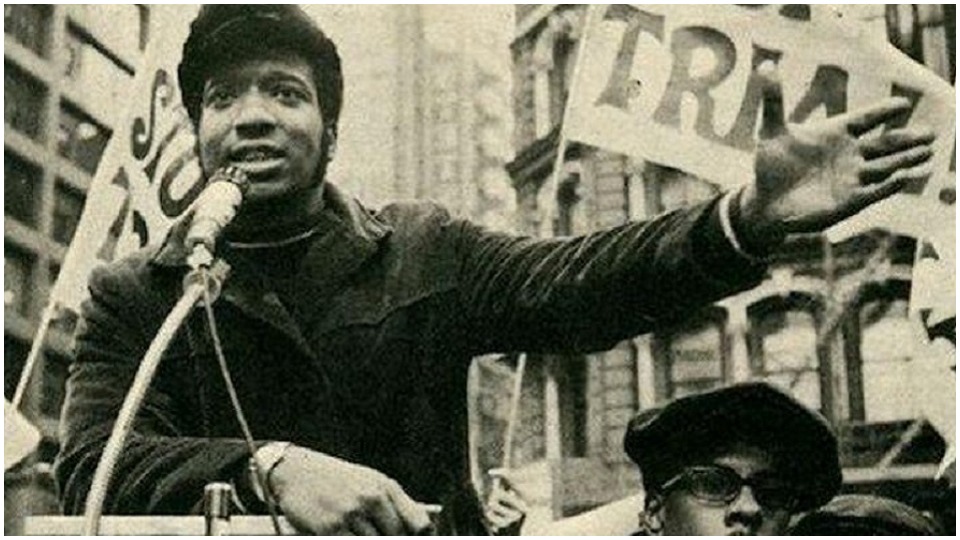
The short story of Fred Hampton, assassinated Black Panther leaderNewly unearthed documents have shed new light on the FBI’s role in the murder of the 21-year-old Black Panther leader Fred Hampton on December 4, 1969, when Chicago police raided Hampton’s apartment and shot and killed him in his bed, along with fellow Black Panther leader Mark Clark. Authorities initially claimed the Panthers had opened fire on the police who were there to serve a search warrant for weapons, but evidence later emerged that told a very different story: The FBI, the Cook County State’s Attorney’s Office and the Chicago police had conspired to assassinate Fred Hampton. FBI memos and reports obtained by historian and writer Aaron Leonard now show that senior FBI officials played key roles in planning the raid and the subsequent cover-up. “It was approved at the highest level,” says attorney Jeff Haas. We also speak with attorney Flint Taylor. Both are with the People’s Law Office and were the lead lawyers in a landmark civil rights case over the deaths of Fred Hampton and Mark Clark.

https://www.democracynow.org/2021/2/1/fred_hampton_new_fbi_docs
Transcript
This is a rush transcript. Copy may not be in its final form.

AMY GOODMAN: This is Democracy Now!, democracynow.org, The Quarantine Report. I’m Amy Goodman, with Juan González.

As Black History Month begins today, we look back at the assassination of Black Panther leader Fred Hampton in Chicago 51 years ago and how new documents reveal more details about the FBI’s role in the murder of the 21-year-old revolutionary.

Fred Hampton was killed December 4th, 1969, when Chicago police raided his apartment and shot and killed him in his own bed. Black Panther leader Mark Clark was also killed by police in that raid. Authorities initially claimed the Panthers had opened fire on the police who were there to serve a search warrant for weapons. Evidence later emerged that told a very different story: The FBI, the Cook County State’s Attorney’s Office and Chicago police had conspired to assassinate Fred Hampton.

Now several hundred pages of FBI memos and reports, obtained by historian and writer Aaron Leonard through a Freedom of Information Act request, document that the director of the FBI’s Domestic Intelligence Division, William Sullivan, and the head of the Extremist Section of the Domestic Intelligence Division, George Moore, both played key roles in planning the raid and the cover-up that followed.

For more on what these documents say, we’re joined by Flint Taylor and Jeff Haas, founding members of the People’s Law Office in Chicago, who were the lead lawyers in the landmark Fred Hampton and Mark Clark civil rights case. Their new piece for Truthout is headlined “New Documents Suggest J. Edgar Hoover Was Involved in Fred Hampton’s Murder.”

Jeff Haas, let’s begin with you. You wrote a book about Fred Hampton. Talk about what these new documents show and what you see as the smoking gun of J. Edgar Hoover’s direct involvement.

JEFF HAAS: Thank you, Amy.

Well, first of all, it’s 51 years after the incident and 40-some years after the trial. We had never gotten these documents before. But what they showed was that Hoover and Sullivan and Moore were following Roy Mitchell, a special agent in charge, very closely with regard to O’Neal. And they were complimenting him and rewarding him from the moment he gave the information and the floor plan to special agent Mitchell. They were congratulating Mitchell on what a wonderful job he did with this informant. Of course, Mitchell got the floor plan, gave it to Hanrahan’s police, and that’s what led to the raid. The floor plan even showed the bed where Hampton and Johnson would be sleeping.

So, we knew much of this. We knew O’Neal had gotten a bonus. We never knew Mitchell got a bonus. And we never knew that Hoover and Sullivan and Moore were starting to watch this in November, 10 days before it happened. They were monitoring exactly what went on. And so it was approved at the highest level. And during the trial, we had sought to go up to Sullivan and Moore and Hoover, but the judge wouldn’t allow us. And we thought perhaps even John Mitchell and Richard Nixon were involved. We didn’t have these documents, so we couldn’t uncover that. This also shows that after the raid, the head of the FBI in Chicago met with and congratulated the informant, O’Neal, thanked him for his information, which led to the success of the raid.

What’s also interesting is, 51 years later, these documents still have redactions. There’s a specific redaction because an FBI agent had been called in front of a grand jury, and he was told, “If you get asked any questions about blank,” which is the FBI, “leave the grand jury and report to your higher-ups.”

A year after the raid, the FBI role and COINTELPRO had never been disclosed. It was only about Hanrahan and the police. So it took us 13 years to uncover that it was COINTELPRO, a program whose objective was to disrupt, destroy and neutralize the Panthers and, specifically, prevent the rise of a Black messiah, like Fred Hampton, who could unify and electrify the masses. It was this FBI program that led to the passing of the floor plan and the 90 shots and Fred Hampton executed in his bed at 2:30 in the morning on December 4th.

JUAN GONZÁLEZ: Now, Jeff, the documents also seem to indicate that there was a plan to cover up the FBI’s involvement in the raid. Could you talk about that aspect of what you’ve uncovered?

JEFF HAAS: Yes. At the grand jury — this was a special state grand jury. Because the Black community was so outraged and there was a lot of pressure, they called a special grand jury, where they allowed the FBI agent who talked about who fired the guns, but they didn’t allow anybody to talk about the floor plan or the role of the informant, William O’Neal, in setting up the raid and getting a bonus for it. So, that was kept quiet. Matter of fact, if there hadn’t been a raid at the Media, Pennsylvania, FBI office, we might never have learned about COINTELPRO.

JUAN GONZÁLEZ: And in terms of why it’s taken so long and there’s still redactions on some of these documents�— I mean, the assassination of President Kennedy, there have been documents released from that. And here we have one radical revolutionary in Chicago, and it’s taken so long just to get information about what actually happened.

JEFF HAAS: Well, yes. I think the cover-up continues, in the fact that many of these pages contain redaction, including the information from O’Neal. So there are things the FBI has still not released, we think showing the involvement of higher-ups. We do have a continuous rewarding of the special agent, Roy Mitchell, referring to the success of the raid, how the raid was critical to the role of the FBI. So, some of these documents are new. But for the next year, Roy Mitchell got congratulated for how well he had handled O’Neal and how important the information he’d gotten. And they continuously internally called the raid a success, while externally they were hiding it.

AMY GOODMAN: I want to bring Flint Taylor into this conversation, co-founder of the People’s Law Office in Chicago. You and Jeff were arrested for protesting what you called in the piece “the outrageous rulings of the judge and the blatant misconduct of the defense.” Can you explain what this trial was, Flint?

FLINT TAYLOR: Well, this was a trial, 18 months on trial, Jeff and I and others in our office, fighting to get these documents out, fighting to establish the role of the FBI. And we had a judge who was very similar to Judge Hoffman in the Conspiracy 8 trial, which many people may remember. And he was dead set against us. He was originally from Alabama. He was a racist. And he did not believe and would not let us get at the evidence that the FBI was involved in this case. But we were developing this evidence along with the Senate select committee, the Church Committee. So we were exposing this evidence both in court and outside of court, and the judge was getting more and more upset with us.

And so, when we protested the unfair rulings that he was making — he was keeping us from putting Hoover in the case. He was keeping us from putting John Mitchell and the others from Washington in the case. And he was keeping us from getting the documents that showed the bonus to O’Neal, the informant. All of this, we were fighting for, day and day after day. And when we protested, both of us, at various times, were held in contempt and sent to the federal lockup here in Chicago.

But we kept fighting it. The judge threw the case out after 18 months of trial, believe it or not. He wouldn’t let the jury decide the case. We fought it to appeal, and we won a remarkable decision in the court of appeals, defended it in the U.S. Supreme Court. And 13 years of litigation and fighting to get the evidence out, we were ultimately able to obtain one of the largest, if not the largest, police violence settlement, for the families of Mark Clark and Fred Hampton and the surviving Panthers, in the history at that time of the federal courts.

JUAN GONZÁLEZ: And, Flint, for the younger members of our audience who really do not, perhaps, understand the role and significance of the Black Panther Party and, for instance, J. Edgar Hoover labeling them the greatest domestic threat to the U.S. government, Hoover was aware, by then, although the public found out later, that there had been polling done, secret polling done, that showed that more than 25% of all African Americans at the time supported the Black Panther Party. Could you talk about the party’s significance?

FLINT TAYLOR: The party was very significant. And its leadership was, as well. And Fred Hampton was not only an up-and-coming leader, but a very charismatic and dynamic leader. And the Panthers had a Ten-Point Program. That program covered the waterfront with all sorts of revolutionary and socialistic programs — a free breakfast program, for example, a free medical clinic, for another example, a newspaper that came out every week and talked about the atrocities of the police and the government.

It was very much an anti-imperialist organization, fought against the War in Vietnam, said people should not go to Vietnam, opposed mass incarceration before there actually was that term, and also was very strong in setting up and fighting for coalitions between Black, Hispanic or — like the Young Lords — of course, you know about that, Juan — and other organizations, revolutionary and radical organizations. And this is another reason why Hoover feared the Panthers so much, because they were bringing together all sorts of different radical and revolutionary groups, groups against the War in Vietnam. And this was very threatening to the government at that time, and they targeted, under the COINTELPRO program, which was focused to destroy the Black Panther Party, on Fred Hampton and the Black Panthers, because they were so successful here in Chicago.

Tuesday, February 2, 2021

ALL POWER TO THE PEOPLE ! ~~collectivist

 ~~Written by collectivist ~~ 


(As part of Leftist Politics' celebration of Black History Month I'm posting Part 1 of an article I wrote in 2013 about the Black Panther Party for Self Defense; to be followed, over the next few weeks by:  Part 2; and parts one and two of a recently written original article entitled, "White Supremacy is Capitalism's Frankenstein Monster and Both Will Be Slain by Class Struggle".)

"This country is a nation of thieves. It stole everything it has, beginning with Black people. The U.S. cannot justify its existence as the policeman of the world any longer. . .I don't want to be part of that system. We must question whether or not we want this country to continue being the wealthiest country in the world at the price of raping everybody else."
Stokely Carmichael (aka, Kwame Ture) Honorary Prime Minister of the BPP
It all began with two college students; Huey P. Newton and Bobby Seale. They both worked at the North Oakland Neighborhood Anti-Poverty Center, where they also served on the advisory board. To combat police brutality, the advisory board obtained 5,000 signatures in support of the City Council's setting up a police review board to handle complaints. Seale was taking classes at Oakland City College, while Newton attended both San Francisco Law School and City College. Both institutions were active in the North Oakland Center.
With their numerous local connections, Newton and Seale decided to start their own organization. "Inspired by the success of the Lowndes County Freedom Organization, in Mississippi, and Carmichael's calls for separate Black political organizing* they wrote their initial platform statement, the Ten-Point Program. With the help of Huey's brother, Melvin, they decided on a uniform of blue shirts, black pants, black leather jackets, black berets and openly displayed loaded shotguns. In his studies, Newton had discovered a California law that allowed carrying a loaded rifle or shotgun, as long as it was publicly displayed and pointed at no one.
What were some of the broader historical factors that led to the founding of the Black Panther Party in 1966? 

The Student Non-Violent Coordinating Committee (SNCC) emerged in 1960 as the organizational consolidation of the spontaneous sit-in movement that had begun in Greensboro, North Carolina, when four Black students sat in at a Woolworth's lunch counter, which refused to serve them. Less than a month after the celebrated March on Washington, in 1963, four black children  died in a bombing at a Birmingham, Alabama church. During the 'long hot summer' of 1964, there was unprecedented racial violence in the cities and against hundreds of volunteers who had gone to Mississippi to work on voter registration drives and other projects. On March 7, 1965 (what was to become known as 'Bloody Sunday") state troopers and Dallas county deputies beat and gassed demonstrators marching for voting rights in Selma, Alabama.
This period sparked a reconsideration of non-violence as a tactic in the movement. Bob Moses, a leading SNCC activist in Mississippi, captured the essence of the ideological struggle:
"We don't agree with it, in a sense. The majority of the students are not sympathetic to the idea that they have to love the White people that they are struggling against. But there are a few who have a very religious orientation. And there's a constant dialogue at meetings about non-violence and the meaning of it. For most of the members it is a question of being able to have a method of attack rather than to be always on the defensive."
The Black Panther Party For Self-Defense's Ten-Point Program read:
1. We want freedom. We want power to determine the destiny of our Black community.
2. We want full employment for our people.
3. We want an end to the robbery by the White man of our Black community.
4. We want decent housing, fit for shelter of human beings.
5. We want education for our people that exposes the true nature of this decadent American society. We want education that teaches us our true history and our role in present-day society.
6. We want all Black men to be exempt from military service.
7. We want an immediate end to police brutality and murder of Black people.
8. We want freedom for all Black men held in federal, state, county, city prisons and jails.
9. We want all Black people, when brought to trial, to be tried in court by a jury of their peer group or people from other Black communities, as defined by the Constitution of the United States.
10. We want land, bread, housing, education, clothing, justice and peace. And, as our major political objective, a United Nations-supervised plebiscite to be held throughout the Black colony in which only Black colonial subjects will be allowed to participate, for the purpose of determining the will of Black people as to their national destiny. . . (The Ten-Point Platform concludes with an excerpt from the U.S. Declaration of Independence.)
By 1968, the BPP had grown rapidly; transforming itself from a locally-based group to a national one. In 1969, it had over 5,000 members in forty chapters. 'Survival' programs were set up to provide immediate relief for local communities to operate in. The most successful of these was the Free Breakfast for Children Program, the brainchild of its chairman, Bobby Seale. "In October, 1968, the BPP newspaper advertised for volunteers to prepare and serve free breakfasts in Berkeley, California. The program spread quickly to churches, community centers, and auditoriums in San Francisco and Oakland. By the end of 1969, breakfasts were being served in nineteen cities under the sponsorship of the national headquarters and twenty-three local affiliates. More than twenty thousand children received full free breakfasts before going to school."

Liberation, Imagination and the Black Panther Party, Edited by George Katsiaficas and Kathleen Cleaver
"The offices were like buzzing beehives of Black resistance. It was always busy, as people piled in, starting at 7 a.m. opening time, and continuing 'til after nightfall. People came with every problem imaginable and because our sworn duty was to serve the people, we took our commitment seriously. When people had been badly treated by the cops or if parents were demanding a traffic light on North Philly streets where their children played, they came to our offices. In short, whatever our peoples' problems were, they became our problems. We didn't preach to the people. We worked with them."

Mumia Abu-Jamal
From August 1969 through 1970 the Black Panther Party established an array of community programs across the country. In addition to the breakfast program, there were: 'liberation' schools', health clinics, food, clothing and shoes distribution, busing for prison visits, housing cooperatives, pest control, plumbing and maintenance, legal aid, renters assistance, senior escorts, ambulance services and a Sickle Cell Anemia Research Foundation - all free of charge, utilizing volunteers who were both paraprofessional and professional. Many of these programs were short lived, depending upon the strength and viability of a given chapter at a particular time.
Official repression occurred almost from the beginning. In 1967 Newton was incarcerated after a violent confrontation with an Oakland police officer, which left him wounded and the officer dead. Ultimately, after two trials - one ending in a hung jury - Newton was allowed to go free, having been jailed for three years. On September 8, 1968, FBI Director, J. Edgar Hoover, declared that the BPP was, "the greatest threat to the internal security of the U.S." This precipitated a national campaign to destroy the organization.
"No aspect of the Black Panther program was of greater concern to the FBI than the Free Breakfast for Children Program, which fostered support for the Panthers revolutionary politics. Hoover drove home this point in an 'airtel' to the special agent in charge in San Francisco, on May 27, 1969:
"You state that the Bureau should not attack programs of community interest, such as the Breakfast for Children. You state that this is because many prominent 'humanitarians', both Black and White, are interested in the program, as well as churches, which are actively supporting it. You have obviously missed the point . . . You must recognize that one of our primary aims in counterintelligence, as it concerns the Party, is to keep this group isolated from the moderate Black and White community which may support it. This is most emphatically pointed out in their Breakfast for Children Program, where they are actively soliciting and receiving support from uninformed Whites and moderate Blacks." . . .to be continued


*Both the name and the panther symbol were originally  part of the 'Black Power' movement, in Mississippi,  led by Carmichael and others

Misrepresenting the Left: We Are Not Liberals ~~ Ron Jacobs

 https://dissidentvoice.org/2010/04/misrepresenting-the-left-we-are-not-liberals/

Despite the current media-induced confusion, liberals are not leftists. This misconception is not only embarrassing to those of us who are genuinely leftist in our politics, it is also discrediting the Left. From the New York Times to FOX News, the portrayal of the US Democratic party and Barack Obama as leftist is creating a perception in the US populace that leftists are ineffective politicos who have no principles they won’t modify. Of course, the Left has not done that great of a job explaining the situation in any other way, thereby leaving the way open for the misconceptions put forth by the media to appear as truth.

If one wants to know what a liberal is, they need only to look at the US Democratic Party. From Hilary Clinton to Dennis Kucinich, that party is in no way leftist. How can I say that? To begin with, liberals differ from leftists in fundamental ways. For starters, liberalism is founded on the sanctity of private property. According to John Locke, who is quite possibly the godfather of liberalism, it is the possession of property that gives humans their freedom. Indeed, in its early days, liberalism only saw freedom as being deserving to propertied males. While not disparaging the positive aspects of liberalism’s early days–its opposition to monarchy and the role of the Church, to name two of the most important ones–it is crucial to acknowledge the shortcomings of a philosophy grounded in the ownership of property. Since the fact of private ownership was a qualification for entry into self-governance it obviously excluded many members of those societies where the politics of liberalism replaced the monarchy and the Church. Add to this fact the denial of political power to women and (in the newly created United States) the acceptance of slavery, and the shortcomings of liberalism as a philosophy guaranteeing liberty and equality become glaringly obvious. It is understood by those that utilize a Marxist analysis to understand history that liberalism is a bourgeois philosophy, primarily because it protects the dominance of that class in those societies where it flourishes.

Of course, history does progress. The slave trade was eventually outlawed in Europe and suffered a bloody end in the United States. Women did eventually achieve political and economic power in those nations where liberalism is the underlying philosophical foundation of the regime. This progress did not occur due to the graces of the ruling class, however. Of all the countries that fall under the liberal banner, France experienced the greatest upheavals on its way to eventual liberty for all of its citizens. The United States was close behind. Equality remains at best a promise. The greatest challenges to liberalism were the twentieth century’s two world wars. Yet, both of these wars were the result of liberalism’s necessary relationship to the capitalist economy. World War I was the result of a rivalry between empires that had run out of new lands to conquer. Those empires then turned on each other in an attempt to steal each other’s colonies. World War Two was a direct assault on the principles of liberalism by the totalitarian philosophy of fascism.

This brings us neatly to the historical moment when liberalism became identified with governmental intervention into the domestic economy in ways not seen before. Instead of helping only the wealthy and their corporations dominate the economy as in the past, liberals began to encourage the installation of governmental controls on unfettered capitalism. This did not happen because liberals were interested in destroying capitalism, but in saving it. The institutions of capital in much of the world were under heavy fire from workers and others in the years preceding World War Two. Unlike the conservative free marketeers in public life, liberals during the reign of FDR understood that the only way to save capitalism from what they considered the twin evils of Bolshevism and fascism was to institute programs that would guarantee working people work and some minimum financial security. Government programs designed to provide this minimal security were legislated under intense attacks from the free marketeers and were the result of years of strikes and other battles from the labor Left. It is reasonable to state that these safety net programs and the transformation of the US economy to a Keynesian model that relied heavily on the production and sale of war materials did save capitalism in the United States and, consequently, throughout much of the world. This also placed the United States into the role of the primary capitalist and imperialist power. This transformation did at least two things. It insured that war and the preparation for war would continue to be a growth industry for US business and it created a situation where US workers (mostly white males at the time) would be able to live a relatively good life in terms of income and job security, thanks to the intensified exploitation of labor forces in the developing world. It also allowed the liberal government to push through programs like Lyndon Johnson’s Great Society and Medicare.

The peak of postwar liberalism in the US was the 1960s. Its greatest triumph was passing legislation that ended legal apartheid in the US and its greatest defeat was the defeat of US forces in Southeast Asia. The latter, which was presented to the world as a mission to bring the liberal ideals of liberty and equality to the people of that region of the world, was disproved. The actual conduct of the war exposed this presentation for the lie it was: a bloody and brutal attempt to destroy a nation and a people that bordered on genocide. It also gave the US Left, which was at its greatest popularity since the 1930s, the opportunity to expose the myth of liberalism. That is, that liberalism’s ideals of liberty and equality could not be obtained under the economic machine of capitalism. This contradiction was apparent both in Vietnam and in the US, as the struggle for racial equality became an effort by the government to repress those individuals and groups dedicated to achieving that equality.

The post World War Two years of capitalist expansion were followed by years of contraction that began in the early 1970s (most agree that 1973 was the exact year). This created a fear among the capitalist class and its governmental sycophants that they might lose their position in the world. So, they began to cut back on labor costs, shipping operations to the non-union southern US and then overseas and reneging on retirement promises and health care contracts. At first, there were those among the liberal establishment in the US who stood with the workers and opposed these moves. However, by the time the ultraright administration of Ronald Reagan was out of office, it was almost impossible to find a liberal who would stand with striking workers. Indeed, it was getting pretty difficult to find a national union official who would stand with striking workers. The free marketeers were back on top and were once again in complete control of the economic policy of Washington. This period saw the rise of a new type of liberal (the neoliberals) to positions of power in the White House and throughout Washington. Neoliberal Bill Clinton campaigned on a promise to halt so-called free trade agreement known as NAFTA and then pushed it through Congress in his first years in office. NAFTA and other free trade agreements were not about free trade, but about forcing already indebted nations of the developing world to accept US goods while destroying their own economies. At the same time, credit rules began to be loosened in the United States, resulting in the creation of untold billions of dollars that did not truly exist. Yet, as long as everyone from the individual getting a home loan to the World Bank forcing austerity measures on national governments believed that the money was good there was no apparent problem. The neoliberal model of world development–a model that encouraged dependence on US banks and corporations and espoused the philosophy that the free market would solve all social ills–reigned supreme.

As for the liberal political program, it became a mere shadow of its earlier self. No longer were society wide programs to eliminate poverty like the Great Society programs mentioned earlier considered. Instead, the liberals looked at such programs and destroyed them under the guise of reform. Perhaps the best example of this strategy can be found in Bill Clinton’s Welfare Reform Act of 1996, a piece of legislation that took free marketeer Ronald Reagan’s statement that people in the US were only poor by choice and made that statement policy. Even when it came to identity politics, the liberals were hesitant to push their belief in equality too far. Instead of demanding legislation insuring de jure equality for the LBGT community, the Clinton administration chose to institute ambiguous policies that clarified little and arguably caused more discrimination. In addition, during his campaign, Clinton borrowed from the racist Southern strategy of the GOP and attacked performer Sister Souljah for her statements about black resistance to white racists. An adjunct to this more conservative social stance could be seen in liberals public embrace of religious figures and politics. Bill Clinton and the Democratic Party also supported the 1995 legislation increasing the number of federal offenses that could result in the death penalty while further militarizing the nation’s police forces. The US military attack on Yugoslavia in 1999 that came after forcing the Belgrade government to accept a peace agreement that guaranteed war was the final act in a reign that reminded everyone on the left that liberalism exists to defend the interests of the bourgeoisie.

The Left believes in justice. According to most liberals, so do they. However, the Left also believes that there can not be genuine justice for all unless there is economic justice for all. To put it briefly, human rights can not exist for all regardless of class until economic inequality is addressed and minimized. Ideally, this means that the motivation of profit is eliminated altogether. It does not deny the right of people to own their own property, but it does deny those who would profit from letting others use that property through rent. Unlike liberalism, leftists publicly acknowledge the fundamental nature economics plays in how political structures operate. This doesn’t mean that liberals don’t understand the essential role capitalism plays in maintaining the liberal state in all its guises, it just means that leftists know that to lessen the inequalities that exist under capitalism, it is necessary to change it with the eventual goal of ending its predominant role in determining social relations. In short, leftists understand that capitalism is a fundamental source of social inequalities, while liberals tend to believe that, if capitalism cannot cure those inequities, it can surely help lessen them. This belief exists despite the historical empirical evidence that the opposite is true.

If one looks at history, it seems apparent that leftism arose in response to the failings of the original liberal projects of the French revolution and the American war for independence. Both of these catalytic events did at least two important things. They ended the power of the monarchy and put the newly forming bourgeois class in power. Meanwhile, the peasants and the growing industrial working class discovered that the ideals of liberty and equality did not apply to them. In fact, their unequal status in relation to the bourgeoisie was essential to the rule of that class. This realization created a need for a different political philosophy that progressed beyond the principles of the French Revolution. Like the philosophy of that revolution, this newer philosophy was born from the experience of the oppressed. It found its most complete expression in the pens of Karl Marx and Friedrich Engels.

Liberals fear the end of capitalism and therefore will not support those who desire to undermine it. This is why they supported the Cold War. It is why they support the establishment of a client state in Iraq and why they support the expansion of the US war in Afghanistan. It is why they support a health care bill that is not single payer but supportive of the insurance industry. It is why Barack Obama had no doubts when he continued the Bush bailout of Wall Street. The musician Phil Ochs said it like this in his 1965 song “Love Me, Love Me I’m a Liberal.”

But don’t talk about revolution
That’s going a little bit too far
So love me, love me, love me, I’m a liberal…
There’s no one more red, white and blue
So love me, love me, love me, I’m a liberal

Like liberals, there are several varieties of leftists. All, however, share an understanding that capitalism is an essentially unfair economic system that rewards those who already have capital much more frequently than those who just work their tails off. They also understand that capitalism needs wars to survive and requires inequality to function. This is why they oppose it. As stated before, liberals have a much rosier view of capitalism and have historically been willing to do whatever it takes to save it. So, while they may be the Left’s occasional allies, they are not the Left, no matter how many times FOX News and the New York Times say they are.

Monday, February 1, 2021

Lerro on the Need for Ritual: a Pivotal Work, Dare We Heed It ~~ Loren Bliss

By LOREN BLISS
Dispatches from Dystopia

FAR MORE SUCCINCTLY than I have ever seen it explained elsewhere1, Bruce Lerro has described in an exceptionally thought-provoking, unusually well-crafted2 essay just how it is we might recapture and wield -- this time for the preservation of our species and the protection of our Mother Earth -- the psychologically transformative  power inherent in ritual. 

His point is that if we are to transcend our self-inflicted apocalypse, we must rediscover and reclaim that power for ourselves, thus giving ourselves psychological-warfare weaponry at least as potent as the psywar weapons our enemies now routinely wield against us. 

The piece in question is entitled "The Power of Magick: Why Materialists, Atheists and Marxists Need It." It was originally published Thursday (28 January 2021) on Mr. Lerro's website, Beyond Capitalism, then republished Sunday (31 January) by LA Progressive here, which is where I first read it.

I am embarrassed to say I had not explored Beyond Capitalism until now.

While the title of Mr. Lerro's  newest essay  is self-explanatory, the text also clearly describes -- in patently secular terms -- how and why what he labels "magick" actually works, its real-world psycho-dynamics perhaps best summarized in what seems to me his most telling paragraph:

"Magick is the art and science of altering states of consciousness at will through the use of imagination, the senses, the emotions through the arts. The techniques can be used for good or for bad purposes. The entire field of advertising is an industry in the use of black magick. Often the association with changing states of consciousness is that it is some kind of secular, recreational escape from reality. Of course, some of that is true, but my reasons for arguing for altered states of consciousness are dead serious. People alter their states of consciousness primarily for social and personal needs, not just for fun." (Italics as in original; boldface added for emphasis.)

Thus I cite Mr. Lerro's essay here both for its thought-provoking nature and for the vital support it provides those of us who clamor for broadening the accessibility of Marxian source-documents as well as techniques of socialist propagation and consciousness-raising in general, all of which suffer  unprecedented obscurity thanks to deliberately paralytic isolation in the academic prisons maintained by Neoliberal fundamentalism.

__________________
1My arson-doomed "Glimpses of a Pale Dancer" addressed this topic at length, mostly with examples from  the re-popularization of  traditional balladry c. 1930s-1950s.. The backbone of my entire manuscript, these examples  illustrated  how the behavioral dynamic Bruce Lerro defines as "magick" was evident in the Folk Renaissance, which boosted a long-simmering, profoundly iconoclastic but hitherto relatively obscure art movement into unprecedented popularity and so birthed the 1960s Counterculture.  Despite its seemingly irremediable  political, racial and socioeconomic divisions, the Counterculture was potentially unified by a unique aesthetic solidarity -- the mostly  unexplored  bond evident in the music and art shared by feminists, environmentalists, back-to-the-landers, anti-war activists and urban communards alike. (Its unity was momentarily evident even amongst the hopelessly Ayn Randified legions of bourgeois faddists who later became the postwar generation's New-Deal-destroying Moronic Majority -- i.e.,  the  class-and/or-race-privileged moral imbeciles whose craven embrace of the Neoliberal brand of Nazism now gets them rightfully damned as "Boomers," a subconsciously apt pejorative implicitly expressing the thermonuclear-caliber devastation inflicted on human society by their self-obsessed ).  Indeed it was probably my photographically illustrated examples of the Counterculture's potentially revolutionary aesthetic  solidarity that provoked the destruction of "Dancer" and all the rest of my life's work, the main thrust of which was to resurrect the Counterculture from  the conceptual tomb in which our Oppressors hope to bury forever its significance as the first undeniably popular wave of consciously anti-apocalyptic (and therefore implicitly anti-patriarchal) revolution.  Even so, Mr. Lerro has stated in a relatively few paragraphs what over 24 years (1959-1983)  I wrote and discarded probably a half-dozen 150,000-word drafts to explain, with my extensively footnoted analysis derived mostly from Jungian sources and the works of Marshall McLuhan. Thus I cannot but hail the succinctness of Mr. Lerro's thinking, particularly in transforming the illusive notion of "sacred mysteries" into operational examples of secular psycho-dynamics. Obviously, both of us reason from mutual  recognition of paganism as perhaps our most effective tool for rediscovery and recovery of the self-empowerment prerequisite to community empowerment. In this context, Colin Wilson's disclosure in The Occult (Random House: 1971) -- that British Intelligence contacted the  Britannic witch covens and asked then to hex Hitler and especially his Luftwaffe  -- becomes a telling revelation of Ruling Class comprehension of magick's reality and power. 

2The only truly glaring error I as a member of the working press  -- a former editor-in-chief whose 30-year newspaper and magazine career climbed the proverbial ladder from copyboy to reporter/photographer and thence thru sports, city, news and picture editorships --  have found in Mr. Lerro's "The Power of Magick" is in the section entitled "The Catholic Church as closeted black magickians."The mistake is not in Mr. Lerro's conclusions, which I know from my own parochial school years to be true, but in his faulty grammar: he wrote, "When I was a boy my grandmother would go with my parents and I," demonstrating the ever-more-commonplace confusion of  the nominative (subjective) case with the objective case. It is an error  for which the blame goes neither to the writer  nor to the editor who failed to snag this particular foul ball, but (as with so much else that afflicts us), to the Oppressors who are methodically dumbing us down to functional illiteracy as part of their much broader psychological-warfare effort to render us unable to even conceptualize liberation.  For the multitudes who've been denied proper education in English grammar -- that is,  in the vital physics and chemistry of our language -- the proper form is "with my parents and me"; "I" is the subjective personal pronoun, in other words the actor; "me" is its objective form, here specifically among the objects of the preposition "with" and therefore denoting that which is acted upon. To observe the increasing frequency of such vexatious errors invariably saddens me,  particularly since  they cannot bur distract from both the credibility and the long-term accessibility of the texts in question.

LB/31 January-1 February 2021.

-30-