~~ recommended by emil karpo ~~

Before his July 16 speech to the nation on what he claimed was the illegitimacy of previous elections, President Donald Trump warned reporters, “Without free and fair elections, you don’t have a country.”
Only a month earlier, June 12, the FBI raided the Cleveland offices of the Ohio Organizing Collaborative, a community group helping working class and Black residents to register to vote.
The raid appeared aimed at investigating unspecified allegations of voter fraud, following efforts by the Department of Homeland Security (DHS) to collect voter records in six Ohio counties. Along with interviewing Ohio Organizing Collaborative employees, agents searched and took organizational laptops and electronic devices.
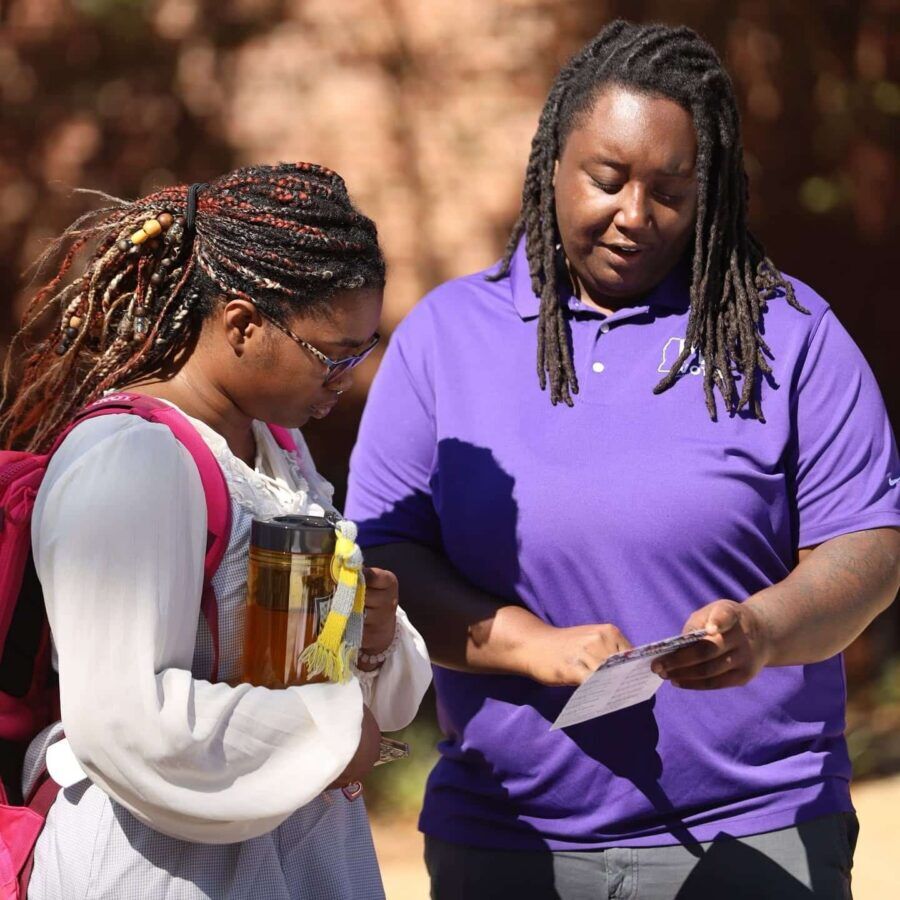
“This is not normal business. I mean there’s no reason for over 100 agents to be knocking on the doors of everyday Ohioans,” Ohio Organizing Collaborative board member Prentiss Haney told the Statehouse News Bureau.
“Demanding and accusing people of voter fraud as if it was a witch hunt and, and scaring them with the children, following them in their cars to school and to work,” Haney said. “I mean this was a full-out assault. I mean, we haven’t seen anything like this since Selma [Alabama]. And so this was completely politically motivated.”
According to Reuters, which uncovered the DHS investigations, Ohio was one of at least eight states—including Arizona, Colorado, Missouri, Connecticut, Nevada, Georgia and Michigan–that have been targeted as part of the Trump administration’s effort to gain federal control over elections.
Amid a pastiche of improvised law, weaponized policy and divided public opinion, President Trump’s creeping war on “the enemy from within” appears to be targeting even his most ardent supporters beyond city limits.
Rolling back the voting rolls
The U.S. Constitution places control of elections in the states’ hands and federal electoral law in Congress’. In February, the president declared his intention to “nationalize” or “take over” running elections. Trump asserted that a state “is an agent for the federal government in elections.”
While Trump’s executive order attempting to federalize elections was rolled back by the courts, one provision survived–giving the U.S. attorney general the power to prosecute “election crimes.”
In search of such “crimes” in Ohio and beyond, the Department of Justice is demanding the complete voter rolls from all states. The department is suing the 30 states that have since refused. Justice officials also promised to criminally charge state officials who failed to protect computerized voter databases.
Trump’s Department of Justice isn’t alone in its efforts to roll back voting protections. On April 29, the Supreme Court effectively ended the Voting Rights Act with its decision in Louisiana v. Callais. Within days, white legislators in Southern states began gerrymandering Civil Rights-era Black majority districts back into white majorities.
Other federal agencies have been directed to constrain voting in ways that will impact rural voters. In June, the U.S. Postal Service proposed a rule to refuse to deliver mail-in ballots in states that won’t hand over their voter rolls, which was blocked by a federal judge later that month.
Without ruling on the constitutionality of the president’s order restricting mail-in voting, the Supreme Court ruled August 27 on procedural grounds the administration could continue pursuing instituting the new rules.
Legal observers claimed the switch unlikely to affect the midterms, but the administration continues to threaten to block the USPS from mailing out ballots in states that refuse to provide a list of such voters. The next day a lower federal court blocked the administration’s electoral order for another two weeks, only a week before states are scheduled to send out mail-in ballots.
The Trump administration also joined an earlier Republican National Committee lawsuit against Mississippi’s policy of accepting mail-in and absentee ballots postmarked on Election Day. That lawsuit also failed.
Today, 1 in 4 rural voters use mail-in ballots, while 2 in 5 voters age 65 and older vote by mail.
Rural democracy shakened
The authoritarianism being pursued top-down appears to be finding its analogs bottom-up in some rural counties.
Ostensibly Republican strongholds, many rural districts are attacking the bases of their own communities’ civil trust. Election results are starting to get ignored, for one.
This year, the Central Valley agricultural community of Avenal, California, recalled its mayor and three of four city council members. The ousted officials ignored the results of the referendum and continue running the town more than three months after the election.
“It’s very concerning to me that we have a situation in our nation where if we don’t like election results, we say it’s rigged,” Cathy Darling, a former election official and chair of the board of the California Voter Foundation told the New York Times in August. “The behavior is being modeled at the highest levels in our nation.”
Elected officials are not the only ones ignoring the will of voters. In 2025, Chad Bianco, a Republican sheriff in Riverside County, California, seized nearly 650,000 ballots cast in California’s special redistricting election, claiming to investigate a ballot count discrepancy.
Distrust is getting sown by other means. In 2024, in Huron County, Michigan, three hours north of Detroit, community members accused a Republican election official in rural Michigan of a litany of misinformation-fueled violations, including manipulating election equipment somehow connected to the internet, sending voters multiple ballots in the mail, and stuffing ballot tabulators at the end of the voting day.
“I’ve heard about everything I could hear,” Theresa Mazure, the clerk for the 700 residents of Hume Township in Huron County, told Stateline.
I just shake my head. And when you try to explain, all I hear is, ‘Well, that’s just the Democrats talking.’ No, it’s the democratic process. I’m concerned about November. People think we’re the enemy. What do we do? How do we combat this? The mistrust was there, the seed was planted, and then it was fertilized and grew. I’m very angry about this, because we’re honest people. All we’re trying to do is our job.
Lindsay Schubiner is Director of Programs at Western States Center. She tells Barn Raiser: “What we’ve heard from grassroots partners in rural areas is that election denier groups are active and attempting to get involved in election administration directly. Many communities are concerned that election deniers could engage in voter intimidation at ballot boxes and polls.”
The intimidation can extend to violence.
“The past three elections have seen an unprecedented increase in the volume and intensity of safety threats to poll workers, advocacy groups, and other election-focused organizations,” says Che Johnson-Long, Community Safety Director at Vision Change Win, a self-described “Black-led team of Queer and Trans social justice consultants.” “From bomb threats to swatting to intimidation tactics, personnel involved in elections increasingly need to build risk assessment and mitigation skills,” Johnson-Long says.
Against national polls in favor of making voting easy for citizens, Republican voters see such efforts as to the Democrats’ advantage. The blowback in restricting voting extends far beyond Democratic cities. Trump’s demand on Congress to pass the Safeguard American Voter Eligibility (SAVE) Act would require every voter to provide proof of citizenship in person to register to vote or change one’s voter registration. Under the SAVE Act, a state ID or driver’s license would no longer suffice as valid identification
Claims from Trump and Republicans about noncitizens voting are disputed by the fact that it is already illegal for non-citizens to vote in federal and state elections, and the instances of non-citizens voting is less than one-tenth of one percent of the voting public.
A recent state audit in Utah found only 27 of the state’s two million voters were noncitizens and removed them from voter rolls. The audit also placed thousands of U.S. citizens in the conservative state, many who have voted for decades, in a position of having to prove their citizenship to state officials in order to vote.
Texas officials declared the 1.2 million voters there just placed on a “suspense” list for living at a new residence would still be able to vote if they also filled out a special declaration of residence at their voting precincts. Election day will tell if such forms will be made available at every poll.
Kerry Drake, writing in WyoFile, explained that the SAVE Act would punish rural voters, requiring them to drive long distances to register in person. An estimated, 44% of all eligible voters don’t have a U.S. passport, which, along with a birth certificate, the SAVE Act considers proof of citizenship.
According to American Communities Project, of the 15 community types that the group tracks, 62% of voters lack a passport in Evangelical Hubs, 61% of voters in the African American South, 58% of voters in Working Class Country, 53% of voters in Aging Farmlands and 53% of voters in Rural Middle America.
Where age meets place complicates rural voting in other ways. Rural counties are shifting older off an already aging baseline, with the elderly more likely to vote by mail. Indeed, 47% all rural voters voted early in 2020, half of those by mail.
The developing restrictions, appear targeted at Trump’s base as much as his opposition, harkening back to disenfranchisement tactics such as literacy tests and poll taxes.
Rural groups fighting for rural rights
To reverse these developments at the poll, rural organizers “are building off of a long legacy of informal safety systems, values-aligned neighborhood safety groups, aunties who made sure people make it to the polls safety, and church groups who have historically supported de-escalation at the polls,” says Johnson-Long.
Michael Chameides is the communications and policy director for the Rural Democracy Initiative, which works to help rural and small town communities build “civic infrastructure” and find commonalities across “ideological and racial divides.”
According to Chameides, the group’s grantees—168 organizations in 23 states—“lead successful campaigns to develop local leaders to run for office and helped elect pro-democracy champions.” [Full disclosure: Barn Raiser is a grant recipient of the Rural Democracy Initiative]
Rural communities today represent a much greater diversity of the population than stereotypes about it portray. Chameides cites these demographics:
- One-third of all voters live in small towns and rural areas
- 24% of rural people are not white
- 1 in 10 rural counties are majority Black, Indigenous or people of color
- 4.9% identify as Native American, Alaska Native, and Native Hawaiian
- The rural Hispanic population has grown 20% since 2010
- 37% of voters who are Black, Indigenous and people of color live in small cities and rural areas
With Rural Democracy Initiative support, Mississippi Votes built a network of attorneys to protect voting rights. In 2024 the organization trained poll monitors at 50 locations with histories of voter suppression.
In 2024, voters from the Navajo Nation and the Fort Apache Indian Reservation in Apache County, Arizona, saw their provisional ballot rejections increase 710%. Since then, Arizona Native Vote, another RDI grantee, and tribal leaders have helped thousands of voters correct address errors and trained local organizers to educate voters about registration rules.
Vision Change Win launched a two-part Building Our Own Electoral Safety Training Series (BOOTS) aimed at electoral safety in the field, de-escalation, safety for canvassers, online rapid response systems, and organizational security culture. VCW sees this work in building capacity “to make a lasting impact in the struggle for liberation and social justice.”
“Rural electoral organizers face unique challenges,” Johnson-Long of Vision Change Win says. “With increasing threats, organizers can make a big impact, Johnson-Long continued. “[We’re] building safety infrastructure where often times there is none.”
In Oregon, the Rural Organizing Project, has helped publish the STAND Election Guide that covers statewide ballot measures in easy-to-understand language. The guide also offers help on how to conduct voter conversations.
The elections that need to be protected have also always been only one of many gateways to broader rural democracy. Freedom isn’t just an ideal written on paper, rural organizing’s daily work demonstrates, but a lived negotiation. The art of the White House deal implies, if we’re not organized enough, so is freedom’s destruction.

No comments:
Post a Comment