1). “Resisting Trump's Teen Pregnancy Crusade”, Jul 14, 2026, Kylie Cheung, Abortion, Every Day, at < https://jessica.substack.com/
2). “Lindsey Graham's Cruel Legacy”, Jul 13, 2026, Jessica Valenti, Abortion, Every Day, at < https://jessica.substack.com/
3). “HHS Changes to Teen Pregnancy Grant Funds Challenged by Grantees”, Jul 14, 2026, Sandhya Raman, Bloomberg Law, at < https://news.bloomberglaw.com/
4). “Federal health agency cancels most of its teen pregnancy prevention grants”, Jun 29, 2026, Kelcie Moseley-Morris, Wisconsin Examiner, at < https://wisconsinexaminer.com/
5). “California Lawmakers Look to Make Abortion Shield Laws Less Dependent on Who's Governor: As states with abortion bans target California physicians who prescribe abortion pills across state lines, Democrats want to lock in protections for doctors, no matter who the next governor is.”, Jul 14, 2026,Jackie Fortiér, KFF Health News, KQED (from KFF Health News), at < https://www.kqed.org/news/
6). “Florida budget includes $29.5 million for the Florida Pregnancy Care Network: The state program that promotes controversial anti-abortion pregnancy resource centers.”, Jul 10, 2026, McKenna Schueler, Creative Loafing Tampa Bay (Originally published at Orlando Weekly), at < https://www.cltampa.com/news/
7). “Unregulated Pregnancy Clinic Industry Nearing $2 Billion in Annual Revenue, Memo”, Nov 13, 2025, Anon, Reproductive Health and Freedom Watch, at < https://
~~ recommended by desmond ~~
Introduction by desmond: The struggles over women's reproductive health care rights and abortion access has seen the Forced-pregnancy / Forced-birth movement become ever more shrill, drastic and draconian. In Item 1)., “Resisting Trump's Teen ….”, Cheung surveys the developing emphasis on forcing and hoodwinking young women into accepting the world view and expected personal actions of the Forced-pregnancy / Forced-birth movement. Similarly, Jessica Valenti looks at developments and points out the ugly actions of the now deceased and unlamented by women's rights advocagtes, right-winger Lindsey Graham in Item 2)., “Lindsey Graham's Cruel Legacy”. The recent moves towards forcing teenage girls to bear children are discussed in Item 3)., “HHS Changes ….” and in Item 4)., “Federal health agency cancels ….” the discussion in Item 4). includes facts about the recent lawsuits filed by abortion rights and civil rights organizations against the Trumpian cancellation of funding for some 58 effective programs.
In some good news Item 5)., “California Lawmakers Look ….”, analyzes the move in the California state legislature to make refusal to provide information or arrest medical personnel, mostly for providing medication abortion materials to women in the Dark Ages Red States. Another major issue is the continuing growth of Crisis Pregnancy Centers (CPC), that provide phony information and sometimes provide often incompetent ultra-sounds. In Item 6)., “Florida budget includes ….”, there is a report on $29.5 million in Florida state funds to often corrupt CPCs and Item 7)., “Unregulated Pregnancy Clinic Industry ….” notes that a total of over $2.5 Billion has been raked in by the CPC industry.
xxxxxxxxxxxxxxxxxxxxxxxxxxxxx
Resisting Trump's Teen Pregnancy Crusade
Click to skip ahead: AED Exclusive: Meet ACT’s New Executive Director; In the States: Iowa, Illinois, Florida, Missouri, California; New Suit Fights Trump’s Teen Pregnancy Cuts; On Capitol Hill: Attacks on Planned Parenthood, Abortion Pills; In the Courts: Debunking ‘Abortion Pill Reversal’
AED Exclusive: Meet ACT’s New Executive Director
It’s never been more important to protect telemedicine abortion—which accounts for nearly 30% of all abortions in the U.S. and nearly all abortions in banned states. That’s where the Abortion Coalition for Telemedicine (ACT) comes in. The group has been advancing telehealth abortion for years, and just named its new executive director: Amanda Allen, co-founder of the Lawyering Project and a member of the Abortion Care Network’s board of directors.
Abortion, Every Day had the chance to chat with Allen today about the group’s exciting and challenging work helping patients in the nation’s most restrictive states—while attacks on this essential health service are at an all-time high. “Telemedicine abortion is about privacy and freedom; that is just terrifying to the opposition,” Allen says.
“That’s why abusers are bringing lawsuits against their victims to try to stop it, why they’re relying on junk science. They’re trying to put the genie back in the bottle, but all the data shows that’s just never going to happen. In 50+ years, the anti-abortion movement never once gave up, and we can’t give up either.”
ACT’s work to protect providers couldn’t be better timed: Louisiana has an extradition order out for the group’s co-founder—the trailblazing Dr. Margaret Carpenter. And Texas is seeking over $100,000 in damages from the provider. The goal is clear: anti-abortion states want to make an example of certain providers and chill access. But telemedicine abortion isn’t going anywhere.
“Extradition threats are a desperate, final bid to weaponize the legal system against providers,” Allen said. But shield laws, she says, are working exactly like they’re supposed to: “Governors in two states relied on their shield laws in refusing extradition requests from anti-abortion politicians.”
That’s not to say there isn’t a major fight ahead—Republican AGs hope they can convince the Supreme Court to eliminate shield laws altogether. And conservative misinformation campaigns are taking a toll, exacerbating post-Dobbs chaos and confusion. One recent survey showed under a third of respondents knew about telemedicine abortion at all. “There’s so much more public education to be done,” Allen says.
The good news: ACT and Allen aren’t about to back down. Amy Hagstrom Miller, president and CEO of Whole Woman’s Health, says, “Anyone who knows Amanda knows she doesn’t back away from a fight.”
You can learn more about ACT’s work and how to support them at their website.
In the States: Iowa, Illinois, Florida, Missouri, California
No state is an island. That means an abortion ban’s impact is never limited to one state’s borders. Just look at Iowa and Illinois.
This week marks the second anniversary of Iowa’s six-week abortion ban taking effect, and, per new data from Chicago Abortion Fund, the fund saw a 177% increase in clients from Iowa from July 2022 to July 2024. Over the last two years, CAF has spent $774,000 supporting Iowans coming to Illinois for abortion care.
CAF Executive Director Megan Jeyifo noted that “with those increased travel distances, we also saw increases in costs as our callers had to navigate long drives, extended periods of childcare coverage, and additional hotel stays.”
“Iowa is a textbook example of how immediately neighboring states see the ramifications of an abortion ban next door. … No one should have to leave their home state to access basic medical care they want and need.”
At the same time Iowa’s ban turns two, Planned Parenthood North Central States’ (PPNCS) Iowa City facility is set to close on July 31. This will render Eastern Iowa a health care desert, Iowa Starting Linereports. Planned Parenthood’s Des Moines facility will become the state’s sole physical clinic, compounding Iowa’s long-simmering care crisis. Iowa already has the lowest rate of OBGYNs per capita—the six-week ban has only worsened this.
PPNCS leaders have assured patients that virtual services will remain available to them. But PPNCS’ Sheilahn Davis-Wyatt acknowledged the grave, long-term impact of losing physical facilities on public health infrastructure: “When access is cut off, care is not replaced. It simply disappears.”
In states where reproductive health clinics are shuttering, anti-abortion crisis pregnancy centers are thriving. In Florida, for a third year in a row, the state’s budget will fund Texas-based CPC network Human Coalition—for so-called “telecare” services. Like the rest of CPCs’ work, the ultimate goal isn’t to serve patients, but to prevent as many people from having abortions as possible and collect their data in the process. The state has earmarked $29.5 million in taxpayer funds for the Florida Pregnancy Care Network.
Within two years of the end of Roe, anti-abortion states poured at least $500 million into CPCs. Reproductive Health and Freedom Watch estimates they brought in $1.9 billion in 2023. CPCs are projected to have received $2.5 billion in revenue in 2025. Despite all this state funding, anti-abortion lawmakers are increasingly pushing legislation to shield CPCs from any amount of regulation or investigation:
In Missouri, GOP Gov. Mike Kehoe just signed the god-awful ‘Born Alive’ bill we’ve been warning you about all year. ICYMI, the law threatens providers with the death penalty if they “knowingly perform or attempts to perform an overt act that kills a child born alive.” Obviously, this is not a thing: Republicans are relying on fantastical anti-abortion imagery to stigmatize and misrepresent later abortion.
While the ‘born alive’ abortion is straight out of conservative imagination, the consequences are very real. Grieving parents in devastating, highly complex medical situations could be robbed of their last quiet moments with their child—while doctors are forced to perform pointless and painful medical interventions on fatally ill newborns. Those who don’t could be charged with first-degree murder.
Abortion Action Missouri called the new law “blatantly unconstitutional and medically nonsensical.”
And in California, some good news: a new bill would require governors to deny extradition requests from anti-abortion or anti-trans states for California doctors who prescribed medication abortion, or administered gender-affirming care.
Gov. Gavin Newsom has adamantly refused to comply with Louisiana’s extradition request for a California doctor for allegedly mailing the pills, while Xavier Becerra, the Democratic nominee for governor, has also said he’d refuse. But as one nurse practitioner and advocate for the bill put it, “Protecting providers from prosecution should not rely on shifting political winds or a single person’s decision.”
That’s where bills like AB 2164 come in, to protect providers long after Newsom’s term. AB 2164 is currently being heard in committee.
New Suit Fights Trump’s Teen Pregnancy Cuts
The Trump administration wants to eliminate the nation’s Teen Pregnancy Prevention Program (TPPP), a federal grant initiative that aims to reduce adolescent pregnancy and STIs. Last year the administration called the TPPP, a bipartisan program that’s dramatically reduced teen pregnancy since its establishment in 2009, “radical indoctrination.” Then, last month, the administration terminated 53 of 67 TPPP grants—a whole two years before they were set to expire.
The administration also announced a shift to ideologically driven, non-evidence-based abstinence-only education program. (For instance: teaching girls about period tracking instead of birth control.)
Thankfully, Democracy Forward—joined by groups like Planned Parenthood and the Sexuality Information and Education Council of the United States (SIECUS)—filed a lawsuit to stop Trump’s war on TPPP. Some cause for optimism: the organization successfully sued the first Trump administration for attempting to defund TPPP.
Democracy Forward’s Skye Perryman points out, “An overwhelming majority of Americans believe young people should receive honest, inclusive sexual education.”
“This is a backdoor, ideologically-driven effort disguised as education, defying Congress’s clear directive that these grants support medically accurate, age-appropriate, evidence-based programs.”
Attacks on teen pregnancy prevention and sex education aren’t a fringe position among the right: earlier this year, conservatives railed against new data revealing that the teen birth rate is going down. One Fox News analyst called it a “problem” that teens are having less babies.
As a reminder, most teens are impregnated by adult men.
The Trump administration’s crusade to boost teen pregnancy is part and parcel of their fascist, pro-natalist agenda, as well as the far-right Heritage Foundation’s long-term plan to deny future generations of girls a future outside of motherhood.
On Capitol Hill: Attacks on Planned Parenthood, Abortion Pills
This month, the 2025 budget law that defunded Planned Parenthood and abortion providers across the country expired, and Congress neglected to renew the ‘defund’ provision. But, as Planned Parenthood warned, Republicans aren’t anywhere near finished pushing their backdoor, national ban. Watch out for a major lobbying push this week from Americans United for Life, Live Action, Students for Life Action and the National Right to Life Council.
The groups will hold a press conference on Capitol Hill alongside a handful of extremist GOP Congress members, calling for the restoration of the defund provision.
Another Capitol Hill item to keep an eye on: this Wednesday and Thursday, the Senate will host confirmation hearings for Attorney General nominee Todd Blanche, who currently serves as acting AG. Expect abortion to play a starring role in his hearings.
Sen. Josh Hawley has already said he’ll press Blanche on his position on active lawsuits against Trump’s FDA to try to stop medication abortion. For their part, Democrats should hammer Blanche on the letters he’s received from top ‘pro-life’ groups, calling on him to end shield laws and the shipment of abortion pills across state lines.
Whatever Blanche says during his hearings, we already know where he stands. In his tenure since April, the DOJ released a 900-page report—lying that violent anti-abortion activists who faced prosecution under the Biden administration were merely targeted for their Christian beliefs.
In the Courts: Debunking ‘Abortion Pill Reversal’
Three years ago, California sued Heartbeat International and RealOptions Inc. for pushing disinformation about abortion. Specifically, these CPCs have been telling prospective abortion seekers—without evidence—that medication abortions can be reversed, putting their health and safety at serious risk. A bench trial for the case in Alameda County Superior Court finally began at the end of last month, and the opening arguments have been nothing if not telling.
Led by Deputy Attorney General Hayley Penan, California has focused its efforts on discrediting the pseudoscience behind ‘abortion pill reversal,’ a regimen that claims a medication abortion that’s underway can be reversed after taking the first pill. As Penan’s expert witnesses noted, there’s simply no credible evidence of this.
Meanwhile, Thomas More Society attorneys are manipulatively claiming that if California supports a “woman’s right to choose,” they should support women choosing APR. Of course, when it comes to our health and safety, we should be able to make informed choices that don’t actively endanger us—and we should know when we’re receiving information from actual doctors or from conservative activists.
Last week, Thomas More Society announced that three different women who claim they underwent APR and were able to continue their pregnancies and become mothers will testify. The women, of course, are known anti-abortion activists—and there’s simply no way to verify their claims.
While this case is in California, it has massive nationwide implications for whether CPCs will be able to lie and endanger women with impunity. This suit is one of several involving anti-abortion activists who claim restrictions on their ability to harass or lie to patients violate their ‘free speech’ rights.
xxxxxxxxxxxxxxxxxxxxxxxxxx
Lindsey Graham Dies; Idaho Abortion Ban Heads to Ballot
Click to skip ahead: Lindsey, Mitch & Steve: This Week in Shitty Men; Abortion is Officially on Idaho’s November Ballot; In the States: Missouri, South Carolina, Ohio, New Hampshire & More; New Campaign Pressures Women to Carry Doomed Pregnancies; CNBC: Banned States Are the Worst Places to Live
Lindsey, Mitch & Steve: This Week in Shitty Men
As I’m certain you know by now, U.S. Sen. Lindsey Graham died this weekend. I’ll best remember the South Carolina senator as someone who—up until recently—introduced a particularly cruel abortion ban every session since 2013.
Graham’s 15-week national ban had no exceptions for fatal fetal abnormalities—meaning it would force women to carry doomed pregnancies to term. And if Graham’s legislation had passed, rape and incest victims across the country would only be able to access care if their assault was reported to the police.
In recent years, Graham stopped calling his ban a ban; instead, he insisted the legislation was a “national minimum standard.” Which, of course, is a ban. All of which is to say: I hope Lindsey Graham rests with as much peace as he gave American women.
Speaking of putrid politicians: let’s talk about Mitch McConnell, and whether the anti-abortion movement knows something we don’t. In a now-deleted social media post, National Right to Life mourned the passing of McConnell—who is very much alive, according to Republican leadership. The post thanked him for “his decades of steadfast leadership in defense of unborn children.”
My guess: the group had an obit pre-written and someone hit publish too early. But given the ongoing questions about McConnell’s health…it’s notable.
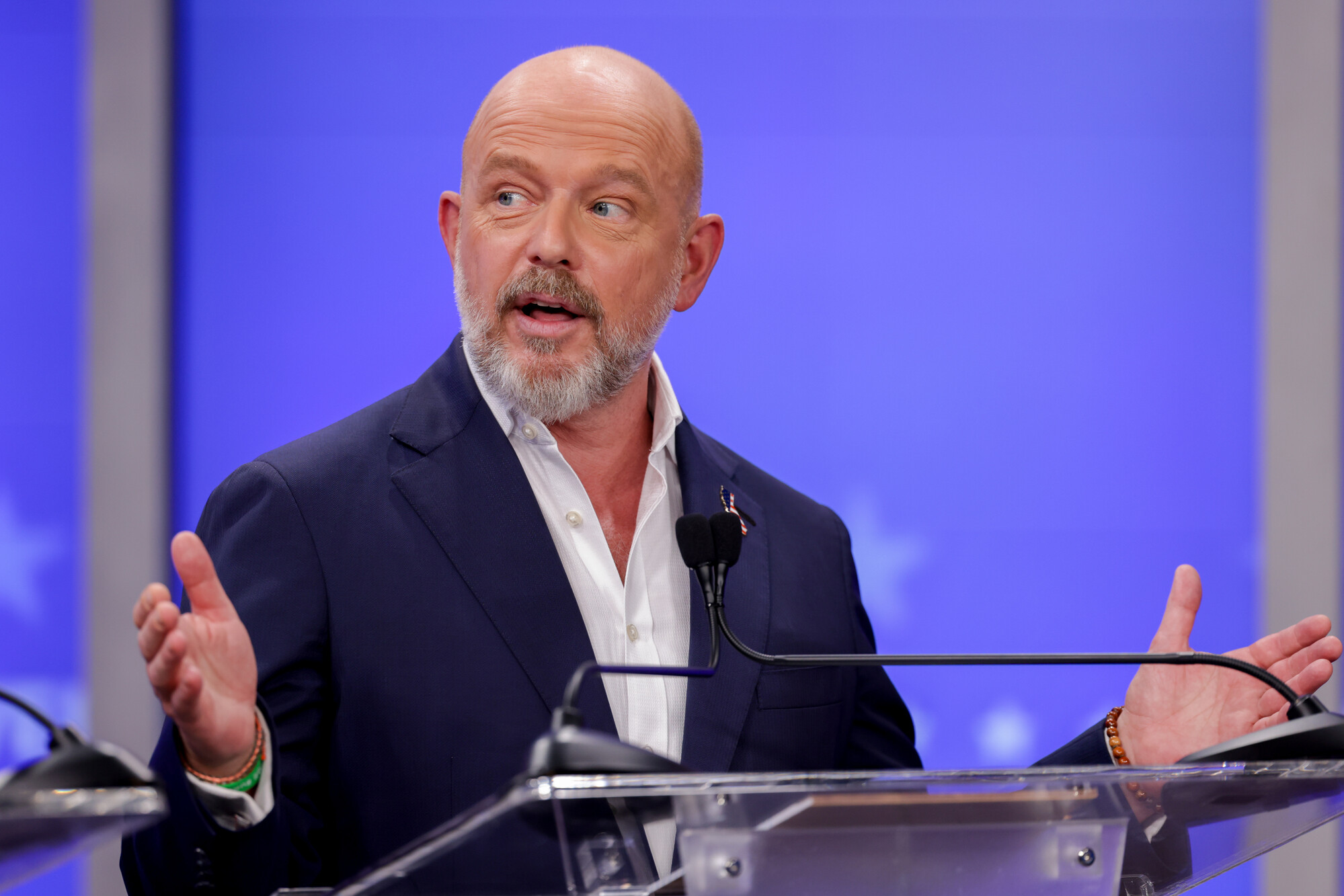
Our last shitty man of the day nearly gave me a rage aneurysm. Remember Alabama Attorney General Steve Marshall? This is the guy who had a secret plan to prosecute women who take abortion pills with “chemical endangerment of a child.” You see, Alabama’s ban doesn’t allow him to arrest women for abortion—so Marshall thought this could be a clever workaround. (Until Abortion, Every Day’s coverage forced him to back down—ha!)
Well, the same man who wanted to arrest women for taking abortion pills is now lecturing the FDA for not protecting them from the medication. In an interview with the conservative Daily Signal, Marshall cited the junk ‘study’ conservatives keep using to smear mifepristone, and knocked the Trump administration for moving too slowly on abortion pills:
“I think calling on [the White House] to see it beyond the political lens, but about being able to protect women across the country from a drug that has obviously had adverse consequences.”
In keeping with shameless rank hypocrisy, Marshall also touted his other efforts to “protect” women—like petitioning the EPA to list abortion pills as a water contaminant, and threatening pro-choice websites with legal action.
And let’s not forget: this is the same AG who argued he can stop women from leaving Alabama for abortion care—comparing it to the travel restrictions placed on registered sex offenders. So the Republican positioning himself as women’s biggest protector is also the guy who wants to throw women in jail for crossing state lines. 🤡
Abortion is Officially on Idaho’s November Ballot
Well, it’s official: Idaho voters will have the chance to repeal the state’s total abortion ban this November. Idahoans United for Women and Families announced today that the over 110,000 signatures they collected for the Reproductive Freedom & Privacy Act “are the most collected for a qualified ballot initiative in Idaho history.”
It’s an incredible accomplishment that speaks volumes about the activists in Idaho—and underscores just how unpopular abortion bans really are.
As I laid out last week, Idaho voters can’t use citizen-led ballot initiatives to change their state constitution, but they can use them to change the law. If passed, the Reproductive Freedom & Privacy Act would allow abortion until ‘viability’—after which, ending a pregnancy would require a “medical emergency.”
You all know how I feel about language like this: it leaves the most vulnerable patients behind. I also worry about squandering a prime political moment when voters are furious. After all, Idaho has seriously suffered under this ban—over 30% of OBGYNs have fled the state, maternity wards have shuttered, and maternal health deserts have spread. This law is not popular.
And listen, I understand the urgency to restore care of any kind, and the fear of pushing too hard in a red state. I’m guessing that’s why this ‘viability’ exception requires a “medical emergency”—which is a much higher standard than we’ve seen in other states. Virginia’s ballot measure, for example, would allow abortion after viability to protect a patient’s physical and mental health; Nevada’s allows it “when needed to protect the life or health of the pregnant patient.”
My guess is that Idaho advocates don’t want to leave room for interpretation, or give anti-abortion groups an opening to claim the law would allow abortion “up until birth.” But here’s the thing: they will say that regardless.
Don’t get it twisted: I realize it’s very easy for me—in New York, behind a laptop—to push for abortion without any government interference. I don’t know what it’s like to organize in a red state!
What I do know, though, is that Americans overwhelmingly (81%) don’t want the government involved in abortion at all. And that Idaho advocates have been using that precise message to great success. As Idahoans United Executive Director Melanie Folwell told the Idaho Capital Sun:
“We have known from early on this issue was deeply personal and had the ability to break through divisive partisan frames…When it comes to making the tough decisions in our lives and in our families, we call the shots and not the government. That is something that has resonated in every corner of the state.”
It’s a winning message—one I really do believe can win at the ballot without restrictions.
For more on ‘viability’ and pushing for abortion without compromise, read this terrific guest column from Erika Christensen of Patient Forward:
In the States: Missouri, South Carolina, Ohio, New Hampshire & More
Missouri Republicans are appealing to the state Supreme Court to restore the abortion restrictions that a lower court just struck down. tl;dr: Missouri Republicans are desperate to stop women from ending their pregnancies, even if it means ignoring the will of the people and their own state constitution.
Quick recap: Missouri voters codified abortion protections in 2024. Conservative lawmakers responded by making that constitutional amendment nearly impossible to actually use—enforcing zoning requirements, licensing hurdles, restrictions on prescribing abortion pills, and more. Then, last month, a judge struck most of it down.
Judge Jerri Zhang’s ruling opened the door for increased access in the state, and Republicans are furious. Now they’re appealing directly to the state Supreme Court—with Gov. Mike Kehoe, Attorney General Catherine Hanaway, and the Department of Health and Senior Services all signing on.
All of this is happening, by the way, at the same time that Missouri Republicans are trying to reinstate a near-total abortion ban by putting the issue back on the ballot—under the name Amendment 3. Which yes, is the same name as the pro-choice measure voters passed in 2024! If the courts don’t give the GOP what they want, they’re hoping to trick voters into delivering their ban instead.
The abortion rate went down by double digits in South Carolina, the Post & Courier reports. There’s been a 16% decrease since the state passed a six-week abortion ban in 2023—which went into effect thanks to a ruling by an all-male state Supreme Court.
Most abortions in the state took place ahead of that six-week cut-off: of the 2,534 reported abortions that occurred in 2025, only 51 happened later. That should give you a sense of how ineffective “exceptions” are. There were less than two dozen abortions for fatal fetal abnormalities, for example, and less than five were performed on rape victims.
Still, anti-abortion activists want the law to be even stricter. Extremists calling for “equal protection” are hoping to pass a law that would punish abortion patients with execution or life in prison—legislation that’s been seriously debated in committee. And South Carolina Citizens for Life is calling for abortion to be banned after a “diagnosable pregnancy.” (As I reported last year, that particular language is meant to open the door for restrictions on contraception.)
“Hoosiers have watched 13 rural labor and delivery units close since 2020, leaving over half of Indiana rural counties without one. Black women die more than one and a half times more often than the state maternal mortality average. And the exodus compounds itself: after Dobbs, medical residency applications to states like ours dropped by at least 10%, and primary care health professional shortage areas swelled to 169.”
- Regional Planned Parenthood CEO Rebecca Gibron, Indiana Capital Chronicle
Planned Parenthood Southwest Ohio Region is suing the state health department, accusing it of blocking a routine license transfer for over a year and a half—and putting abortion access in the region at risk in the process.
The organization says when it bought a Dayton clinic, they filed for change-of-ownership right away—but the Ohio Department of Health has sat on that paperwork ever since. The only reason the group is able to provide care at the location is because the previous doctor has agreed to keep his own license active in the meantime. But as president Nan Whaley points out, without a license in their own name, the clinic could be shut down “on a whim.”
The organization actually got an injunction back in 2022 that bars the state from revoking or refusing to renew their license—so now they’re asking a court to hold the health department in contempt of that order. Whaley didn’t mince words:
“The Republicans at the State House don’t like the fact that Ohioans in 2023 passed a referendum that protects abortion access in Ohio. So, they decide not to do their job at all, and that’s what we’re seeing right now. We have a right to a license.”
Finally, some good news out of New Hampshire, where Republican Gov. Kelly Ayotte vetoed HB 232—which codified an employee’s right to refuse to perform or assist with an abortion based on a “sincerely held religious belief or moral conviction.”
Planned Parenthood New Hampshire Action Fund warned that the bill would have allowed patients to be turned away at hospitals and health centers, and that it targeted health care centers that provide abortion care.
Ayotte’s veto message made clear the bill was redundant at best: federal law already protects medical professionals who don’t want to perform or assist in abortions.
“This federal right of conscience protects those in New Hampshire who work for abortion providers. Therefore, this bill is unnecessary and does not create any greater protections for New Hampshire medical professionals.”
Quick hits:
Over in South Dakota, columnist Rick Snedeker blasts state leaders for passing the ‘Baby Olivia’ law and indoctrinating schoolchildren;
Abortions in Nebraska rose by 8% in 2025—largely thanks to out-of-state patients;
And from abortion to vaccines, Baltimore Banner columnist Leslie Gray Streeter shares the reasons she’ll never leave Maryland.
New Campaign Pressures Women to Carry Doomed Pregnancies
Live Action—the extremist group behind Baby Olivia—has released a new short documentary pressuring women to carry doomed pregnancies to term. Take a deep breath, and let’s get into it.
The video (which I won’t be linking to) follows two couples whose pregnancies were diagnosed with anencephaly, a fatal condition in which parts or all of a fetus’s head and brain are missing.
In their release, Live Action gives the 18-minute short a somber title: “When A Preborn Baby Has a Terminal Diagnosis.” But the title on YouTube gives away the group’s real goal: “Would You Abort a Terminally Sick Baby?”
That’s right—this video exists to shame women who end nonviable pregnancies. The description doubles down: “abortion only serves to bring more trauma to the family and treats the baby as less valuable or less human than a ‘healthy’ child.”
If you’ve been reading for a while, you know this tactic. I started covering it back in 2023 in my Calculated Cruelty series (Part I, II, III). But here’s the short version: conservatives want to ban abortion in cases of fatal fetal abnormalities, eliminate prenatal testing altogether, and paint women who end doomed pregnancies as “killing” their “disabled children.”
I hate to give Live Action any oxygen, but the language they use will inevitably end up in legislation. For example, the group claims it’s “beneficial” for women’s mental health to carry nonviable pregnancies to term—and to give birth to dying infants. How long do you think it will take before “studies” making that exact claim show up in your statehouse?
That’s not a hypothetical: calling nonviable pregnancies “pre-viable” has already made it into law, as has rebranding fatal fetal abnormalities as a “life-limiting diagnosis.” The goal is to soften what these diagnoses actually mean—assuming women are told about them at all.
CNBC: Banned States Are the Worst Places to Live
CNBC released its annual list of “America’s 10 Worst States to Live In,” and nearly every single one has an abortion ban. The list names Alabama, Arkansas, Indiana, Louisiana, Oklahoma, Tennessee, Texas—all of which have total abortion bans—and CNBC explicitly cites restrictions as part of why states made the list. In Oklahoma, for example, CNBC points out that the ban is hurting business, “increas[ing] net migration outflows, particularly among single adults.”
The list also includes Georgia, which has a six-week ban, and Utah, which currently has an 18-week ban while a total ban is being fought in the courts. Missouri is the only state on the list where abortion is technically legal—though you all know how chaotic access has been there.
As you can imagine, conservative media outlets are furious about the bad grades. Newsbusters sniped, “so being anti-baby is pro-business.” I don’t know why they’re surprised: of course abortion bans are bad for business! Turns out doctors don’t want to practice where they can be prosecuted for doing their jobs, workers don’t want to raise families somewhere they could bleed out in a parking lot, and college students don’t want to go to school in a state that doesn’t see them as fully human.
That’s not “woke” data—it’s the reality of Republican repro policies.
xxxxxxxxxxxxxxxxxxxxxxxxxxx
HHS Changes to Teen Pregnancy Grant Funds Challenged by Grantees
A group of local governments and health groups filed a lawsuit against the Trump administration Tuesday seeking to block funding changes to the federal program dedicated to preventing teen pregnancy.
The suit, filed in the US District Court for the District of Columbia, argues that changes implemented by the Department of Health and Human Services’ Office of Population Affairs would ineffectuate the Teen Pregnancy Prevention Program. In June, the HHS terminated 53 current TPPP grants and diverted $68 million in funds into new funding announcements that seek applications that align with the administration’s priorities.
The TPPP provides five-year grants to community organizations and state and local health departments that are used to reduce pregnancy and the spread of sexually transmitted infections among teenagers and young adults.
“Defendants relied on factors inconsistent with the statutory criteria, failed to consider important aspects of the problem of reducing teen pregnancy, and changed course without regard for the substantial reliance interests of awardees, program beneficiaries, and the broader public,” the filing states.
The plaintiffs include Planned Parenthood of the Heartland, the Sexuality Information and Education Council of the United States, Hennepin County, Minn., and King County, Wash.
Democracy Forward Foundation, Public Citizen Litigation Group, and Dunn Isaacson Rhee LLP are representing SIECUS and both counties, while Planned Parenthood Federation of America is representing its affiliate.
The plaintiffs say the changes are arbitrary and capricious under the Administrative Procedure Act and are seeking a preliminary injunction to reverse the terminations and block the new funding opportunity changes.
The complaint says the plaintiffs were harmed by the implementation of the 2026 policy, which prohibits discussion of gender ideology and diversity, equity, and inclusion and requires lessons on “sexual risk avoidance” as a condition of receiving funding.
“King County is a national leader in evidence-based sexual health education, helping achieve some of the lowest unintended pregnancy rates among young people in the country,” said King County Executive Girmay Zahilay. “The Trump administration’s decision to terminate our grant early forces us to halt development of a new education program, undermining proven public health efforts and disregarding the health and well-being of young people. We are standing up for our young people and communities against this ideological attack and will continue fighting to protect access to accurate, effective sexual health education.”
“The Trump Administration is interfering with a long-running, successful program to reduce teen pregnancy, “ said Cormac Early, attorney at Public Citizen Litigation Group, in a statement. “HHS’s new policy flouts Congress’s directive that the TPP Program be guided by evidence – not ideology – and undermines the goal of the statutory program: preventing teen pregnancy.”
The department didn’t immediately reply to a request for comment.
Democratic lawmakers sent two letters to HHS Secretary Robert F. Kennedy Jr. in early July seeking a rationale and justification for the terminated grants and the issuing of the new funding opportunities.
“That King County program asked 12-year-olds to consider the question: ‘How can I help my partner enjoy sex more?’ We’re not funding that, Congresswoman,” HHS responded at the time to critiques of the grant changes.
The case is Hennepin County v. HHS, D.D.C., No. 1:26-cv-02460, complaint filed 7/14/26
xxxxxxxxxxxxxxxxxxxxxxxx
Federal health agency cancels most of its teen pregnancy prevention grants • Wisconsin Examiner
A spokesperson for U.S. Health and Human Services confirmed to Stateline on Friday that the agency is canceling 53 out of 67 grants, worth about $68 million, under the Teen Pregnancy Prevention Program, affecting grantees in more than two dozen states.
A list obtained by Stateline of canceled grants includes those awarded to universities, community organizations, city and state health departments and Planned Parenthood affiliates in states such as Arizona, Montana, Michigan, Texas and West Virginia. The grants were canceled two years before their expiration dates because the programs did not align with agency priorities, according to one of the grantees who received a termination notice.
The program is part of the agency’s Office of Population Affairs and is a “national, evidence-based grant program that funds diverse organizations working to prevent teen pregnancy across the United States,” according to the HHS website. The agency provides funding to programs that develop and evaluate innovative approaches to prevent teen pregnancy as well as to prevent sexually transmitted infections among adolescents, and to promote positive behaviors.
Ayana Bradshaw, president and CEO of AccessMatters in Philadelphia, told Stateline her organization received the termination notice of its $1.2 million grant on Friday, and it was effective the same day. Bradshaw said the letter cited a misalignment with agency priorities, specifically that the program “normalizes or promotes sexual activity for minors.”
AccessMatters’ Adolescent Health Initiative is entirely funded by the federal grant and provides free sexual and reproductive health programs to more than 1,100 teens between the ages of 13 and 19. The program provides information, education and referrals for healthcare as needed.
“This is devastating for the youth that we serve,” Bradshaw said. “It also impacts us as an organization, our staff, and it impacts the partners that we had who supported us in implementing this program.”
During the first administration of President Donald Trump in 2017, HHS took the same action, ending grants for more than 80 recipients two years before they were set to expire. Legal advocacy organization Democracy Forward sued the administration on behalf of several grantees and won a permanent injunction after courts ruled the action violated agency regulations.
The Trump administration identified the teen pregnancy program as one to cut in its 2025 budget request, and it was included in the final 2026 appropriations bill. The language accompanying that bill said grants for sexual risk avoidance must use medically accurate information and teach youth about risky behaviors “without normalizing teen sexual activity.”
Teen birth rates have fallen dramatically in the past 20 years, according to federal Centers for Disease Control and Prevention data — about 72% since 2007. Experts attribute that decline to fewer teens deciding to have sex earlier, sex education and better access to contraception, especially for girls.
The agency also released two new grant programs this week, one of which is titled “Replicating Effective Teen Pregnancy Prevention Programs,” with $63.4 million available to be awarded. The other is “Rigorous Impact Evaluation of Programs to Prevent Teen Pregnancy and Achieve Optimal Health,” with $8.3 million available.
Both opportunities tell applicants that they must pass an alignment review process to ensure they meet agency priorities. That language mimics Trump administration language in the 2027 Notice of Funding Opportunity for Title X grants, which a national family planning organization filed a lawsuit over last week, arguing that it violates Congress’ intentions and administrative procedure.
Tara Mancini, director of public policy at reproductive health advocacy organization Power to Decide, said she expects the administration’s decision to cancel the grants to be challenged again in court.
Stateline reporter Kelcie Moseley-Morris can be reached at kmoseley@stateline.org.
This story was originally produced by Stateline, which is part of States Newsroom, a nonprofit news network which includes Wisconsin Examiner, and is supported by grants and a coalition of donors as a 501c(3) public charity.
xxxxxxxxxxxxxxxxxxxxxx
California Lawmakers Look to Make Abortion Shield Laws Less Dependent on Who's Governor
Thirteen states have banned abortion outright, and 28 other states ban abortion somewhere between six weeks and viability. At the same time, other states that allow abortion have enacted shield laws to protect doctors and nurses from liability when they prescribe across state lines.
People living in states with total abortion bans are increasingly getting abortion pills prescribed via telehealth, from 74,000 abortions in 2024 to 92,000 abortions in 2025, according to the Guttmacher Institute, citing numbers from its Monthly Abortion Provision Study.
Critics of shield laws say that states have a legitimate interest in enforcing their own statutes and that such laws represent an attempt by some states, like California, to nullify the legal decisions of others.
“If California says, ‘We’re not going to honor any other state’s laws. We’re going to ship abortion pills into your states. You can’t have a law that says abortion is illegal,’ I don’t know — that doesn’t seem like a workable situation,” said Greg Burt, who is vice president of the California Family Council and has spoken in opposition to shield laws at the State Capitol.
Twenty-one other states and Washington, D.C., have similar shield laws, but Arizona, California, Michigan, North Carolina and Pennsylvania rely on an executive order, which could be reversed by a successor, according to the Guttmacher Institute.
Amanda Barrow, a senior staff attorney at the Center on Reproductive Health, Law, and Policy at UCLA Law, said passing extradition protections would put California on firmer footing because, an executive order “could be revoked by a governor who is anti-abortion or anti-gender-affirming-care.”
Hilton has said he would do just that if elected.
“Just as I wouldn’t want to see Louisiana coming in and undermining something that we voted for here in California,” the GOP candidate told KQED in January.
During a May gubernatorial debate, Becerra said he was strident about protecting reproductive rights as the state’s attorney general.
“Absolutely no,” Becerra said of allowing California physicians to be extradited.
This year, Hawaii added gender-affirming care to its existing shield laws. And Oregon expanded extradition protections, including banning law enforcement from cooperating with out-of-state or federal investigations into care that’s legal in the state.
But Republican legislators in conservative states have cast telehealth visits as an end run around their laws. And some have moved to restrict abortion pill access.

The governors of Mississippi, Oklahoma and South Dakota have signed bills this year that criminalize the sale, purchase, or distribution of medication that induces an abortion. Those states make it a felony to provide medication abortion drugs to people who are seeking to end a pregnancy. The laws impose up to 10 years in prison with potentially tens of thousands of dollars in fines.
Mississippi amended the state’s controlled substances code to add abortion pills as a criminal category. Although the state already prohibits abortion broadly, the measure specifically addresses distribution, which could subject out-of-state providers to prosecution.
In January, Louisiana tried to extradite a California doctor, Remy Coeytaux, accused of mailing abortion pills to a patient. Newsom denied the request.
xxxxxxxxxxxxxxxxxxxxxxxxxx
please click on this link to view: https://reproductivehealthfreedom.us/wp-content/uploads/2025/11/2023-UPC-industry-financial-memo.pdf

No comments:
Post a Comment