1). “The Volunteer Pilots Taking Abortion Patients Where They Need to Go: Elevated Access organizes volunteer pilots to fly abortion patients across the country— here's how it works”, Jun 20, 2026, Kylie Cheung, Abortion, Every Day, at < https://jessica.substack.com/
2). “Your Guide to the Last Four Years of Anti-Abortion Attacks: They want us to feel overwhelmed. Here's how we cut through the noise.”, Jun 23, 2026, Kylie Cheung, Abortion, Every Day, at < https://jessica.substack.com/
3). “Medication abortion is now available in KC. How GOP wants to halt it”, Jun 22, 2026, Kacen Bayless, Kansas City Star (Reality Check), at < https://www.kansascity.com/
4). “Why overturning Roe v. Wade only made America’s abortion rate rise: 'They will never stop abortion': 'After Dobbs' chronicles 'the extraordinary efforts' to help women get healthcare (Interview)” , March 25, 2025, Amanda Marcotte, Salon, at < https://www.salon.com/2025/03/
5). “Pregnancy Justice Report Reveals Massive Scope of the Criminalization of Pregnant People, (Press Release)”, Sep 19, 2023, Press Release, Pregnancy Justice, at < https://www.
~~recommended by desmond ~~
Introduction by dmorista: The Forced-Pregnancy / Forced-birth fanatics continue to press on Women's Reproductive Rights and Abortion Access. Item 1)., “The Volunteer Pilots Taking ….”, is an uplifiting article about volunteer pilots; who regularly fly women from reactionary areas where they cannot get needed Reproductive Healthcare to “Blue States” where such care is available. Item 2)., “Your Guide to the Last Four Years …. is a review of important developments during the post Roe (Dobbs) era. It is mostly a list of attacks on Womens' Reproductive Healthcare access, but also mentings several areas where attempts to limit womens' choices have been thwarted. One such area is mentioned in Item 3)., “Medication abortion is now ….”, that includes some discussion of the ongoing struggle in Missouri, after the passage of Amendment 3 in Nov of 2024. This includes the right's attempts to frustrate access to abortion and now the faux Amendment 3 on the ballot this year that is an attempt to repeal the State Constitutional Amendment 3 passed in 2024.
The issue of increasing levels of abortion In Item 4)., “Why overturning Roe v. Wade ...” and other Forced-Pregnancy / Forced-birth initiatives have actually increased the overall number and per capita rates of Abortion in the U.S. Finally there were discussions of the continuing outrages of arrests of pregnant women, then mostly held in harsh conditions that are inimical to healthful outcomes for the pregnancies in Item 5)., “Pregnancy Justice Report Reveals ….” a copy of the facts revealed in the basic statistics is posted here below:
“Nearly four in five (79.4%) arrests took place in just five southern states—Alabama, South Carolina, Tennessee, Oklahoma, and Mississippi. These states are among the top 11 in maternal mortality, showing how criminalization does not improve maternal or fetal health, and in fact, undermines it.”
xxxxxxxxxxxxxxxx
The Volunteer Pilots Taking Abortion Patients Where They Need to Go
Mike Bonanza is a pilot—even when he’s off the clock. In his free time, he relaxes and unwinds by flying, because this requires “just enough concentration where I can’t think about other stuff,” he tells Abortion, Every Day.
Flying isn’t just his job and his hobby of choice—it’s also the main vehicle for his advocacy. As Executive Director of Elevated Access, Bonanza—along with Manager of Flight Coordination Kira Lima and a network of volunteer pilots—transports clients seeking abortion or gender-affirming care across the U.S. with free flights. Elevated Access works closely with local abortion funds, over 100 health and advocacy organizations, and their founding partner, Midwest Access Coalition.
Bonanza launched Elevated Access in 2022, but he first started offering volunteer flights in 2021—because, even before bans, distance from one’s nearest clinic has always been a challenge.
Bonanza tells AED that the website went live just hours before the Dobbs ruling was leaked that May. Within days of Dobbs, over 500 pilots expressed interest in volunteering—with many sharing personal stories and connections to abortion.
Right now, key routes to accessing abortion are facing serious threats—including interstate travel. Counties across Texas are enacting ‘travel ban’ ordinances that create civil penalties for helping women cross state lines; and states like Idaho and Tennessee have passed hotly contested legislation to criminalize the ‘abortion trafficking’ of teens.
Then there are informal travel bans already exist: AED recently reported on Child Protective Services stopping at least one minor from traveling for abortion by separating her from her mom. And for undocumented communities, travel has always been precarious due to paperwork and border checkpoints—all the more so amid escalating ICE presence.
At the same time, with mounting threats to telemedicine medication abortion, activists are preparing for a reality where more people could be forced to travel across state lines for care. Bonanza and Lima say that they and their volunteer network are rising to the challenge—and, with their dedicated team of lawyers, covering their legal bases and staying up-to-date with the constantly changing laws, too.
Here’s AED’s conversation with Bonanza and Lima about what an average volunteer flight entails, their passengers’ (and pilots’!) stories, what’s bringing them joy, and more.
AED: How did you realize you wanted to be a pilot?
MB: The long-story-short is, my dad had been a pilot. And just recreationally, we flew together off and on as I was growing up. He made me an offer I couldn’t refuse with giving me the airplane he owned—that he would let me fly if I just paid for the gas. You couldn’t get a better deal than that. After some more training, I got a lot more into aviation, I’ve got a commercial certificate and I’m a flight instructor too.
KL: My dad was also a pilot and he inspired me. I was around aviation my whole childhood. I got my pilot license when I was in high school.
AED: How did you get involved in the abortion rights and reproductive justice movement?
MB: The origins of Elevated Access are in an anti-racism workshop my wife recommended that I attend as we were navigating our role after the murder of George Floyd, to be more active in breaking down white supremacy in our country. She had a cousin doing workshops and affinity groups.
In that space, I learned about reproductive justice. Before that, it hadn’t really occurred to me how people had to travel for abortion, I just thought, “Abortion is legal, why can’t someone get it?” I didn’t even realize people might need help getting to an abortion appointment.
So, I had this idea, but I started out volunteering with Midwest Access Coalition for over a year and we talked a lot with them—about security and privacy work, and this idea of pilots as a resource to transport people traveling for abortion. They were really interested in the idea. I started working on the organization and by April 2022, we had several viral moments on social media, which is how Kira got involved with us.
AED: Where were you when Roe was overturned? How did that affect the kind of work you wanted to do?
MB: At that point, I’d been around folks in the movement for a long time, we’d known the decision was coming for a long time. I made our website live on the night before Dobbs opinion leaked. I was getting ready for bed when it came out, checking the news. At that time, it was me and two other pilots. I knew we’d need more, so I reached out to a TikTok mutual friend asking for help making content, thinking maybe we could recruit four or five more pilots. It went viral, and by June 2022, we had over 500 pilots say they wanted to join our network.
I’ll let Kira speak to this—she was handling the vetting and values-alignment checks with volunteers and working closely with them.
KL: Every single pilot has a different story and reason they want to do this—most of which is they’re upset. We have some pilots that have daughters and want to do what’s best for them, or pilots who have had abortions themselves. So many different reasons across the board, but always this underlying desire to help people wanting to solve the problem that we’re all navigating in the way we, as pilots, can.
MB: Obviously many are more liberal or progressive, but we also have some libertarians because they believe the government shouldn’t be telling people what to do with their bodies. Another of our pilots, his daughter is a doctor at an abortion clinic and his other kid is trans, and we also help people travel for gender-affirming care. Everyone’s got a personal story.
AED: What does a typical trip serving traveling abortion patients entail? Where are you typically flying to and from?
KL: We’re typically supporting people from states with limited or no access to abortion, red states, southern states, to states where it’s accessible. We have folks in Florida where the closest state to them is Virginia. But we’re going all over the country. There are sometimes people in rural California who need help going to larger cities for support. The routes vary based on the distance, the location.
MB: For some shorter distances, if it’s less than 200 miles or so, it’s pretty simple for a volunteer pilot to do. When it approaches 500 miles, we might do a relay where there are more than one pilots, one flies the first half, another pilot will pick them up and fly the second half. For other cases, when it gets to a certain distance, a smaller plane might make less sense, or the time or cost-saving gets lost compared to flying with an airline. We work with some airlines for those really long distances, like if a flight is over 1,000 miles.
I’ve done over 20 flights. One of the more recent ones involved a woman, her partner, their three-year-old, traveling to Illinois. We talked a bit over text a few days before. The woman said, “It’s my first airplane ride ever, I’m nervous but excited,” which we hear often. I offered to answer any questions. On the day of, she said she was getting too scared to fly. I told her she’s in charge here, I’m here to help, we can go back to her hometown if that’s what she wants.
We talk about what might make her more comfortable, like if we tried taking off, flying a little, and then landing. So, we try that, and she feels ready to fly, and I set an alarm to check in with her in 30 minutes. When the alarm goes off, I checked on her, and she was asleep with her daughter in her lap. Later she was completely comfortable, taking photos, and when we landed, I made sure they got to their Uber, they got to their appointment from there.
AED: Can you tell us about the traveling patients you typically serve? What are their stories? What are their circumstances?
KL: We work with partner organizations, and that’s how we’re being connected with most of these passengers who don’t have the resources, whether it’s access to a car or the funds to travel via flight, or to travel with their children or afford child care. They reach out to partner organizations, who pass on the request, and by the time they get to us, they’re just letting us know where they need to go, and we get those flights scheduled for them.
MB: We don’t hear much of a story, which is what we prefer because we’re all about privacy. When our partners reach out to us, we just trust they’re making good use of us as a resource. I will say: this isn’t just a red state, blue state thing. I flew a mom and a daughter in Illinois to a different part of the state because their car was not safe to drive out of town.
I’ve had passengers who already had four kids and wanted to be there for those kids. Sometimes people just sit in the back and fall asleep, some people tell their stories. The vast majority have never flown on a small plane before, and for most people, they haven’t even flown on an airline before. It’s one less stressor for them to not have to navigate TSA, layovers, gate changes—all those things where, if you’ve never flown before, could be pretty intimidating.
AED: What are some of the biggest challenges that go with this work?
MB: I’d love to be able to say, if we have a flight that’s needed from A to B, and we know near A, that we can say, “Yep, flight will happen.” But since we’re volunteers, there’s definitely a challenge of budget, schedules aligning, they can get off work. All of those are challenging, but that’s why we’re always recruiting, we attend aviation events everywhere and we’re always recruiting.
KL: The challenge is to expect the unexpected. We could have everything perfectly scheduled, then the passenger needs to shift to this day, or we need to shift because of weather, or a maintenance issue with the plane, or the passenger missed their appointment so we pivot by a day. We have to recognize these are real people and there are ebbs and flows, flexibility that’s needed. We know it’s an emotional experience for some, and definitely an unfair experience that they even have to travel at all for health care.
AED: We’re seeing more and more attacks on telemedicine abortion pills as well as attacks on abortion-related travel. What does that mean for your work?
MB: Obviously, it’s a lot to keep track of. The first couple years, we tried to keep track of it on our own internally, but got to the point, as we’re managing risk a little more, where we got attorneys from the Abortion Defense Network. We meet once a month to review things they’re aware of and talk about it. Or we’ll flag something to our attorney for their input. To date, we haven’t had to change any of our operations—and still follow all state and federal law. We’re always prepared with creative solutions, talking to our attorneys or other people in the movement.
AED: I can imagine that this is exhausting, emotionally difficult work. How do you unwind? What brings you joy as you do this work?
MB: For me, it’s definitely flying for fun. This weekend, I was flying a plane I don’t use for Elevated Access because it only goes 70 miles per hour. I’ll fly for fun to relax, get away from everything— one of the things I like about flying is that it takes just enough concentration that I can’t think about other stuff.
KL: I really love helping animals, too. I foster cats and kittens and dogs sometimes.
AED: How can our readers help Elevated Access?
MB: If you’re a pilot or know a pilot, we’re always recruiting!
xxxxxxxxxxxxxxxxxx
Your Guide to the Last Four Years of Anti-Abortion Attacks
Four years after the end of Roe v. Wade, our ability to fight back comes down to whether or not we can keep our heads above water. Because right now, the anti-abortion movement’s most powerful weapon isn’t any one law or attack, but the weight of all of them all at once.
Their goal is to inundate us: if we can’t even keep up with the attacks, how can we possibly resist them?
Part of our mission at Abortion, Every Day is to cut through that noise and ensure that none of the anti-abortion movement’s strategies slip through the cracks or escape the outrage they deserve. And we’ve had a lot to write about.
We’re proud to be part of a movement that—despite the constant onslaught—has risen to the occasion. As you read ahead and reflect on some of the biggest issues of the last four years, remember this: in spite of all that anti-abortion money and political power, the ABORTION RATE REMAINS STEADY. That’s thanks to how powerful abortion rights activists are, and because a nation of Helpers are determined to make sure people can get the care they need.
That doesn’t mean these laws haven’t had an impact. If the last four years have shown us anything, it’s that abortion bans don’t reduce the number of abortions—they just increase suffering. That’s why we can’t commemorate Dobbs without acknowledging the MATERNAL MORTALITY CRISIS in banned states, and the women who’ve been killed by bans. While we’ll likely never know the true scale of death or every story, we do know a few of these women’s names: Amber Nicole Thurman and Candi Miller in Georgia, Josseli Barnica, Nevaeh Crain, Yeniifer Alvarez-Estrada Glick, and Porsha Ngumezi in Texas. Ciji Graham in North Carolina.
The post-Dobbs maternal mortality crisis isn’t a glitch that can be prevented with the right amount of performative legislative tinkering: it’s a devastating, baked-in feature of banning abortion. Study after study has revealed the deadliness of these laws—like one that estimates a 9.2% increase in pregnancy-associated deaths in banned states.
The wait-and-see approach demanded by anti-abortion laws is lethal: while state and federal legislation like EMTALA requires hospitals to provide emergency life-saving and stabilizing care—including abortions—doctors in banned states are more likely to wait for pregnant patients to reach the brink of death.
Patients who survive a life-threatening pregnancy are not left unscathed, either: the last four years have led to an increase in pregnancy complications and UNNECESSARY SUFFERING. We’ve heard from women who’ve gone septic, lost vital organs, and been left infertile. That suffering isn’t always limited to banned states, either: the PROLIFERATION OF CATHOLIC HOSPITALS has nearly killed women in states like Illinois and California, too.
That Republicans have fought all the way to the Supreme Court for the right to deny patients life-saving abortion care should tell you everything you need to know.

Just as important as tracking maternal mortality? Tracking the GOP’s efforts to conceal this suffering and death. In states like Idaho, Mississippi, Georgia, Texas, and Florida, Republicans have disbanded maternal mortality committees, stacked them with anti-abortion activists, or obstructed their ability to work—all while anti-abortion leaders blame doctors—or women themselves.
Thanks to abortion bans, we’re experiencing the structural collapse of women’s healthcare in real time. Since 2025, the federal DEFUNDING OF PLANNED PARENTHOODand abortion providers has shuttered dozens of clinics across the country—including in health care deserts where these clinics were the sole health provider. As OBGYNs leave and medical students avoid banned states, we expect mortality and morbidity rates will only worsen.
Especially if the GOP and anti-abortion movement continue to push CRISIS PREGNANCY CENTERS as reasonable “replacements” for real reproductive healthcare clinics. These exorbitantly funded fake clinics don’t provide real care and regularly endanger women’s health and lives. They amount to anti-abortion surveillance facilitiesthat collect (and share) women’s private data and collude with law enforcement—leaving marginalized and immigrant communities especially vulnerable, all while being increasingly immune from state regulation.
Pregnant women in the U.S. have always lived under a reproductive police state, but the end of Roe has further emboldened zealous prosecutors, cops, and lawmakers. Within two years after Dobbs, there were over 400 pregnancy-related arrests, including women arrested for “abuse of a corpse” for flushing or throwing away miscarriage remains. Others rely on misleading and charged language claiming fetuses were “born alive.”
Most of these cases follow the same pattern, and all advance FETAL PERSONHOOD—the anti-abortion claim that embryos, fetuses, and even fertilized eggs are constitutionally protected people whose rights supersede those of the pregnant person.
Pregnancy criminalization is driven by the anti-abortion movement’s growing SURVEILLANCE operation—from the weaponization of automatic license plate readers by law enforcement to track abortion patients, to GOP state government efforts to create databases of abortion patients or registries of pregnant people.
This increase in surveillance has been paired with an increasingly mainstream call to punish abortion patients, as once-fringe ABORTION ABOLITIONISTS and ‘EQUAL PROTECTION’ policies take over the anti-abortion movement. Bills that would punish women who end their pregnancies with the death penalty—once unthinkable—are now regularly introduced, and even advanced, in state legislatures across the country. The ‘abolitionists’ who draft these bills are infiltrating state Republican parties and platforms (as they did in Texas), or are being elected to office themselves. ‘Mainstream’ anti-abortion groups, too, are carefully moving towards endorsing punishment for patients.
Given the trend towards extremism, it’s no surprise that ANTI-ABORTION VIOLENCE is at an all-time high. Reported death threats against providers doubled from 2024 to 2025, clinic blockades surged, and reported arsons, harassment, threats, and other violence have spiked, too. Meanwhile, the Trump administration has effectively greenlit this violence—declining to enforce the FACE Act that protects clinics, pardoning violent activists, and characterizing the arrests of violent extremists as discrimination against Christians.
But this extremism will never be popular. Americans don’t even want conservatives’ ‘mainstream’ bans: 81% of voters oppose government interference in pregnancy and abortion. That’s why the anti-abortion movement is waging such aggressive ATTACKS ON DEMOCRACY. Republicans have consistently obstructed abortion rights ballot measures.

And with abortion as a defining issue in nearly every election cycle since Dobbs, GOP candidates constantly misrepresent their anti-abortion positions to appear more “moderate.” Despite massive barriers created by Republicans, abortion rights ballot measures have succeeded in nearly every state they’ve appeared; pro-choice state Supreme Court justices have won tough races from Wisconsin to Pennsylvania; and, time and again, in red states and blue states, and up and down the ballot, nearly every election has become a referendum on reproductive rights.
Despite Republicans’ line about ‘leaving abortion up to the states,’ that’s the last thing we’ve seen in practice.
Abortion politics were never going to stay limited within state boundaries, and that’s especially true as ATTACKS ON ABORTION PILLS ramp up. Today, telemedicine abortion makes up nearly 30% of all abortions—and accounts for nearly all abortions in states with bans. Thanks to telehealth, the national abortion rate has remained relatively constant since Dobbs.
That’s why Louisiana is suing the FDA to ban telemedicine abortion—and to extradite two out-of-state providers for allegedly mailing medication abortion into the state. The goal is to have the Supreme Court eliminate the shield laws that protect blue state providers from criminal and civil penalties.
The anti-abortion movement has been clear what their ultimate objective is: a national ban via the COMSTOCK ACT, an 1873 zombie law that prohibits the interstate shipment of ‘obscene’ materials—like, say, abortion pills or abortion-related supplies.
One particularly egregious line of attack on pills? Equating medication abortion with ‘coercion’and abuse—even though an abortion ban, itself, is the ultimate form of ‘coercion,’ and there is endless evidence that bans hold outsized harm on domestic violence victims. In reality, telemedicine access to abortion pills is a lifeline for abuse victims.
This brand of desperate propaganda has become par for the course from the anti-abortion movement. And their lies go beyond talking points. Since the end of Roe, conservatives have ramped up their claims EQUATING BIRTH CONTROL WITH ABORTION—which is now the official line from the Trump administration. The end goal is to push contraception out of reach, too: look at the Trump administration’s new Title X guidelines, which emphasize ‘natural family planning’, an anti-abortion dog whistle. And look, too, at the right’s cultural attacks on birth control via torrents of online disinformation via viral ‘tradwife’ influencers.
Speaking of extreme disinfo: the GOP and anti-abortion leaders are also equating abortion with pollution via their baseless, anti-science ‘ABORTION IN THE WATER’ narrative. They claim Americans are drinking each other’s abortions—unless people dispose of their miscarriage and pregnancy remains via ‘catch kits,’ which force women to bag up their blood as medical waste, rather than just flushing.
You’ll find ANTI-ABORTION CRUELTY in every one of their tactics: like telling women who end their doomed pregnancies that they’re “killing disabled children,” or calling it a “post-birth abortion” when devastated parents decline painful medical interventions for fatally-ill newborns.
Four years after Dobbs, no matter what happens next, the anti-abortion movement is already getting what it wants: chaos and confusion. That’s why ATTACKS ON SPEECH—from legislation to censor pro-choice websites and advertising, to cancellations of pro-choice speakers—are so central to their movement. They want us all to have as little information as possible as we navigate an endlessly expanding minefield of threats and barriers to access care.
The truth is, they’re threatened by the power, resilience, and reach of our movement, and our ability to pool resources and information. They hope their threats will have a chilling effect. They’re trying to isolate us, and especially young people.
Abortion, Every Day is turning *four* this month, and we’re not slowing down. Our mission remains more vital than ever: we’ll continue to call out anti-abortion attacks, highlight the people and organizations making a difference, and bring you the national and local abortion news mainstream media ignores.
Power our work with a subscription today—20% off annual plans for a limited time.
Young people—especially young women—hate abortion bans. That’s exactly why the anti-abortion movement has its sights set on TARGETING YOUNG WOMEN, whether through cultural propaganda like the PINK PILL PIPELINE, or legislation like ‘BABY OLIVIA’ bills to insert anti-abortion lies in sex ed classes.
The goal is to get young women to see the loss of our rights and freedoms as a good thing. Conservatives even published a roadmap for how to make it happen: following up its hit Project 2025 for the Trump administration, the far-right Heritage Foundation published a 250-year plan, which heavily focuses on indoctrinating young women.
As conservatives attack young women, they weaponize faux panics over ‘parental rights’ to target youth abortion access and abortion access broadly. But when parents choose to help their kids access abortion, they’re punished, as anti-abortion politicians increasingly go after helpers. Look at our recent reporting on a mother who was separated from her teen daughter by Child Protective Services—for trying to help her daughter travel out-of-state for abortion care, which is legal.
In Jessica’s 2024 book, Abortion: Our Bodies, Their Lies, and the Truths We Use to Win, she makes the case for how anti-abortion politicians are trying “to get away with attacking us under the cover of national overwhelm.”
It’s natural to be overwhelmed—but the stakes are too high to turn a blind eye.
However trite it may seem, staying informed, and keeping your community informed—are vital forms of resistance and activism against a dominant political movement throwing everything it can at the wall just to see what effectively dismantles our rights.
Four years after Dobbs, we’re as committed to doing our part—that is, helping you stay informed—as ever, and we hope you are, too.
xxxxxxxxxxxxx
Medication abortion is now available in KC. How GOP wants to halt it
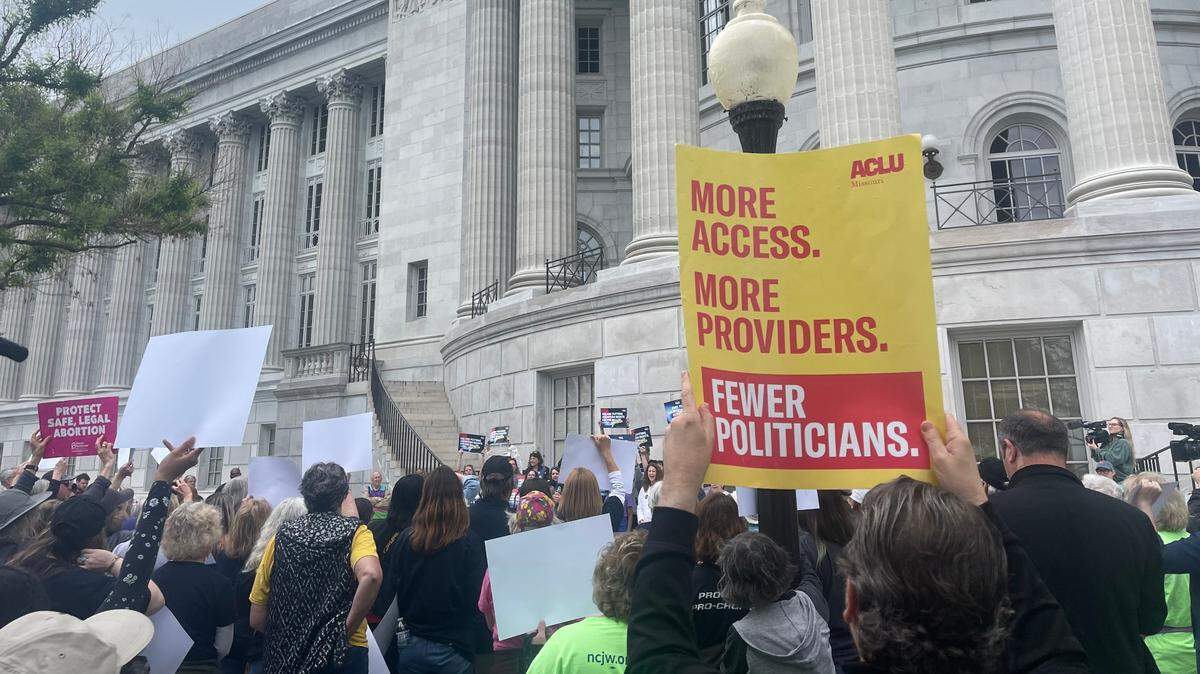
Reality Check is a Star series holding those with power to account and shining a light on their decisions. Have a suggestion for a future story? Email our journalists at RealityCheck@kcstar.com. Have the latest Reality Checks delivered to your inbox with our free newsletter.
The Planned Parenthood affiliate in Kansas City welcomed patients for medication abortion appointments on Monday for the first time since 2018, a remarkable moment in Missouri after a judge struck down a series of longstanding restrictions on the procedure.
“For years, Missouri patients crossed state lines to receive care from our providers in Kansas,” said Emily Wales, the president and CEO of Planned Parenthood Great Plains. “Today, they can once again receive that same trusted care in their home state.”
But the celebratory moment for abortion rights supporters was laced with a level of uncertainty. Voters are gearing up for a fight at the ballot box in November over a Republican-led constitutional amendment that would once again ban nearly all abortions in the state.
Republican officials immediately seized on the court ruling and the state’s expanded abortion rights. Abortion opponents have used the ruling to promote the new proposed ban, which will be called Amendment 3 on the Nov. 3 ballot.
“Now more than ever, it’s critical for Missourians to vote YES on Amendment 3 in November and make it abundantly clear that our state stands for life and the protection of mothers,” Gov. Mike Kehoe, a Republican and staunch abortion opponent, said in a statement.
Thursday’s ruling from Jackson County Circuit Court Judge Jerri Zhang was months in the making and came after nearly 52% of voters legalized abortion rights in 2024 and struck down a previous ban on the procedure. The ruling found that most of the state’s restrictions on abortion now violate state law, opening the door for clinics to begin offering full services.
Now, ahead of the November vote, Thursday’s ruling has energized both sides of the abortion debate.
Inside Amendment 3
The 2024 vote that legalized abortion was historic and marked a sharp rebuke of Republican lawmakers, who had spent decades restricting access to the procedure. The election ushered in a new era for Missouri, making it the first state to overturn a near-total ban after the fall of Roe v. Wade in 2022.
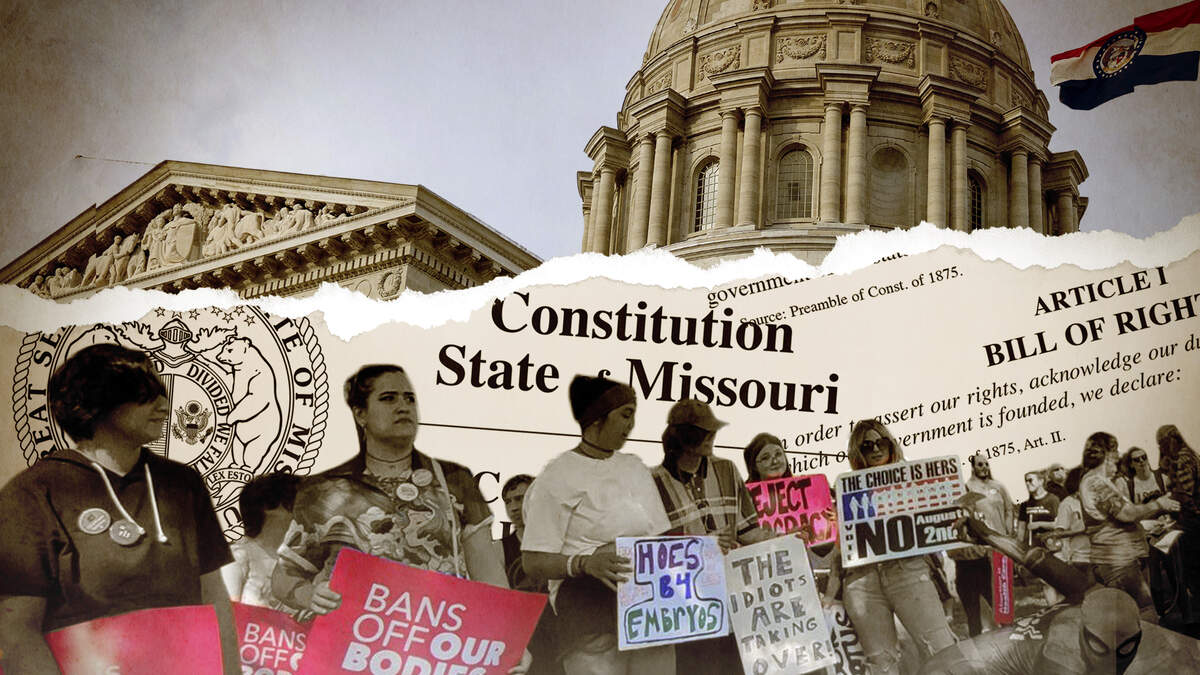
In the wake of the vote, abortion opponents immediately began discussing plans to overturn it. That effort culminated in Amendment 3, a proposed constitutional amendment that lawmakers voted to place on the ballot. The measure shares the same name as the 2024 abortion rights amendment, which was also called Amendment 3.
If approved, Amendment 3 would completely strike down the amendment voters approved in 2024 and allow abortions only in the rare cases of medical emergencies, fetal anomalies and rape or incest within 12 weeks of gestational age.
The measure is silent on when, exactly, abortions would be banned, making it likely that judges would decide whether the amendment would reinstate Missouri’s previous abortion ban with the added exceptions or give lawmakers the ability to pass additional legislation to restrict access.
In a move intended to draw in more voters, the measure also purports to ban gender-affirming care for minors, even though that health care is already illegal under state law.
The decision to include language about transgender health care comes as abortion rights remain popular nationwide, but support for transgender health care and other LGBTQ rights is more limited.
Recent polling has suggested that a plurality of Missouri voters supported the language of the abortion ban despite their broad support of abortion rights, illustrating a remarkable disconnect ahead of the election.
Supporters of Amendment 3 have used Thursday’s court ruling to promote the new amendment. Abortion opponents have long argued that voters did not understand what they were voting on when they legalized abortion in 2024.
Her Health, Her Future, the main campaign supporting the amendment, called the ruling “deeply troubling” and said it “confirms our worst concerns.” The campaign said the court’s decision wiped away longstanding protections for “women, girls and unborn children.”
“That is why Amendment 3 is so important,” the campaign said.
Abortion providers respond
Meanwhile, abortion rights providers and supporters have framed those responses to Thursday’s ruling as a deliberate attempt to trick voters into banning access to the procedure again.
“We’ve seen opposition take tactics of being misleading and that’s already happened in response to the decision,” said Wales with Planned Parenthood. “And our job is just to do what we’ve done — tell the truth, provide health care and make sure that Missourians lead healthy and safe lives.”
Ahead of the vote, Wales said abortion providers would continue to “provide the best quality health care” and “be honest about what a patient’s experience is.”
“I’m really thrilled as a Missourian that people are going to get to see their friends and neighbors have rights restored before the vote,” Wales said.
As abortion opponents and supporters gear up for November, the messaging around Thursday’s ruling has offered a preview of how both sides plan to message around Amendment 3 ahead of the high-stakes vote.
Abortion opponents, including Kehoe and Republican Attorney General Catherine Hanaway, have cast the ruling — and expanded abortion rights — as dangerous. Hanaway has vowed to appeal the decision, saying her “heart (was) broken” by the ruling.
Supporters and providers, meanwhile, have framed the decision as a realization of the rights voters approved in 2024.
“Every patient deserves the opportunity to discuss all of their options with a trusted provider and choose the care that’s right for them,” said Salina Sandoval, associate medical director at Planned Parenthood Great Plains.
xxxxxxxxxxxxxxxxxxxxxxxxxxxxx
Overturning Roe rose abortion rates
Republican politicians owe the pro-choice community a thank you card for saving the right from the worst impacts of their policies. After the Supreme Court overturned nearly five decades of abortion rights in the infamous Dobbs v. Jackson Women's Health case, the fallout has been terrible: women nearly bleeding to death in hospital parking lots, women having to be airlifted to safer states for abortions, and, unfortunately, a few highly publicized deaths because abortion bans prevented timely care. Still, the impacts have fallen far short of what anti-choice activists hoped and what pro-choice activists feared. There haven't been hospitals filling up, as they did in the days before Roe v. Wade, with patients mutilated from botched abortions. It's not because women have, en masse, given up and submitted to forced childbirth. On the contrary, the birth rate continues to decline while the abortion rate went up after the Dobbs decision.
Sociologist Carole Joffe and law professor David Cohen explore a major reason why in their new book "After Dobbs: How the Supreme Court Ended Roe but Not Abortion." (Full disclosure: I blurbed the book.) Both abortion providers and activists reacted to the Dobbs decision by rising up and creating, almost overnight, an infrastructure of helpers to make sure that women in red states still had access to safe abortion, despite the bans Republicans were rapidly passing. Even though it's shielded Republicans from the political consequences of their hateful policies, this small army of pro-choice patriots has managed to protect women's health, despite the often-daunting obstacle before them.
Joffe and Cohen spoke with Salon about these often unsung heroes, and the ongoing Republican war to take this crucial healthcare access away. This interview has been edited for clarity and length.
In your previous book "Obstacle Course," you wrote about the hoops that women have had to go through to get abortions, even in the pre-Dobbs era. This book is "After Dobbs." What changed in the years since Roe vs. Wade was overturned?
Joffe: It's like before Roe, but on steroids. People have to travel further. Before Dobbs, 1 out of 10 patients had to go out of state. Now it's 1 out of 5. But even though things are harder, many people are surprised that the number of abortions has risen in the United States since Dobbs. Our book helps explain that. It's because of the extraordinary efforts of the abortion-providing community, the advocacy community, the activist community. There's been a huge amount of money and organization that mobilized right after Dobbs. For some, abortion became more feasible. Not necessarily easier, but more feasible. Obviously, some people were still left behind.
Even though our book, in some respects, tells a surprisingly upbeat story, we have no illusions. We end the book on a note of caution. Everything boils down to sustainability. Will the donations keep coming? Will the activists and providers still keep working their butts off? And of course, what will the Trump administration do?
Want more Amanda Marcotte on politics? Subscribe to her newsletter Standing Room Only.
Cohen: One of the big differences is that Dobbs mobilized pro-choice states to do things that they've been asked to do for decades, which is to take an inventory of their laws, see what restrictions are on the books, and get rid of them. There were so many restrictions, even in good states, and the legislators didn't seem to care. Dobbs made them care. And so you saw states that got rid of, for instance, physician-only requirements or waiting periods or minors restrictions. They started paying under Medicaid and funding clinics through other ways. Dobbs got people to pay attention, who should have been paying attention. Now, in a lot of states, abortion is more accessible than it was before.
Providers are taking a lot of risks under threat, such as red states demanding they be extradited if they help women get abortions. But there's also an army of activists and donors connecting women to those providers.
Cohen: Many providers in blue states are under telehealth shield laws that allow them to mail pills to people in other states. It's not many, but they can mail out pills in large numbers. There are about 10,000, maybe more, pills mailed every month from these telehealth shield providers. They are providing abortion care to people in abortion ban states, so those people don't have to travel.
The other part of the equation is the activists, the everyday people who want to help. They're helping in small to huge ways. The drive for someone who needs to get from an airport to the clinic a couple of miles away, after they've traveled from Florida? That 10 or 15 minutes changes someone's life. But others are driving patients cross country or accompanying people on flights several states away. They're housing people overnight, coordinating their travel, or donating money to fund it. It's unjust. It should not be this way, but while it is this way, they're going to do everything they can to help the people who need care right now. We have to fight for the long term to change this, but in the meantime, there are still people who need care. We have a chapter about folks like that in the book, showing the extraordinary lengths they go to to get people care.
Joffe: We report on a patient who got rerouted because of a snowstorm. The patient navigator rebooked the patient at another appointment at a clinic in Las Vegas, changed her flight, and got her a hotel. All within a couple of hours. It's just extraordinary how the system worked on very short notice.
It's inspiring to see how many people are helping women get the care they need. What impact is it having on patients themselves?
Joffe: Most people don't have to worry about getting on an airplane for basic healthcare. In some cases, patients have literally never been in an airport before. They don't know how to deal with TSA, didn't know what you could bring and could not bring. The staff at the National Abortion Federation told us patients who brought two bigger suitcases or tried to pack a whole bottle of shampoo. They have to be talked through even this process. Then there are ones left behind. These are people so poor, they don't even have a computer. They don't even know that there are organizations to help or about abortion funds. There are single parents with three or four kids. There's no way in hell they can get on a plane.
One story that struck me in the book was the group of Texas ministers helping patients fly from Dallas to New Mexico. Can you tell me more about that?
Joffe: Before Roe, Dr. Curtis Boyd was a very active abortion provider, with a clergy consultation service. He had a clinic in Dallas as well as in Albuquerque, and he had a long-standing relationship with the Unitarian church in Dallas. I mean, Dr. Boyd himself was, at one point, a minister. After Dobbs, his patients who qualified for medication abortions were helped by a minister group in Texas. They were met by a minister who flew with them, and once they got to New Mexico, would accompany them to the clinic. Since then, things have gotten a lot tougher, in terms of legal surveillance. So that program sadly no longer exists to our knowledge.
Because activists and doctors have been so good at filling in the gaps, anti-choice forces are reacting. Texas and Louisiana are going after a New York doctor who sent abortion pills out of state. The governor of New York said, basically she'd extradite this doctor over her dead body. What does the current legal situation look like? What should readers know about the dangers?
Cohen: There's almost no criminal risk for people who are providing care physically located in a state where abortion is legal and someone travels to them. There is a risk that the patient goes home and an angry boyfriend or ex or parent tries to sue the doctor, even though the abortion took place out of state. Still, that's a very low-risk proposition. The providers who are at the highest risk are the ones we talked about before, the shield providers who are mailing pills into states where there are abortion bans. The anti-abortion movement is, right now, flummoxed about what to do about that. The numbers are so high, almost 10,000 abortions per month. Antis are trying different attacks, because, as we all know, they don't just want to stop abortion happening by providers in their borders.
Joffe: They wanna stop as much abortion as they possibly can. Louisiana wants New York to extradite a doctor, so they can prosecute her for mailing abortion pills into their state. New York has a shield law, however, so the governor and the Attorney General of New York have said they will protect the doctor. Eventually, will probably wind up in federal courts, maybe the US Supreme Court. Right now the doctor is still, to the best of my knowledge, providing care to people and mailing pills. And to the best of my knowledge, it hasn't stopped any of the shielded providers from doing so. They understand the risk, but they think it's important to take this risk because there are so many people who need care in the states where abortion is banned. One of the inspiring stories of the post-Dobbs era is people who know that they are needed. They have the training to do it. They have the technology to do it. There's some risk, but they're doing it anyway because people need the care they can provide.
This is too recent for your book to cover, but there's a whole new case in Texas. The state's attorney general is accusing a midwife of illegally providing abortions. We don't yet know if there's any truth to these charges, but what's your sense of how much red-state abortion is happening outside of the channel of doctors mailing women abortion pills? What are the risks of people offering this more direct care?
Cohen: We know there are informal networks of people distributing pills not as part of a medical clinic, just volunteers. They're like mutual aid groups who have gotten pills through one way or another. To the best of my knowledge, that's happening in every state with abortion bans. I've heard varying estimates of the volume they're doing, from just a few to quite a lot. It's really unknown. The studies from the Society of Family Planning and Guttmacher do not include informal network distribution of pills.
As far as what [Texas Attorney General] Ken Paxton is alleging, first of all, I don't trust a word that comes out of his press office. For all we know, this midwife was providing miscarriage management, and Paxton thinks it was an abortion. We must be super skeptical of everything he says.
Joffe: The similarity with the pre-Roe era is that law enforcement was more likely to go against people under the rank of physician: nurses, midwives, and lay people who had learned to perform abortions. And we know that the accused is a woman of color. Like David, I am deeply, deeply, deeply skeptical of anything Ken Paxton says.
Cohen: Maybe the big story here isn't that Texas midwife was charged with alleged illegal abortions, but that Texas closed three clinics providing prenatal care for low-income Spanish speakers. Those clinics are now closed and people aren't getting care.
Anti-choicers were ecstatic after Dobbs. You heard highfalutin' rhetoric about how they were going to end abortion in the U.S. forever. Project 2025 has language about "ending" abortion. What does your research tell us about how realistic that goal is?
Joffe: Even if the FDA manages to withdraw the approval of mifepristone, the first pill used in a medication abortion, they're not going to withdraw approval of misoprostol, which is widely used in other medical procedures. [Note from the editor: While both pills are recommended, misoprostol by itself will usually terminate a pregnancy.] Now that these networks exist, even if there's a national ban, there always are going to be these pills available. There are also groups sending them over the border from Mexico, or ordering the pills from Aid Access. You can but these pills in Europe. However, there will likely be more cases like what happened to this midwife in Texas. There will be more prosecutions, I assume, but they will never stop abortion.
Cohen: We've seen this historically. We've seen this around the world. Where abortion is banned, people still get abortions. If they crack down even more, there will be more prosecutions. But there will always be people who are committed to making sure people have the freedom to live the life they want and have their bodily autonomy. People who say, "I am so committed to that principle that I'm going to use my time, my money, my skills, my license." Whatever someone has to offer, they will help people access this form of care.
As much as the anti-abortion movement was saying this is going to end abortion, everyone in the abortion rights and justice movement feared Dobbs would dramatically cut back on the number of people getting abortions. But they were wrong. We should have known better, because the people we interviewed for the book, we've known how committed they are for a long time. We knew they would find some ways. I never thought it would be as successful as it's been. Yes, there are people left behind. We need to make sure fewer people are left behind, but they're doing their best to care for the people they can see.
The anti-abortion movement, like you said, were so excited. A year later, the reports were that they were depressed at their conferences. They haven't been able to stop abortion. Abortion is never going to be ended, because people are going to fight for it. People who need it will seek it out and find ways to get it.
Pregnancy Justice Report Reveals Massive Scope of the Criminalization of Pregnant People
For immediate release
Contact: media@pregnancyjusticeus.org
Nearly 1,400 cases of pregnancy criminalization over 16 years, mostly concentrated in just five Southern states
NEW YORK — Pregnancy Justice, which is dedicated to recognizing and defending pregnant people’s human rights, released a new report entitled The Rise of Pregnancy Criminalization, documenting nearly 1,400 cases of pregnancy criminalization in the 16 years leading up to June 2022, when the Dobbs v. Jackson Women’s Health Organization decision overturned Roe v. Wade.
The report finds that state actors have investigated, arrested, and prosecuted pregnant people at an accelerating pace from 2006 through the Dobbs decision, often on the pretext of protecting “unborn life.”
“Our report shows that pregnant people are increasingly targeted for criminalization in ways that do not exist for people who are not pregnant, with dire consequences for themselves and their families,” said Lourdes A. Rivera, president of Pregnancy Justice. “We need to dismantle the harmful and punitive systems and practices that criminalize people based on gender, race, and class. Pregnancy Justice fights for the human rights, bodily autonomy, and full personhood of all pregnant people – and we invite others to read this report and join us in this fight.”
The report reveals that criminalization disproportionately affects poor white and Black people living in the South, with nearly four in five cases coming from just five Southern states: Alabama, Mississippi, Oklahoma, South Carolina, and Tennessee. As the report explains, four of the states that have the highest numbers of criminalization also have “backdoor” personhood laws. In these states, judicial decisions have expanded the definition of “child” in the criminal laws to include fetuses or explicitly criminalize the pregnant person if a newborn is born exposed to a drug.
Some key findings include:
- The report found that 1,396 criminal arrests took place over the 16.5 years between January 1, 2006, and June 23, 2022. This is a more than threefold increase since Pregnancy Justice’s last study, which covered a shorter time span.
- Nearly four in five (79.4%) arrests took place in just five southern states—Alabama, South Carolina, Tennessee, Oklahoma, and Mississippi. These states are among the top 11 in maternal mortality, showing how criminalization does not improve maternal or fetal health, and in fact, undermines it.
- More than nine in 10 cases involved allegations of substance use—which is used as a basis to criminalize pregnant people, even when there is no harm to the fetus or infant.
- According to the case information available, poor white pregnant people were the most criminalized population, and poor Black pregnant people were also overrepresented in the data.
- Pregnancies of people who were criminalized resulted in a wide variety of pregnancy outcomes. Two in three cases involved a live birth with no mention of negative health outcomes for the infant.
Pregnancy Justice will continue to address the criminalization of pregnant people through the Pregnancy Prosecutions Tracking Project, a partnership with law schools across the country, to track pregnancy criminalization in real time, gather data, and aid pregnant people suffering deprivation of liberty.
“The policing and criminalizing of pregnant people is not new, but never before have we had such a comprehensive picture of the full scope of how they—especially those who are poor and living in the South—are losing their autonomy, their rights, and their freedoms because of police, prosecutors’ and politicians’ desire to control pregnancy,” said Dorothy Roberts, professor at Penn Carey School of Law and author of Killing the Black Body.
“Pregnancy Justice’s report clearly shows how the carceral approach to substance use established during the ‘war on drugs’ is being applied to pregnant people, who are being investigated, arrested, and prosecuted for using substances—even as substances are being decriminalized and medical experts warn that criminalization only harms pregnant people, their families, and communities,” said Kassandra Frederique, executive director of the Drug Policy Alliance.
“The findings in this report are a call to action, and anyone working to achieve greater bodily autonomy ought to heed that call,” said Monica Rae Simpson, executive director of SisterSong Women of Color Reproductive Justice Collective. “We must challenge the systems that collude to criminalize pregnant people, ensure that neither poverty, gender, nor race is criminalized, and ensure everyone can get the care they need and live full, thriving lives without fear, stigma, or punishment.”
Read the full Rise of Pregnancy Criminalization report and explore the data in the data center.
###
Pregnancy Justice works to ensure that no one loses their rights because of their capacity for pregnancy or pregnancy outcome, focusing on people who are most at risk of state control and criminalization: those who are low-income, of color, or use drugs.

No comments:
Post a Comment