https://www.counterpunch.org/2026/06/22/the-media-aligned-themselves-with-israeli-propaganda/
And Israeli propaganda in action by PBS:https://www.pbs.org/newshour/show/injured-israeli-soldier-recounts-experience-on-frontlines-against-hezbollah
How the Media Aligned Themselves with Israeli Propaganda
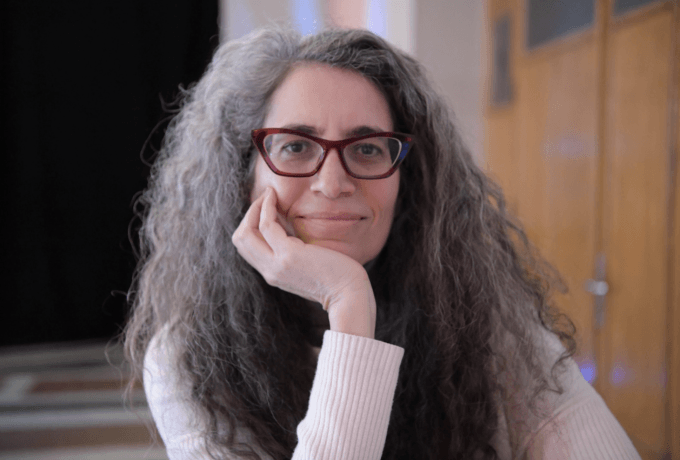
Dima Khatib, photograph by Nelson Pereira.
Journalistic coverage of the Israeli military campaign in Gaza after October 7, 2023, continues to draw sharp criticism. Syrian-Palestinian journalist Dima Khatib minces no words: “The media actively relayed Israeli propaganda.”
“Silence is already complicity. But it was worse. It was active engagement with Israeli propaganda,” said the Managing Director of Digital Projects at Al Jazeera, whose journalistic career spans more than three decades.
“And it was an active engagement against journalists themselves,” Dima added. “Not once, not twice, it was repeated. The justification Israel gave for the killings of journalists—obviously false and unacceptable, that is, every time they were terrorists, they were guilty, they deserved it, etc.—it was celebrated, it was lauded.”
Dima, who has reported from over 30 countries across 5 continents, interviewing presidents and people from all walks of life, points to a clear bias in the media in favor of Israel’s official narrative. “The media weren’t even doing their basic job of verifying this information, simply relaying lies against Gazan journalists. And this was proof of racism against journalists who don’t have the skin color required for journalists, at least in the mainstream media, to do their job. We’re not asking for more; we’re asking them to verify the information and publish it.”
Noting that when a journalist is killed elsewhere, it causes an uproar, she denounces the media’s indifference to the murder of Palestinian journalists. “It’s an unspeakable scandal. 262 journalists (*) have been killed in Gaza—a record, a real massacre. Just look at the major media outlets here in Europe, in the United States, and even in the Global South, and see how many times this information has been relayed, published, and reported correctly and ethically.”
Journalism That is No Longer Journalism
According to Dima Khatib, the “poor” media coverage of the killings of journalists in Gaza demonstrated beyond a shadow of a doubt that Palestinians are not considered equal human beings. She admits that this experience was a huge disappointment and a source of great sadness for her.
The same pattern of disinformation has been applied to media coverage of the genocide in general, she adds. “The media continue to repeat Israel’s lies as if nothing had happened, after they have been debunked time and time again. They parrot the lies spewed by Israeli officials, repeating them like stock phrases in their articles.”
A method that transforms journalism into propaganda, Dima emphasizes. “Every time we say a certain word, we add a little phrase to define our position regarding that word, that person, that organization, that place. It’s unethical, it’s not journalism. It’s propaganda.”
“Just look at how media outlets like the New York Times headline and handle the news,” she explains. “They write that 400 Palestinians have died, but they don’t say how or who murdered them. We wonder if they died of heatstroke or indigestion. But as soon as it involves Israelis, the moment an Israeli dies, we’re immediately told that he was killed by a Palestinian. They publish a photo of him playing guitar. Even though he’s a soldier. A humanization that no Palestinian is entitled to, not even a child. This language has become standardized in newsrooms, and many journalists simply repeat it, thus avoiding upsetting their editors.”
Expressing her disappointment with the attitude of many colleagues in the profession, she adds that there are also those who have opposed and denounced editorial policies that lead to the dehumanization of Palestinians. “It’s a deliberate dehumanization of Palestinians, and it’s why I no longer have respect for the media, I no longer have respect for these fellow journalists. At the same time, I’ve seen courageous ones who said no. There are many newsrooms that have experienced this kind of pressure regarding coverage of Palestine, journalists who have lost their jobs, their livelihood, for themselves and their families, just for saying a word. I have great admiration for the journalists who haven’t given in to propaganda and the easy way out.”
Refusing to betray journalism, some journalists decided to embark on independent projects and launched their own media outlets. According to Dima Khatib, this independent journalism movement has everything it takes to replace “what journalism claims to be but no longer is, because selective journalism isn’t real journalism.” She adds that if we can’t do it for Palestine, we won’t be able to do it against fascism. “It’s a universal struggle for all of us.”
Regarding state media, the coverage of the 2003 war against Iraq revealed an alarming complicity with propaganda, notes Dima, who worked in Doha for Al Jazeera during the invasion of Iraq. “The lies were repeated, repeated, repeated, without any verification, from weapons of mass destruction to an association of Iraq with 9/11 that had no basis in reality. This is very problematic because it’s a public service. A journalist’s work is always a public service, with an ethical duty that is essential for democracy. But this is even more true when it’s funded with our taxes.”
Decolonizing Journalism
Dima Khatib joined Al Jazeera in 1997 as a young journalist in Qatar and later became the channel’s first female executive. She subsequently established Al Jazeera bureaus in China and Venezuela. Appointed director of AJ+ in August 2015, she held this position for ten years, overseeing AJ+’s English, Arabic, Spanish, and French channels.
Having encountered such diverse realities, she says she has come to understand that, within newsrooms, a constant process of decolonization is a priority. “I talk a lot about decolonizing journalism, newsrooms, and the journalists themselves. Even journalists from the Global South, who have been colonized, need to undertake this process. For example, in the minds of many Arab journalists, Latin America was discovered by Europeans. Yet, that’s exactly what the Israelis say about Palestine, which was supposedly a land without a people for a people without a land, as if it were empty. They arrive and there are no natives.”
At the root of these ingrained narratives are school curricula that have omitted historical facts. To such an extent that adults who were victims of colonialism are unable to recognize the harm they suffered when confronted with its remnants. “When you erase the existence of a civilization, several civilizations, ancient ones, and great, important ones, and the massacres that took place, so that this discovery—which is colonization—could happen, you are erasing history, you are erasing entire peoples. It’s the same thing that’s being done to us in Palestine, with this same propaganda,” Dima points out.
“By repeating colonial narratives, we perpetuate the dehumanization of the other,” she adds. “Because these narratives were created with the aim of dehumanizing.”
Besides efforts to decolonize and rehumanize history, it’s equally important to know which language to use, Dima emphasizes. And above all, to get rid of labels. “Who is a terrorist? Who isn’t? Who is good? Who is bad? It’s already predetermined by international agencies that have already defined who is bad, who is good.”
She insists that, faced with this imposition of a single truth, we must, first and foremost, listen to the people who come from there. “If you’re going to cover Bosnia and you don’t have a single Bosnian in your newsroom, well, you’re not going to know how to tell the Bosnian story. So, diversity in newsrooms is very important. In our AJ+ newsroom, we had Palestinians—not just any Palestinians, a Palestinian man or woman from Jerusalem, someone from the West Bank, someone from Gaza, someone from the refugee camps in Syria, Palestine, Jordan, a Palestinian Spaniard, a Palestinian American, a Palestinian Colombian—because without that diversity, we’re not going to be able to tell the stories.”
She adds that the much-vaunted objectivity of the media simply means seeing things from the perspective of someone sitting in Paris, London, or Washington. “That’s what objectivity is. It’s about making everything look the same and eliminating any distinction between one story and another. They’re all told under the same umbrella. Objectivity, in fact, is journalism that doesn’t disrupt the status quo of established norms. Always from a Western perspective. And the West has every right to its perspective, but not to erase other perspectives.”
Gaza Journalists
Since Israel did not allow foreign journalists into Gaza during the genocide—and even before, because there had been a blockade for 19 years—Gaza journalists took it upon themselves to tell the story directly. “There wasn’t the parachuted-in journalist, as is always the case, a journalist who arrives with a whole team, who also has access to a bathroom, a comfortable bed, food, etc., and who arrives with their vision of how the story should be told,” Dima emphasizes. “The task was left to the Palestinian journalists in Gaza. While they lacked food, warm beds, shelter, and protection—they had nothing—they were bombed like everyone else, they were hungry like everyone else, they were cold like everyone else, and they didn’t have access to a bathroom like everyone else.” And we saw that live on social media, and it rehumanized the Palestinian story.”
Young people around the world who followed the reports of these young Palestinian journalists on social media saw them in their tears, in their suffering. And that, Dima points out, contributed to the solidarity movement for Palestinians worldwide, but especially among young people, the university generation, Generation Z, who spearheaded the entire solidarity movement in American universities. “I happened to be in the United States when they set up the first camp. I was in Michigan, I arrived, and they asked me, ‘What media outlets are you from?’ Because here, the New York Times, Reuters, and all that, it’s forbidden. They don’t get through. I told them, ‘I’m from Al Jazeera,’ and they replied, ‘Oh, wow, of course, come on over.’ And I took a look around, and they had Al Jazeera English live on an iPad in the camp. And that really touched me. They weren’t Palestinians; they were people from all over the United States—immigrants, white, Black, and maybe a third were Jewish.”
* The number is higher at the time of publication. On June 21st, cameraman Ahmed Wishah was killed in an Israeli air attack on central Gaza’s Bureij refugee camp, less than three months after his brother Mohammed Samir, also an Al Jazeera journalist, was killed in a separate strike. Ahmed is the 12th Al Jazeera journalist killed by Israel in Gaza.
xxxxxxxxxxxxxxxxxxxx
Injured Israeli experience fighting Hezbollah
The deadly back-and-forth between Hezbollah and Israel has the potential to scuttle the U.S.-Iran agreement. Many of the Israeli soldiers are reservists, called up again to fight Israeli adversaries at great personal cost. Nick Schifrin met one Israeli officer on the border in March and recently spoke with him again after the latest fighting with Hezbollah came close to claiming his life.
Read the Full Transcript
Notice: Transcripts are machine and human generated and lightly edited for accuracy. They may contain errors.
Amna Nawaz:
A linchpin of the U.S.-Iran deal signed yesterday relies on two forces not part of the deal, Hezbollah and Israel. Their deadly back-and-forth continues, with the potential to scuttle the agreement.
Many of the Israeli soldiers are reservists, called up again to fight Israeli adversaries at great personal cost.
Nick Schifrin met one Israeli officer on the border in March and recently spoke with him again after the latest fighting with Hezbollah came close to claiming his life.
Nick Schifrin:
For Captain Micha, life has become slower and more quiet. He was wounded about two months ago fighting for Israel in Southern Lebanon and is now recovering at home outside Tel Aviv. He holds on to his faith and his desire to return to his men, despite his injury and trauma.
Captain Micha, Israeli Defense Forces:
My greatest fear is actually to forget. So I actually don't mind talking about it. I think it's important.
Nick Schifrin:
This is him back in late March patrolling Southern Lebanon through a village emptied by the Israeli military, past the Lebanese homes flattened by Israeli airstrikes. Before the tenuous and faltering April cease-fire, Israel's campaign in Southern Lebanon was relentless.
The military razed entire towns and villages, pushing out the population. Lebanese authorities say more than one million have been forced to flee their homes and more than 3,000 were killed.
Israel invaded and occupied deeper into Southern Lebanon than it had in a quarter-century. Israel says it wanted to put a buffer between Northern Israeli residents and Hezbollah, which had fired thousands of rockets and missiles into Northern Israeli communities, killing dozens of Israeli soldiers and a handful of Israeli civilians.
I visited the border in late March. Metula, Israel's northernmost town, is where Micha and I first met.
Captain Micha:
Our job as reservists and our job as the IDF in general is to create a barrier and to create a -- to make sure that we are what is between them and what we consider our enemy.
Nick Schifrin:
In the days and weeks after, the military ordered him and his unit to create that barrier inside of Lebanon. On April the 18th, they were protecting a bulldozer.
Captain Micha:
The bulldozer went over an explosive device and basically took out of the ground and all the explosive device and it exploded on our men. It was a massive explosion. Initially, I got injured. I have many pieces of shrapnel in my legs.
And, initially, I didn't realize -- I mean, I have got -- I had immense pain in both my legs, but I was still able to run backwards and get on the radio and see how my soldiers were doing, because I didn't actually realize that something hit me.
Nick Schifrin:
One of his soldiers was killed that day, Sergeant First Class Lidor Porat, who was 31 years old.
Captain Micha:
He actually volunteered to come to my unit. He was in a -- he wasn't in as much of a combat unit, as we were. And about a year ago, he had a friend that was in my platoon, a soldier of mine, and just as life would have it, he ended up losing his life in the battlefield.
Nick Schifrin:
The bomb tore through one of Micha's arteries and multiple veins. He survived thanks to quick care.
His is a soldier's stoicism.
Captain Micha:
The actual moment itself, in a way, was a shock, but also it's what you come to expect when you go to war. I think the thing about war, and when you go into enemy territory, is you know that people are trying to harm you and kill you, and we were evacuated pretty quickly.
Nick Schifrin:
Hezbollah has made Israel's invasion of Southern Lebanon even more deadly, thanks to drones. Hezbollah videos show first-person view or FPV drones targeting Israeli soldiers precisely.
These drones are often operated using long fiber-optic cables, the same technology I filmed in Ukrainian trenches, with Ukrainian soldiers targeting Russians.
Captain Micha:
We have known that they had these kind of capabilities for a while, and I think it was a matter of time until it became so popular to them in such a mass scale. If you would actually see the numbers of how many drones are hitting or trying to attack Israelis every single day, and the number of casualties and injuries, I think we will see and we can see that slowly, slowly, the army's getting better at adapting.
Nick Schifrin:
But Micha is a reservist, and the Israeli army and society have struggled to adapt to sending reservists to war repeatedly since the October 7 Hamas terrorist attack. Of 900 days after that day, he deployed more than 500 when we first met in March.
Captain Micha:
The impact of these wars since October the 7th has been immense on Israeli society, especially on reservists, really straining the fabric of Israeli society. So I think that there's nothing we have felt more than that.
If I have a soldier, that any of my soldiers will come up to me and tell me, "Micha, my wife is finished, I need to go home," so we will send them home, because there is no point to protect our home if there's no home to go back to at the end of the day.
My mom has four reservist sons. She hasn't slept in about 10 years. I got married shortly before October 7, and I have been 500 days in reserve, so, I mean, I have seen my soldiers a bit more than I have seen my wife since I have been married.
The first thing I told my wife when she came and saw me after the surgery, it was 3:00 a.m., and she came into the ICU, and she asked me how I am. I told her that -- the first thing I told her was that: "I'm sorry, but once I'm recovered, I'm going back to the unit." So she wasn't very happy.
Nick Schifrin:
And why do you want to go back to your unit, despite the risks?
Captain Micha:
Because the risks have always been there. It's not a new risk. Someone needs to be on the front line, and if all of us will say that another person will do it, then no one will be there, so it's my time. And it's my time now and it'll be my time in a few months when I fully recover.
Nick Schifrin:
But he's planning a future for after the war. He's studying to practice law. Until then, he checks his phone for news from his men. His recovery depends on theirs as well.
For the "PBS News Hour," I'm Nick Schifrin.

No comments:
Post a Comment