https://barnraisingmedia.com/2026-election-rural-california-voters-defy-dccc-and-israeli-lobby/
What is Platner’s class position? What class does he represent? These are the questions that will tell us his true politics. These questions are the fundamental guide to revolutionary politics, and as long as we keep them at the forefront of our analysis we won’t be lured into blind alleys.
https://clarion.unity-struggle-unity.org/2026-06-11-let-daddy-pay-the-bills/
~~ recommended by tpx ~~
What’s Wrong With the American Left: Captured by the Professional Class
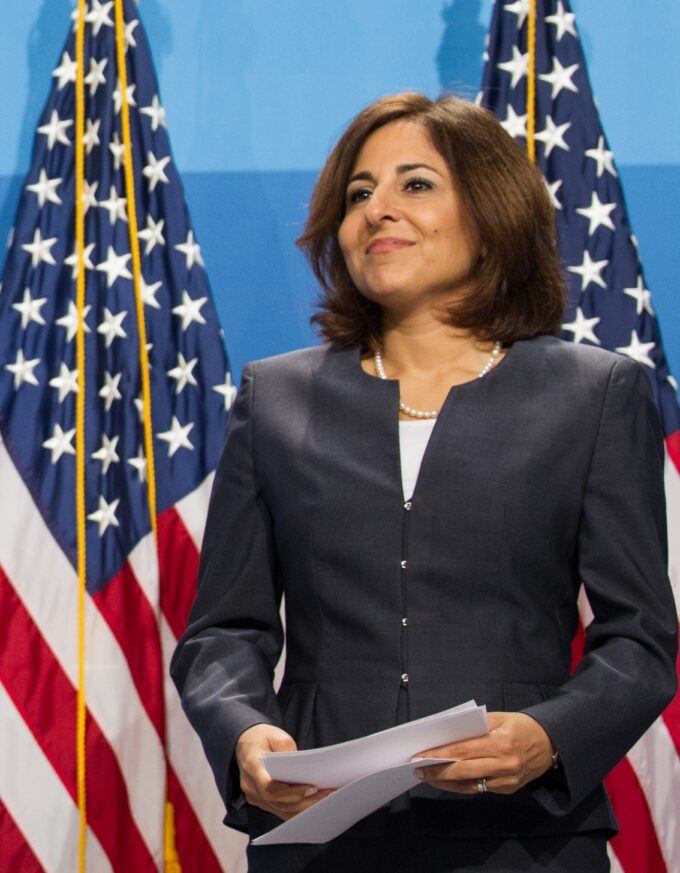
Neera Tanden from Center for American Progress at the White House, 2014. Photo Photo Courtesy of: Faye Evans, ATI.
Ideas do not float free of the people who hold them, and the abandonment of class has a sociological shape. The center of gravity of American progressive politics has shifted from the working class to the college-educated professional. The activists, staffers, donors, writers, and increasingly the voters who set the tone of the movement are drawn from a stratum secure enough to treat economic survival as a solved problem. For this group, politics can become what it cannot be for the precarious: a matter of values, expression, and culture rather than of rent, wages, and health.
This is a quiet betrayal of the tradition, because the democratic socialism of Harrington and Debs was rooted in, and accountable to, the people whose labor it sought to dignify. Dorothy Day did not theorize poverty from a distance; she lived among the poor in the houses of hospitality she founded. The point was not charity but solidarity, the insistence that the movement and the people it served were not two different things. When the movement’s personnel no longer share the condition of those they represent, the accountability snaps, and the agenda drifts toward the preoccupations of the comfortable.
The drift shows up in priorities. A professionalized left fluent in the vocabulary of the seminar room will reliably elevate questions of language, representation, and symbolic recognition, because those are the questions its members feel most acutely. The same left is strikingly quiet about union density, which has fallen to roughly a tenth of the workforce, because rebuilding labor power requires patient organizing among people the professional class rarely encounters. The issues that photograph well in a fundraising appeal crowd out the issues that would actually shift the balance of economic power.
Thomas Frank captured one face of this in What’s the Matter with Kansas?, asking why working people vote against their economic interest. But the deeper question runs the other way: why has the party of the left given them so little economic reason to vote for it? When a movement led by the credentialed offers the working class culture war on one side and means tested technocracy on the other, it should not be surprised when the working class drifts away. The professional left often reads that drift as evidence of false consciousness, which only confirms the distance.
There is a tone that comes with this capture, a moralism that treats political disagreement as a deficiency of enlightenment. The well educated activist, certain of positions arrived at among similar people, can mistake the work of persuasion for the work of correction. This is poison for a mass movement. Bernstein grounded socialism in an ethical imperative to treat every person with respect, an inheritance from the French Revolution’s promise of liberty, equality, and fraternity. Respect means meeting people as equals to be persuaded, not as pupils to be enlightened.
Consider how this capture reshapes the very form of left organization. The classic instruments of working class power, the union local and the mass party, were schools of solidarity in which people who were not alike learned to act together out of shared interest. The characteristic instruments of the professional left, the advocacy nonprofit and the issue campaign, are something else: staffed by graduates, funded by foundations and wealthy donors, and accountable upward to their funders rather than downward to a membership.
The shift in form is a shift in power. A movement that depends on donors will, however unconsciously, trim its ambitions to what donors will tolerate, and the one ambition no major donor will fund is the redistribution of their own power. So the structural demands quietly fall away, and what remains is the safely symbolic and the narrowly technocratic. The tradition built institutions that the working class owned; the new new left builds institutions that own the working class’s voice.
None of this is a brief against educated people in politics; the tradition is full of them, Harrington among them. It is a brief against a movement whose social base has narrowed to a single comfortable stratum and whose agenda has narrowed with it. The remedy is not to expel the professionals but to re anchor the movement in the working class majority, to make the labor organizer as central as the communications director. Until the left’s center of gravity moves back toward the people it claims to serve, it will keep mistaking the concerns of the few for the cause of the many.
xxxxxxxxxxxxxxxxxxxxxx
Rural California Voters Defy DCCC and Israel Lobby
Randy Villegas advances in contentious primary that could flip a key House district

Since the 2024 election, the Democratic Party has been confounded by losses in majority Latino congressional districts like California’s 22nd District, where Democrats make up 42% of the district, Republicans 26% and independents 22%.
This year’s primary fight offers a window into that confusion—one that shows not so much a changing electorate as one fed up with the national parties that represent it and the system of money and power those parties have come to represent.
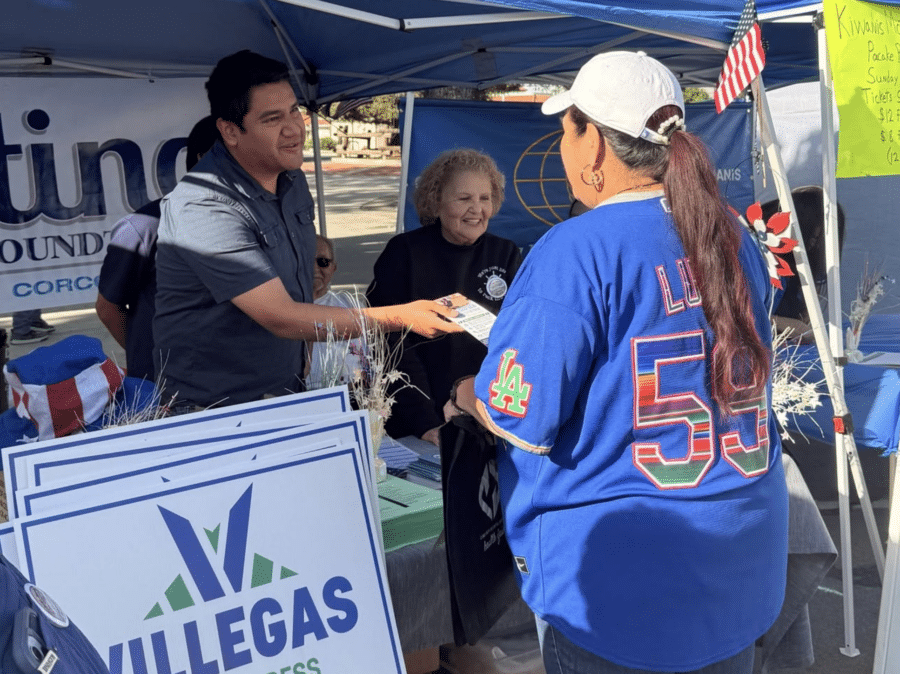
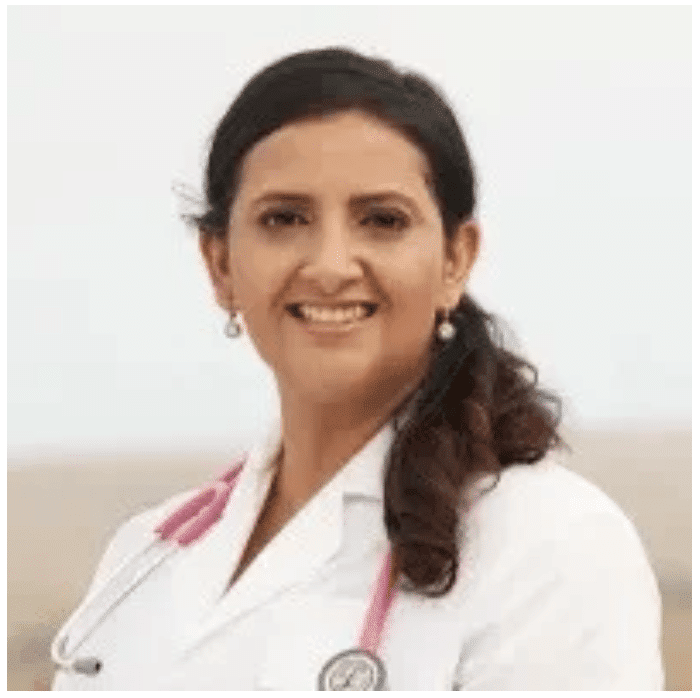
On June 10, The Associated Press declared progressive Randy Villegas the winner after a tight race with moderate Jasmeet Bains, a California State Assembly member heavily backed by the Democratic Congressional Campaign Committee (DCCC) and pro-Israel groups. Villegas will face Republican incumbent David Valadao in November.
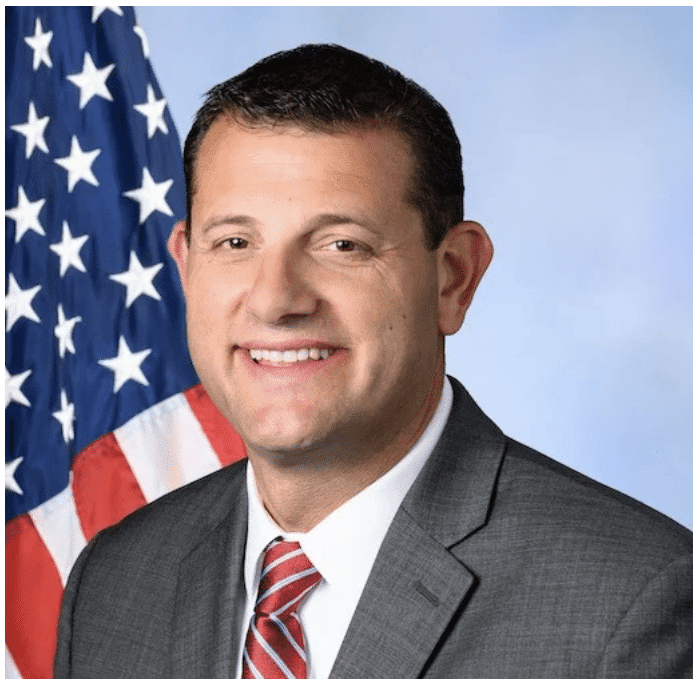
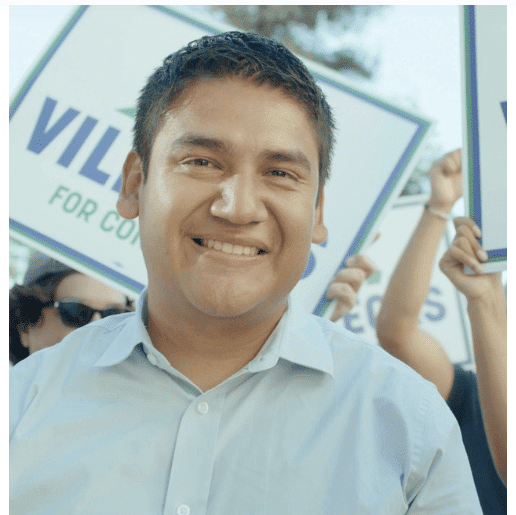
These were not the results the DCCC wanted. Hans Nichols of Axios reported that on June 9, when Villegas declared victory, infuriated House Democrats threatened to withdraw their dues if the DCCC doesn’t stay out of primaries like this one.
The 22nd District is located in the southern part of the San Joaquin Valley. It is a rural area with vast land dedicated to corporate agriculture that produces tens of millions in profits while keeping farmworkers below the poverty line. Corporate farms are destroying the area’s natural resources by diverting rivers and depleting groundwater to irrigate its crops and by polluting the air with the indiscriminate use of pesticides. The district includes cities like Bakersfield, Delano and Porterville, as well as small towns and unincorporated communities.
Last year, community organizations criticized Republican-incumbent Valadao, a dairy farmer who owns over 1,000 acres of Kings County farmland, for voting in favor of President Trump’s “One Big Beautiful Bill.” The California Health Care Foundation declared the bill would have a “catastrophic” effect on California’s health care system, which is expected to cut $30 billion a year in federal funding from Medi-Cal, with an estimated 3.4 million state residents potentially losing coverage.
According to the U.S. Census Bureau, an estimated 23% of the district’s people live below the poverty line (that rises to 32% for children), with 67% percent of the population, or just over half a million people, depending on Medi-Cal, California’s Medicaid program. (And, starting on October 1, some immigrants lawfully living in California will also lose Medi-Cal eligibility because of the bill.)
Early in the primary race, the DCCC, at the behest of local leaders, promised to stay out of the race, barring a situation where two Republican candidates could have advanced to the general election.
California’s open primary system means that both Democrat and Republican candidates face off in the same primary contest, with the top two candidates advancing to the general election in November, regardless of party affiliation.
Redistricting, which was approved by California voters in Proposition 50 last year, was designed to give the Democratic Party an edge in places like the 22nd District. According to Cook Political Report, the 22nd District is one of 18 toss-up races that are critical for Democrats to win back control of the House from Republicans.
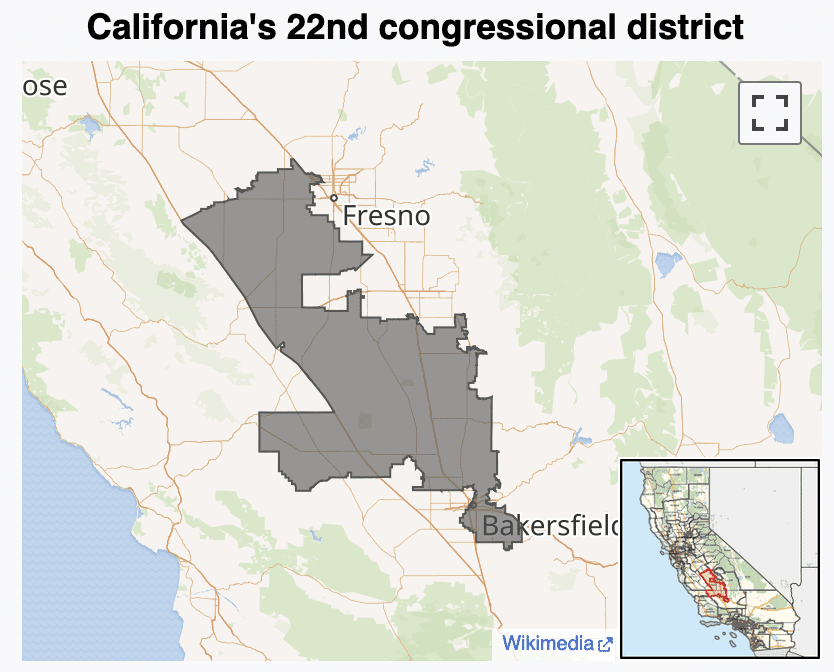
For months, local and national Democratic leaders have clashed over the two Democratic candidates—Randy Villegas and Jasmeet Bains—and what kind of Democrat should represent the party and the district. The two candidates embody an intraparty conflict between a grassroots, labor-oriented progressive wing and a corporate-aligned centrist wing.
The fight over those issues boiled over in this race.
Villegas grew up in a working-class family in Kern, California. He is a school board member in the Visalia Unified School District and a professor of political science at the College of the Sequoias, located in Visalia. Among his priorities are providing access to housing and clean water and opposing the recent cuts to Medicaid and federal nutrition programs. Politically he is close to the current mayor of New York, Zohran Mamdani. He has also received support from Bernie Sanders, Alexandria Ocasio-Cortez, Working Families Party, California Teachers Association, National Nurses United and California Environmental Voters, among others
Jasmeet Bains is a medical doctor and the Central Valley Director of the California Medical Assistance Team. In 2022, Bains was elected to the State Assembly representing parts of Bakersfield and the San Joaquin Valley. She is the first South Asian American woman and Sikh American elected to the State Assembly. Known as a moderate Democrat, she voted against redistricting and with Republicans on legislation favorable to the oil and gas industry, according to a 2024 Politico report.
For his part, Villegas promises that, if elected, he will not support the use of public money for wars. This is a clear rejection of support for Israel in its war against Palestinians in Gaza and more recently its invasion of Lebanon, as well as the U.S. war against Iran, in collaboration with Israel.
Villegas’s comments did not go unnoticed. The Democratic Majority for Israel (DMFI), a political action committee (PAC) working to elect pro-Israel Democrats, invested $500,000 in television ads to attack Villegas. Founded in 2019 to counter the growing skepticism on the left toward the Jewish state, DMFI declared its support for the candidacy of Jasmeet Bains in February.
314 Action, a PAC that prioritizes electing scientists and doctors, endorsed Bains in November 2025 and has spent $500,000 in the district to support her campaign. Both DMFI and 314 Action share donors with the American Israel Public Affairs Committee (AIPAC).
In an interview with Politico, Villegas stressed how voters in his district were acutely aware of the disconnect between funding for Israel and the lack of economic opportunities or access to health care.
“Folks on the ground are increasingly aware of the billions of dollars we’re sending to this genocidal regime at the same time people are struggling to afford gas prices here in the Central Valley, to afford health care,” Villegas said.
By contrast, Bains appeared to backtrack her apparent prior criticism of Israel. “I approach the word genocide with care, and I don’t believe it applies to Israel,” Bains said. “We need leaders in Congress who approach these issues with the seriousness and thoughtfulness they deserve—not soundbites or false choices—and that will continue to be my focus.”
In early May, a month before the primary contest, the DCCC decided to support Bains despite previous pledges not to intervene in the campaign.
This irritated local leaders. Christian Romo, chairman of the Kern County Democratic Central Committee, said DCCC staff had repeatedly told him the organization would not support either candidate. The Democratic Party affiliates of Bakersfield, Tulare, Kings and Fresno supported Villegas.
“They lied to us,” he told CalMatters in May.
Critics and political analysts expressed frustration with the party’s fear of supporting more liberal candidates. They charge the party with preferring to play it safe by supporting the moderate candidate.
“The DCCC, which is the arm of the national Democratic Party that promotes congressional candidates, has always tipped the hand in that district away from the candidate that the community would support and toward the candidate that the establishment supported,” said Michael Evans, a former chairman of the Fresno County Democratic Party, who now lives in San Francisco. “We saw that again in this primary.”
In previous elections, Democrats faced criticism when it came to Valadao because of their support for weak candidates. Talk to local leaders and they’ll tell you why. Even with a population where Latino and Black voters are the majority the Democratic Party doesn’t have a hold on the district.
“One mistake people often make is assuming that Latino voters are a homogeneous group—and, of course, that’s not the case,” says Evans.
“This is a very young district. Additionally, there are a large number of Latinos who, for whatever reason, have not yet become active voters,” he says. “Perhaps it is because they are newly naturalized citizens, or perhaps because they perceive that the government does not work for them.” Moreover, Evans says a large amount of negative messages circulate in the district, “spread in Spanish and coming from right-wing sources.”
Latinos tend to vote less than other ethnic groups, according to a study published by NALEO Education Fund (Previously the National Association of Latino Democratic Officials) in 2024. It concluded that about half (54%) of Latinos are eligible to vote, compared to three-quarters (76%) of non-Latinos.
“What could be your interest on voting if you live in a completely unhealthy environment, and there is no official or government entity that does anything to solve those problems? What is people’s connection to the act of voting?” says Evans. “If an official or candidate does not help you get clean water, does not try to protect your children from diseases caused by pesticides … and then shows up asking for my vote?”
Evans adds that political organizations have not carried out civic and political education campaigns, especially in rural areas, which remain marginalized.
“I’m talking about working to establish a strong community presence, so that communities themselves can help themselves and advocate for their interests effectively,” he says. “That’s precisely what I’ve always thought the Democratic Party should be doing: working closely with communities to help empower them. But hey… now it’s all about money and what the system dictates.”
Espi Sandoval, an activist based in Kerman, west of Fresno County, put it this way in The Fresno Bee the day after the primary: “Many people told me they are refusing to vote because they no longer believe in the political system. They feel disconnected, unheard and forgotten. They believe politicians only return during election season to ask for support, then disappear once elected, focusing instead on donors, lobbyists, political insiders and special interests.”
Local residents wonder if the DCCC will give Villegas its full support, offering him the best chance of defeating Valadao. On June 10, the DCCC put Villegas on its “Red to Blue” list, which identifies candidates the party believes have the best opportunity to flip a House seat.
“It all depends on whether the Democrats unite themselves … Otherwise I see it difficult,” says Miguel Báez, a resident of Delano, Tulare County. “I don’t understand why Democrats are afraid to support someone more liberal. At least Villegas could attract young voters and get more Latinos to vote.”
According to Báez, the complaints against the incumbent are clear. “I hear many people criticize Valadao for his support of the ‘Beautiful Proposal’ (HR 1).” Báez works in medical transportation, taking low-income patients to local hospitals and clinics. “This type of transportation depends on Medi-Cal. What is going to happen when there are no more funds? How will people go to their medical appointments?” Valadao far surpasses Villegas in fundraising, with more than $4 million as of May 13, 2026, against $1.3 million for Villegas.
xxxxxxxxxxxxxxxxxxx
God Bless America and Let Daddy Pay the Bills

Estimated reading time: 5 minutes
He was a marine. He loves his country. He’s a small business owner.
These are the reasons the petty bourgeois socialists love Graham Platner. They’re reasons for principled Communists to dig deeper.
What does My Little Totenkopf have to say for himself on the subject?
“Of course I have a cushion.” He means that his father financed his mortgage. Daddy was a state prosecutor in Maine and owned a law firm for 30 years. He also chaired the board of a non-profit with ties to powerful politicians. Grandaddy was a wealthy architect. “I don’t think that means I don’t work for a living. I don’t think it somehow offsets the fact that I did four tours in the infantry and served my country in intense combat.” He always wanted to be a soldier. He went to a series of private schools, then did three tours of duty in Iraq, one in Afghanistan, and then became a gun-for-hire. His Dad bought him a $200,000 house. He pays Daddy $954.83 a month for it. He bought his oyster company from a friend. Through that company, he owns a 6-acre aquaculture lease, a California Skiff, and equipment worth $100,000. He reportedly chooses not to draw salary so he can also collect his $5,000 monthly killer’s benefits from the VA. He does, however, pay his wife a salary. That way he can keep his disability, the clever clogs!
Imperialist murderer. Petty bourgeois business owner, paid on the taxpayer’s dole while he siphons money out through his wife. Defender of SS lightning-bolt tattoos as just part of “Marine culture.” Possessor of his very own Nazi totenkopf emblazoned right on his chest, which he covered up with more ink in October of last year after he decided to run for office.
Graham Platner is the settler-socialist everyman.
Some readers will undoubtedly remark that it’s easy to be a cynic. What’s not easy is unlearning all the rules society teaches us about how to evaluate someone’s politics. In fact, it’s hard to have hope.
The issues with the Amerikan state run deeper than surface critiques, which is one of the reasons why we can’t just vote our problems away. No politician that emerges organically from the bourgeois party system can ever serve our needs. That system exists to reinforce the control of the ruling class and secure the loyalty of petty bourgeois professionals, local business owners, HOA boards, Chambers of Commerce, and imperialist (traitor) unions.
In order to challenge the capitalist rulers of the Amerikan empire we need to do more than phone bank, door knock, fundraise, and vote. First, we must subject everything, every aspect of our lives and organizing efforts, to the most searching critical analysis. We can’t swallow the propaganda of the imperialists and their lackeys day in and day out, on the television news, in our favorite shows, written down in schoolbooks, and taught in lecture halls without internalizing at least some of it. We have to root it out.
What is Platner’s class position? What class does he represent? These are the questions that will tell us his true politics. These questions are the fundamental guide to revolutionary politics, and as long as we keep them at the forefront of our analysis we won’t be lured into blind alleys.
Platner is representative of the right-wing petty bourgeois trend in socialism that reduces all questions to economism. How can I get higher wages? How can I own a house? How can I get cheaper healthcare? As a result, that kind of politics reinforces rather than challenges the bourgeois state. This is because the bourgeois bargain that underpins that state and has underpinned it for the past century is that the petty bourgeoisie and the white labor aristocracy will support imperialist wars and the capitalist world order in exchange for some limited input in politics, access to relatively cheap land, houses, pensions, high wages, high purchasing power, and low cost consumer goods. This is what Platner and all the jarheads, big city socialists, and Sanders dead-enders are working toward.
Does that mean its categorically incorrect to run a candidate on a Communist ticket? No. Not at all! But there are prerequisites.
For a Communist candidate to stand on their own, they need to be part of an organization that can hold them accountable. They need an articulated Communist platform; that is, a platform that stands in directly opposition to the continued existence of the bourgeois state. They need political education, militancy, discipline, and they need to accept that they will immediately be attacked by bourgeois elements. The purpose of a Communist politician within a bourgeois system can never be to govern according to the bourgeois law, to compromise and horse-trade with the bourgeois state or its representatives. The point is to cause a rupture, to demonstrate the brittleness, the bankruptcy, and ultimately, the fragility of the bourgeois state.
That work begins with you.

No comments:
Post a Comment