1). “They Want Us Numb”, Feb 03, 2026, Kylie Cheung, Abortion, Every Day, at < https://jessica.substack.com/
2). “Abortion Clinics Left Unprotected as DOJ Weaponizes FACE Act Against Journalists and Peaceful Protesters: Once designed to safeguard patients and providers, the FACE Act is now being twisted into a tool for political repression … while clinic violence goes unchecked”, Feb 03, 2026, Teresa Cisneros Burton, Ms Magazine, at < https://msmagazine.com/2026/
3). “War on Women Report: Meta Removes Abortion-Related Accounts; Louisiana Tries to Extradite California Abortion Provider; Fatal ICE Shootings”, Jan 30, 2026, Ava Slocum, Ms Magazine: War on Women Report, at < https://msmagazine.com/2026/
4). “These states voted to protect abortion rights. Conservative lawmakers are not standing down: A trial in Missouri illustrates how hard it is to restore abortion rights, even when voters demand it”, Feb 03, 2026, Carter Sherman, The Guardian, at < https://www.theguardian.com/
5). “The Fake Clinics Taking Over Reproductive Healthcare: As abortion clinics disappear nationwide, 'crisis pregnancy centers' are transforming reproductive healthcare into a far-right fantasy—quietly collecting hundreds of millions in public funds as Medicaid faces historic cuts”, Feb 3. 2026, Sonia Chajet Wides, In These Times, at < https://inthesetimes.com/
~~ recommended by desmond morista ~~
Introduction by desmond: To start with any reader who wants to read just one or two of these articles can do so without any fear that they are missing some carefully coordinated examination of the issues. All the articles are well written and researched works that stand entirely on their own.
The grinding away of pin prick and procedural attacks on women's rights continues. Item 1)., “They Want Us Numb” …., provides a typical top quality summary and review of efforts to deny women's civil rights or to fight for those rights. Item 2)., “Abortion Clinics Left Unprotected ….”, discusses the changes in Federal Governmental Policy since the Trump Dictatorship assumed power. Many of us have no doubt noticed that the current fascist Department of Justice has quit using the FACES Act to protect abortion clinics and has twisted it for use to attack protesters, specifically protesters and two journalists who were reporting on the disruption of a church service where a Thug from ICE was a “pastor”. Item 3)., “War on Women Report: ….”, reports on a wide variety of issues and how they fit into the general fascist agenda and how resistance has been effective in frustrating that horrific vision for America. Item 4)., “These states voted ….”, looks at the sorts of tactics being used in the 7 states that have passed State Consitutional amendments to protect and restore abortion rights. The reactionaries and theocrats never quit. They know their agenda is hated by at least 2/3 of the population but are not even slightly deterred from pursuing back room type operations to force their agenda an unwilling people. Item 5)., “The Fake Clinics Taking Over ….”, examines in some detail the situation with phony Crisis Pregnancy Centers, clinics that do not actually provide any competent medical services but instead try to delay womens' decision making to a point where an easy early abortion is no longer possible. Shockingly these often incompetent and always heavy handed religious operations are now raking in $2.5 Billion per year in the U.S. And the only thing worse than the totally ideological operation of these clinics is the fact that at least half the money lavished on these CDCs is stolen and pocketed by right-wing operatives and charlatans.
xxxxxxxxxxxxxxxxxxxxxxxx
They Want Us Numb
Our Misogynist President
We’d be remiss not to address the president’s latest, stomach-churning outburst of misogyny. After last week’s Epstein Files drop brought fresh sexual violence allegations against Donald Trump, CNN’s Kaitlan Collins attempted to ask the president what he would say to Epstein’s survivors—before he interrupted her:
“You are so bad. You are the worst reporter. …She's a young woman. I don't think I've ever seen you smile. I’ve known you for 10 years, I don’t think I’ve ever seen a smile on your face. …You’re a very dishonest organization and they should be ashamed of you.”
Dozens of women have accused Trump of sexual misconduct—including rape, assault, and even peeking in on children’s dressing rooms. He doesn’t bother to offer meaningful denials beyond countering that his accusers are “not [his] type.”
That’s because he doesn’t think he’s done anything wrong.
Thanks to Trump and the anti-abortion extremists who enable him, violence against women and girls is increasingly normalized—whether it’s living with a rapist president or watching as abortion bans torture and even kill people. He bullies Collins for being “a young woman”—like the young girls in the Epstein Files, like the young girls who are being denied emergency abortion care.
We’re supposed to be used to the president’s violent hatred of women. They want us to be numb to all of this, and to stop paying attention. But we can’t give them what they want.
What’s Next for Planned Parenthood?
Last week, Planned Parenthood and its Massachusetts and Utah affiliates dropped their lawsuit challenging the Trump administration’s budget law, which bars Medicaid patients from getting care at clinics that provide abortion—even for basics like birth control or cancer screenings.
The organization first filed its suit in July. It’s been caught in a legal tug-of-war ever since, leaving patients and providers scrambling to keep up with the chaos.
In December, the case was dealt a blow by a federal court, which ruled the administration could continue to withhold Medicaid funds. Planned Parenthood noted in a recent release that the goal of the suit was always to help patients get care, and that “it is clear that this lawsuit is no longer the best way to accomplish that goal.”
A lawsuit by a group of Democratic-led states challenging the same ‘defund’ provision remains active, but has faced similar legal losses.
Let’s call the ‘defund’ provision what it is: a backdoor, national abortion ban, designed to shutter access to reproductive health clinics no matter where you live. Since the law took effect, two dozen Planned Parenthood centers have already been forced to close—and not just in banned states.
We already know what happens when Planned Parenthood is defunded, because we’ve seen it on the state-level. When Indiana defunded Planned Parenthood under Gov. Mike Pence, for example, it shut down one county’s sole HIV testing center—prompting an HIV outbreak across that county.
Planned Parenthood maintains that the fight against this legislation will continue. It’s unclear what that fight will look like outside the courts.
Here’s what we do know: Large swaths of the country losing access to crucial health care will certainly be a sticking point in a major election year.
Lawsuit Invokes Texas’ HB 7, Fights Shield Laws
Remember when Jonathan Mitchell partnered with a Texas man to bring a wrongful death lawsuit against a California abortion provider? Last summer, Mitchell and Jerry Rodriguez accused Dr. Remy Coeytaux of mailing abortion pills to a man who allegedly coerced Rodriguez’s partner into ending her pregnancy. The suit claims this happened twice.
Since then, Texas HB 7 has taken effect: the law bans the mailing of abortion pills into the state, and allows out-of-state providers to be sued for $100,000. This week, Mitchell amended the suit to bring a complaint under HB 7, calling for a permanent injunction to stop Coeytaux from mailing the medication into Texas.
Mitchell hasn’t identified specific instances of the provider mailing pills since the law went into effect—but he’s hoping to uncover such instances during discovery. The anti-abortion lawyer is also seeking to block a portion of California’s shield law that allows defendants to countersue. One legal expert tells Abortion, Every Day that Mitchell is hoping that will segue into a larger legal challenge to California’s shield law.
Rodriguez is the third Texas man Mitchell has represented in legal action over women’s medication abortions—including Marcus Silva, who sued his ex-wife’s friends for helping her get abortion pills. (That case was eventually dropped, but not before it came out that Silva tried to use the lawsuit to blackmail his ex into having sex with him.)
Mitchell has been invoking the Comstock Act in these cases, calling for a national ban on the mailing of abortion pills and claiming that the pills enable abusers. The reality of domestic abuse and reproductive coercion, however, is much different than conservatives would have us believe. It’s far more likely that abusers will pressure their victims into pregnancy.
The National Domestic Violence Hotline has heard from hundreds of women who say their partners threatened to either report them to the cops or sue them if they had abortions.
Coeytaux is represented by the Center for Reproductive Rights. Interim litigation director Autumn Katz tells AED:
“Reproductive coercion of any form is wrong. But anti-abortion extremists are highlighting only the instances that fit their narrative and their intended outcome: to stop everyone from accessing abortion pills. Laws like HB 7 don’t stop abuse, they trap survivors in abusive situations. … This lawsuit shows exactly how the anti-abortion movement manipulates women’s stories to justify policies that strip them of their rights and put them in even greater danger.”
Extra credit: Coeytaux is also being targeted by Louisiana Attorney General Liz Murrill, who is trying to get the California provider extradited. AED’s coverage below:
In the States: Iowa & Missouri
In Iowa, the race is on to replace anti-abortion extremist Gov. Kim Reynolds with an even bigger anti-abortion extremist. AED told you about the Republican primary debate last week: all the candidates asserted that life begins at conception, called for the state to codify fetal personhood, and one went so far as to brag that he’s been banned from a fertility clinic for trying to save embryos’ lives.
Now, Susan B. Anthony Pro-Life America is slated to spend over $3.2 million in Iowa on this year’s elections. That’s about $1 for everyone who lives in the state.
We know why anti-abortion groups are so worried: the state’s six-week abortion ban, which took effect in 2024, is wildly unpopular. Almost two-thirds of Iowa voters support a right to abortion, but have had to watch the state’s ban exacerbate the state’s existing OB-GYN shortage and throw its health care infrastructure into crisis.
And Democratic gubernatorial candidate Rob Sand raised $18 million within months of announcing his candidacy—that’s more than double the $7.2 million that all four GOP candidates have raised combined.
It’s not just Iowa: abortion bans are unpopular everywhere. Just look to Missouri, where Republicans still refuse to accept an abortion rights ballot measure passed in 2024. After a two-week trial over state restrictions wrapped last week in the Western District Court of Appeals, the state GOP is now weighing legislation that would redirect all future, major legal challenges into the Eastern District instead—which they believe would be more favorable to conservative rulings.
A spokesperson for the ‘pro-life’ group Campaign Life Missouri claims the Western court is “biased” on abortion. Conservatives have given no real reason beyond that.
What does this mean? Republicans know their anti-abortion antics will wind up back in court soon—especially since they’ve put an abortion ban on the ballot for 2026. So they’re trying to preemptively direct all future litigation to a more conservative court.
Just another reminder that anti-abortion politicians do not care what voters want.
Quick hits:
On a Kansas debate stage this week, Republican gubernatorial candidates argued that the state has become an “abortion destination”;
Religious leaders used similar language to bash an Illinois abortion fund—accusing Gov. JB Pritzger of promoting “abortion tourism”;
And after leadership turmoil at Planned Parenthood Southeast—which serves Georgia, Alabama and Mississippi—the affiliate will be overseen by Planned Parenthood Los Angeles.
Fairfax County Anti-Abortion Propagandists Could Get a Day in Court
Virginia Republicans tried to center last year’s elections around one thing: a made-up story about a high school guidance counselor helping two 17-year-olds access abortion.
The story largely originated from a teacher named Zenaida Perez, who partook in a right-wing media smear campaign against her colleague. Her claims were first picked up by a right-wing blogger whose father was a top donor to GOP Gov. Glenn Youngkin.
An outside investigation found the allegations false. (For example, a note Perez claimed was from a student about their abortion actually appeared to have been written by Perez herself.)
After the district put Perez on leave, she filed a $2 million lawsuit accusing Fairfax County Public Schools of defamation and leaving a “lifelong” emotional and professional impact.
But the real victims here are the students and staff of the Virginia public school. Remember, this story was everywhere last year: anti-abortion groups were encouraging activists to show up to Fairfax County school board meetings, and even the White House weighed in. Thanks to Perez and Republicans, the school became the subject of a state police investigation, harassment, and threats from the Trump administration.
All so the GOP could have a bogus talking point about schools paying for abortions.
Legislation Watch: Oklahoma, Florida & More
Oklahoma is poised to ram through their own version of Texas’ HB 7 with SB 1657, a bill to ban the mailing of abortion pills into the state, punishable with lawsuits for at least $10,000. Students for Life—the same organization that opposes birth control and falsely claims abortion pills are contaminating the water supply—takes credit for authoring the bill.
Indiana’s Senate passed a similarly terrifying bit of legislation last week, which also attempts to redefine abortion; and in South Carolina, lawmakers are seeking to classify abortion pills as a controlled substance.
States Newsroom has a good rundown of that anti-abortion legislation and more—including bills in Florida and Wisconsin that would require students to watch “fetal development” videos. As regular readers know, AED has been tracking ‘Baby Olivia’ bills for a few years now: the rapidly-expanding legislation mandates that public schools show students an anti-abortion propaganda video produced by the extremist group Live Action.
As we’ve drawn more attention to the video, state legislators have tried to distance themselves from it—often by proposing bills that don’t mention “Baby Olivia” by name, but instead mandate a video whose criteria just happen to match it perfectly.
Take Republican Rep. Dana Trabulsy in Florida, who proposed a fetal development video requirement. She says straight out: “I hate Baby Olivia, too.” Don’t get too excited, though—Trabulsy says she plans to find a different video.
At the federal level, Florida Sen. Ashley Moody forced a vote on her Pregnant Students’ Rights bill, which would amend the Higher Education Act and require universities to inform pregnant students of all their ‘options’ and ‘resources’ that aren’t abortion. By a 47-45 margin, the Senate blocked the bill via procedural vote.
Had it passed, the bill would have required colleges to provide students with “a list of resources on campus and in the community.” Given its sponsors—a partisan slate of GOP senators and extremist groups like Students for Life and Heartbeat International—those resources “in the community” would likely include CPCs. (Especially if Heartbeat International is involved.)
Students who choose to parent should obviously have all the resources they need to do so—but Moody’s bill didn’t even pretend to create new resources. It’s anti-abortion propaganda meant to obscure students’ options to access abortion. It’s also removed from reality: College students want and need abortion access. In fact, whether abortion is legal in the state is a key factor in prospective students’ decision to enroll.
But Republicans, who are increasingly determined to push anti-abortion propaganda in schools, have been pitching legislation like this for years, so it’s worth keeping an eye on.
In the Nation: Abortion Is Still a Winning Issue
Amid ongoing negotiations, Congressional Democrats have an absolute mandate to keep fighting for insurance coverage of abortion care, even as Republicans fight to drastically expand Hyde.
New polling from National Women’s Law Center and YouGov shows how out-of-touch this GOP demand is: 67% of voters say health insurance plans—whether paid for by individuals or employers—should cover the full range of pregnancy-related medical care including abortion. Abortion—and certainly abortion coverage—is a winning issue. Especially in a key election year, Democrats have to act like it.
Reminder: Now that it’s February, the Department of Veterans Affairs has halted nearly all abortion services. The Trump administration quietly banned all abortion for veterans and their families over the holiday season—implementing a new policy that reverses a Biden-era rule allowing abortions in cases of rape, incest, and health- and life-threatening pregnancies. (Now, the agency can’t even counsel on abortion.)
Quick hits:
Ms. magazine on abortion clinics being left unprotected as the Trump administration weaponizes the FACE Act against journalists;
Roll Call reports on the $40 billion impact that the Trump administration’s expanded Mexico City policy will have on global health aid;
In These Times does a deep dive into crisis pregnancy centers across the country;
And The Guardian digs into the disturbing trend of Republicans refusing to leave abortion rights alone after voters pass pro-choice ballot measures.
xxxxxxxxxxxxxxxxxx
Abortion Clinics Left Unprotected as DOJ Weaponizes FACE Act Against Journalists and Peaceful Protesters
Once designed to safeguard patients and providers, the FACE Act is now being twisted into a tool for political repression … while clinic violence goes unchecked.
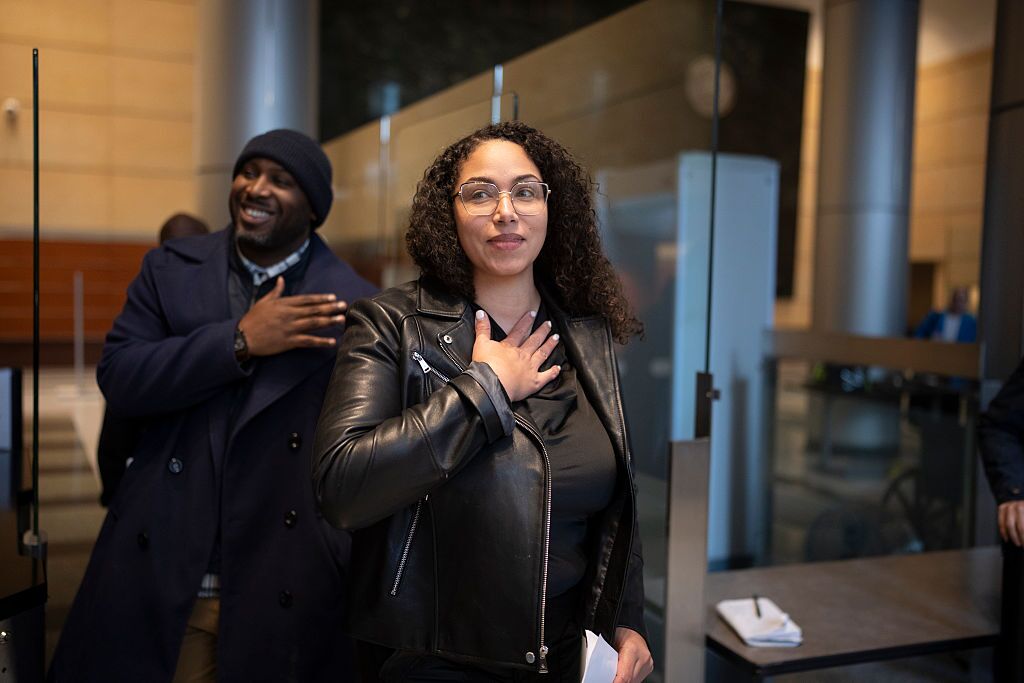
Journalist Georgia Fort (right) and Minnesota state Senate candidate Jamael Lundy are greeted by family and supporters leaving the Federal Courthouse in Minneapolis, Minn., on Jan. 30, 2026, after being arrested in connection to a protest at Cities Church in St. Paul, Minn. Former CNN anchor Don Lemon was also arrested in connection to the Cities Church incident. (Renee Jones Schneider / The Minnesota Star Tribune via Getty Images) As unbelievable as it sounds, President Donald Trump’s Department of Justice has deployed the FACE Act—not against antiabortion extremists who invade clinics and terrorize patients, but against journalists documenting political protests and peaceful activists decrying the killing of Renee Good by federal ICE agents.
The Freedom of Access to Clinic Entrances and Places of Religious Worship (FACE) Act, a law designed primarily to protect abortion providers, clinic staff and patients, is being perverted by the DOJ as part of its broader effort to deny freedom of the press and undermine the rule of law.
The DOJ has criminally charged nine people, including two journalists, under the FACE Act for entering a church to speak out against a pastor who is reportedly the acting field director for ICE in Minneapolis. The high-profile and highly unusual arrests of journalist and former CNN anchor Don Lemon and independent Minneapolis journalist Georgia Fort, along with several peaceful activists, underscore the Trump administration’s latest attack on the rule of law, freedom of speech, and the right to assembly.
The Trump administration purposefully ignored clinic invasions and blockades by antiabortion extremist groups in 2025—all while reproductive health clinic staff and patients have experienced a dramatic surge in threats and violence.
- Since the Dobbs v. Jackson Women’s Health Organization ruling in 2022, reports of clinic obstructions have risen from 45 in 2021, to 777 in 2023 and 2024 combined.
- In addition to reports of obstruction, there were 621 trespassing incidents and 296 death threats or threats of other harm.
- In 2023 and 2024, there were three arson cases and 13 clinic invasions.
The Center for Reproductive Rights Fights Back
They are allowing situations where an antiabortion protester brings an assault rifle to weekend protests at a clinic. The goal is fear.
Liz McCaman Taylor, the Center for Reproductive RightsThe Center for Reproductive Rights has filed two lawsuits related to the DOJ’s selective use of the FACE Act.
In an interview, Liz McCaman Taylor, senior federal policy counsel at the Center, said, “The government is deciding to enforce the FACE Act for religious sites but actively choosing not to enforce the law to protect patients and providers at clinics. Clinics are left to fend for themselves in this environment of terror.”
Immediately upon assuming office, Trump pardoned 23 antiabortion extremists—all convicted under the FACE Act. His DOJ ordered prosecutors to dismiss three pending civil FACE cases and to stop enforcing the FACE Act, except in “extraordinary circumstances.”
The first suit, filed in August 2025, seeks clarification on the administration’s announcement that the FACE Act would be used only in “extraordinary circumstances.”
“We need to know how bad they intend to let things get,” McCaman Taylor told Ms. “They are allowing situations where an antiabortion protester brings an assault rifle to weekend protests at a clinic. The goal is fear. That type of fear, that type of threat, is allowed.”
The second case demands documentation justifying Trump’s pardons for 23 extremists convicted of FACE Act violations and the dismissal of ongoing FACE cases.
“The goal of the lawsuits is to lean on multiple branches of the government to hold the administration accountable,” said McCaman Taylor, “to highlight that they are not only abusing the law, but they are also attacking women.”
Congressional Action to Enforce the FACE Act
In the wake of increased clinic violence across the U.S., 75 members of Congress signed a letter in March 2025 asking the DOJ to “fully enforce the Freedom of Access to Clinic Entrances (FACE) Act and ensure women and health care providers are not threatened, harassed, or abused while trying to enter reproductive health care facilities.”
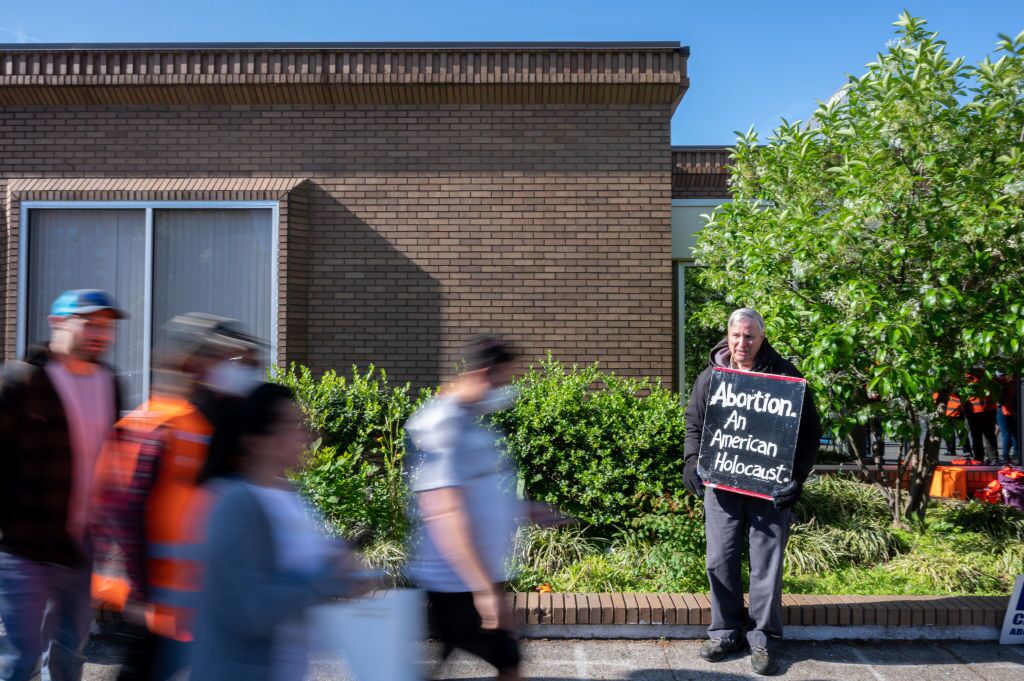
Antiabortion demonstrators harass a patient outside the EMW Women’s Surgical Center on May 8, 2021—Mother’s Day—in Louisville, Ky., flanked by volunteer clinic escorts. (Jon Cherry / Getty Images) The DOJ’s response has been to find ways to turn the FACE Act against pro-choice protesters and other activists.
From Clinic Protection to Political Prosecution: Other Ways the FACE Act Is Being Abused
Both Attorney General Pam Bondi and Assistant Attorney General for Civil Rights Harmeet Dhillon publicly vowed to refocus the FACE Act to protect crisis pregnancy centers from pro-choice protesters. However, they quickly adopted this new strategy of targeting political protesters.
In September 2025, the DOJ used the FACE Act’s civil injunction power against pro-Palestinian protesters who demonstrated at a synagogue in Orange, N.J., in November 2024, before Trump even took office.
The fight to restore the FACE Act to its original purpose—and to protect the rights it was meant to safeguard—has only begun.
“The Center is laser-focused on reproductive rights, and we will have the receipts to show what this administration did to harm women,” said McCaman Taylor.
xxxxxxxxxxxxx
War on Women Report: Meta Removes Abortion-Related Accounts; Louisiana Tries to Extradite California Abortion Provider; Fatal ICE Shootings

MAGA Republicans are back in the White House, and Project 2025 is their guide—the right-wing plan to turn back the clock on women’s rights, remove abortion access, and force women into roles as wives and mothers in the “ideal, natural family structure.” We know an empowered female electorate is essential to democracy. That’s why day after day, we stay vigilant in our goals to dismantle patriarchy at every turn. We are watching, and we refuse to go back. This is the War on Women Report.
Since our last report…
+ The FDA withdrew a rule requiring cosmetics companies to test their products made with talc for asbestos, alarming public health advocates.
+ Two Pennsylvania hospitals told the state they may not provide emergency contraception to sexual assault survivors because of religious objections.
+ Some good news out of Wyoming: The state’s supreme court started the new year by striking down Wyoming’s two abortion bans, ruling that abortion is essential healthcare.
+ Kentucky Attorney General Russell Coleman has tried to remove pro-abortion ads for Mayday Health, an organization that shares information about abortion pills, birth control and gender-affirming care, by sending subpoenas to gas stations in the state carrying the ads in an effort to block the gas stations from showing them.
Let’s not forget what else was sent our way in December and January…
Friday, Dec. 12, 2025: Meta Removes Dozens of Abortion Advice and Queer Advocacy Accounts
Meta removed or restricted more than 50 Facebook, Instagram and WhatsApp accounts run by reproductive justice organizations, queer groups and abortion providers, from October to December 2025.
Many of the suspended accounts were from Europe and the U.K., but the removals also affected accounts in Latin America, Asia and the Middle East. One organization affected was Women Help Women, a global telehealth abortion service that Carrie Baker profiled for Ms. in December.
Repro Uncensored, an NGO tracking digital censorship across gender- and health-related movements, recorded 210 incidents of account removals and severe restrictions on various social media platforms in 2025 as opposed to only 81 in 2024.
“Within this last year, especially since the new U.S. presidency, we have seen a definite increase in accounts being taken down, not only in the U.S., but also worldwide as a ripple effect,” said Repro Uncensored’s executive director Martha Dimitratou.
Meta has since said more than half the accounts Repro Uncensored identified, including Women Help Women’s, have been reinstated.
Thursday, Dec. 18: Trump Administration Strips Veterans of Reproductive Healthcare
While the rest of America was preparing to sign off for the year, at the end of 2025, the Trump administration quietly reinstated a full exclusion on abortion and abortion counseling for veterans and their dependents. The new rule undoes a 2022 Biden-era policy, introduced just after the end of Roe v. Wade, that authorized the Department of Veteran Affairs (VA) to provide abortions in cases of rape, incest or threats to the pregnant woman’s health.
Trump’s new rule change drew criticism from a wide range of veterans’ rights and healthcare groups. The House and Senate Veteran Affairs Committee called the administration’s central claim that veterans don’t need abortion access as part of their essential medical healthcare “insulting and ignorant.”
Women veterans are already at higher risk for sexual assault and rape than many other groups in the country, and veterans also tend to have a higher rate of health conditions leading to more pregnancy complications.
“You can’t thank a veteran for putting her body on the line for her country, then turn around and take away her right to control it. There is nothing patriotic about denying our nation’s heroes the care they deserve and the ability to determine their own futures,” said Rep. Morgan McCarvey (D-Ky.), a member of the House Committee on Veterans’ Affairs.
Wednesday, Jan. 7, 2026: ICE Officer Fatally Shoots Renee Nicole Good in Minneapolis
On Jan. 7, ICE agent Jonathan Ross fatally shot 37-year-old Renee Nicole Good. Good was dropping her 6-year-old son off at school when multiple ICE agents demanded she exit her car before one fired multiple shots through her car window, according to a bystander video that The Washington Post analyzed.
In response, President Donald Trump, Vice President JD Vance, Department of Homeland Security Secretary Kristi Noem and others from the Trump administration ridiculed Good, pointing to her pronouns in her Twitter bio and calling her “disrespectful,” a “fucking bitch” and “AWFUL (Affluent White Female Urban Liberal).”
Jennifer Weiss-Wolf wrote in Ms.,
“The only civilized political response should have been a call for an independent investigation, but it seems like every MAGA with a mic is hellbent on making this a cautionary tale: Women who respond to and resist the authority of a man with a gun will get exactly what they deserve. ‘Fucking bitch,’ possibly muttered by Ross as he let bullets fly (caught on air thanks to real-time video footage), is perhaps the most grotesque case in point.”
Friday, Jan. 9: San Antonio Shuts Down Abortion Travel Fund
The City of San Antonio’s abortion fund became the latest in Texas to shut down due to a new state law banning government funds for people who travel out of the state for abortions.
Last April, San Antonio’s City Council approved $100,000 for its Reproductive Justice Fund to provide resources for residents who have to travel outside of the state for abortion care, since abortion is illegal in Texas under nearly every circumstance. The next day, Texas Attorney General Ken Paxton’s office sued the city, and the lawsuit was dismissed with the new law that prevents Texas funding for abortion-related travel. Paxton claimed victory, stating, “I will always do everything in my power to prevent radicals from manipulating the system.”
In the nearly four years since the Supreme Court overturned Roe v. Wade with the Dobbs decision, abortion funds have become a lifeline for patients in states with bans who need to travel out of state for care. Texas’ law SB 33, which Gov. Greg Abbott signed in August 2025, prevents the use of money for “logistical support” for abortion and allows Texas residents to sue cities they believe have violated the law. In September, Austin shut down its own Reproductive Healthcare Logistics Fund after the city allocated $400,000 to the fund in 2024.
Tuesday, Jan. 13: Louisiana Attempts to Extradite California Abortion Provider
Louisiana Attorney General Liz Murrill has signed an extradition request for California OB-GYN Dr. Rémy Coeytaux for allegedly mailing abortion pills to a patient in Louisiana, where abortion is banned. In September, Murrill signed an arrest warrant for Coeytaux.
California has a shield law in place that protects doctors who prescribe medication to patients in other states, and California Gov. Gavin Newsom denied Murrill’s extradition request, saying, “We will not allow extremist politicians from other states to reach into California and try to punish doctors based on allegations that they provided reproductive health care services. Not today. Not ever.”
Coeytaux is the second doctor for whom Murrill has requested extradition. In 2025, Murrill and Texas A.G. Ken Paxton attempted to extradite New York doctor Margaret Carpenter for allegedly sending medication abortion to patients in Louisiana and Texas. Like Newsom, New York Gov. Kathy Hochul cited the state’s shield law and said there was “no way in hell” she would extradite Carpenter.
Wednesday, Jan. 14:
+ North Carolina Woman’s Death Determined to Be Result of the State’s Abortion Ban
This month, ProPublica published the story of Ciji Graham, a police officer in North Carolina who died in November 2023 when doctors wouldn’t give her timely care for her fatal heart condition because she was pregnant.
Thirty-four-year-old Graham, already mother to a 2-year-old son, lived in Greensboro, N.C. In North Carolina, abortion is banned after 12 weeks of pregnancy, although Graham was only six weeks along at the time. Even though Graham had a rapid, irregular heartbeat that put her at risk of heart failure, her cardiologist refused to perform a cardioversion—a procedure that would have shocked Graham’s heart back into rhythm—because of her pregnancy, despite medical consensus that cardioversion during pregnancy is safe.
Knowing she wouldn’t be able to receive the care she needed for her heart until she wasn’t pregnant anymore, Graham scheduled an appointment for an abortion at A Woman’s Choice, the only abortion clinic in Greensboro. However, days before she could make it to her scheduled appointment, Graham died of her heart condition, made worse by pregnancy complications.
Graham is one of at least 12 women (and probably many more unreported cases) who have died in the U.S. since 2022 after post-Roe v. Wade abortion bans meant they couldn’t access timely healthcare for pregnancy complications.
+ Senate Republicans Try to Restrict Medication Abortion Access With Unfounded Claims
Also on Jan. 14, the Senate Health, Education, Labor & Pensions (HELP) Committee held a hearing on medication abortion pills deceptively titled “Protecting Women: Exposing the Dangers of Chemical Abortion Drugs.” Despite the extensive body of scientific evidence that the mifepristone pill is safe, Republican legislators used the hearing to showcase junk science and misleading narratives, including the baseless far-right claim that abortion pills are contaminating drinking water.
Sen. Patty Murray (D-Wash.) criticized Congress Republicans for using the hearing to spread misinformation and advance a political agenda, saying,
“The only reason mifepristone is regulated as heavily as it already is, is because of antiabortion politics, not because of science. And now Republicans are holding this hearing to peddle debunked junk ‘studies’ by antiabortion organizations which have no credibility and have been forcefully condemned by actual medical organizations, to justify reinstating more burdensome requirements and ultimately ripping medication abortion off the shelves entirely. We all know this hearing is not about the actual science or the facts—and it’s certainly not about what is best for women’s health.”

(Natalie Behring / Getty Images) Saturday, Jan. 24: ICE Kills Second Minneapolis Resident Alex Pretti
Barely two weeks after Renee Nicole Good’s murder, ICE agents murdered 37-year-old ICU nurse Alex Pretti in Minneapolis while he was helping a woman protester (protesting ICE and Good’s killing) whom an ICE agent had pushed to the ground.
After Good’s murder at the start of the new year, anti-ICE organizing in Minneapolis has intensified during the month of January, with thousands gathering for protests and declaring a general strike from work. Pretti’s death marked the third shooting of a Minneapolis civilian by federal agents during January, and the second fatality. (ICE agents also shot Julio Cesar Sola-Celis, a Venezuelan immigrant, in the leg, but he has survived as of the time of this writing.)
As with Good’s killing, Trump administration officials have avoided taking accountability for Pretti’s death and criticized the protestors in Minneapolis. In response, Pretti’s family released a statement saying, “Alex was a kindhearted soul who cared deeply for his family and friends and also the American veterans whom he cared for as an ICU nurse at the Minneapolis VA hospital. … The sickening lies told about our son by the administration are reprehensible and disgusting. Alex is clearly not holding a gun when attacked by Trump’s murdering and cowardly ICE agents.”
xxxxxxxxxxxxxx
These states voted to protect abortion rights. Conservative lawmakers are not standing down
After Missouri residents voted to repeal their state’s near-total abortion ban and enshrine abortion rights into their state constitution, advocates quickly got to work. In a lawsuit filed the day after the 2024 election, abortion providers challenged not only the constitutionality of the state’s ban, but also a slew of other restrictions that, they said, made their jobs so arduous as to be impossible.
More than a year later, they are still in court.
Last week, Missouri abortion rights supporters and opponents ended a two-week-trial over the legality of dozens of Missouri restrictions. But Missouri is far from the only state where activists are waiting to realize the full promise of ballot measures that were meant to expand abortion rights in states that passed them. Legal battles over the measures are also raging in Arizona, Michigan, Montana, Nevada and Ohio. In some of these states, lawmakers have also introduced legislation that, experts say, would undercut the will of voters who passed the measures.
At least three states are set to vote on pro-abortion-rights ballot measures come November. Advocates hope they’ll join the 12 states that passed such measures after the fall of Roe v Wade, which triggered a national backlash that highlighted how popular abortion protections are even in red states. But abortion rights supporters are warning that the fights that have followed prove that such measures are not a panacea, given the obstacles that decision-makers can throw up.
“A ballot measure changes the constitution and it says that the voters want receptive rights and freedom to be protected, but the amendments don’t make everything go away on their own,” said Amy Myrick, senior counsel at the Center for Reproductive Rights, which is involved in several post-measure legal battles. “The courts and the legislatures have to follow through to strike down restrictions when they’re unconstitutional. And even when there’s a right in the constitution, burdensome restrictions can stay on the books and make it difficult or even impossible for people to get care.”
While advocates have successfully used the measures to strike down sweeping abortion bans, they hoped to use the measures to also eliminate the hundreds of restrictions that had gnawed away at access to abortion in the decades before the US supreme court overturned Roe v Wade. Missouri’s history, in particular, offers a snapshot of these restrictions’ power. Onerous rules around abortion clinics’ operation – such as a requirement that providers perform two pelvic exams on patients – nearly forced the state’s last abortion clinic to close in 2019. The number of abortions performed in Missouri plunged: just 167 abortions were recorded in 2020. That marked a 97% decrease from 2010, far more than the national average.
During the trial earlier this month, Missouri abortion providers argued that the measure rendered many of the state’s restrictions unconstitutional . Among the restrictions they hope to remove are a ban on prescribing abortion pills through telehealth, a requirement that physicians develop an in-depth complications plan and a mandate that abortion patients wait 72 hours after an initial consultation before undergoing the procedure.
These laws, they argued, constituted “targeted regulations of abortion providers” (Trap) laws, leading abortion to be policed unlike any other medical procedure.
“I provide vasectomies routinely,” Dr Margaret Baum, chief medical officer with St Louis-based Planned Parenthood Great Rivers, testified. “And I am not required to have a complication plan, contact a primary care physician, even ask the patient how many miles they live from the health center.”
State officials, meanwhile, maintained that the restrictions were necessary to protect women’s health.
“If they’re safe, these requirements don’t burden them,” Peter Donohue, Missouri’s deputy solicitor general, said in court of abortion providers. A ruling is not expected for several months.
‘A snub to the voter’
By 2022, the year that Roe fell, 24 states had enacted Trap laws. States passed most of those laws after 2010, when Republicans – enraged by Barack Obama’s 2008 ascension to the presidency – mounted a nationwide campaign dedicated to retaking state legislatures.
The legal battles outside Missouri are also largely over Trap laws. Earlier this month, Arizona advocates went to trial over a requirement that requires patients to make two in-person trips to an abortion clinic 24 hours apart and a ban on telemedicine abortion (which has become an increasingly common abortion method since Roe’s demise). In Ohio and Michigan, activists are hoping to strike down a similar 24-hour waiting-period law, among other restrictions, while Montana advocates are fighting against 2024 licensing requirements that could force abortion clinics to close. In Nevada, they have sued to strike down a 1985 law that requires minors to notify their parents before getting an abortion.
In the suburbs of Phoenix, Julio Morera and Lisa Rapasky, members of Arizona for Abortion Access, canvas before election day, in Mesa, Arizona, on 11 March 2024. Photograph: Kasia Strek/The Guardian Conservative legislators in some of these states are also still trying to implement new abortion restrictions. Last year, Ohio lawmakers introduced a bill to strengthen the anti-abortion doctrine of “fetal personhood”, which claims that embryos and fetuses deserve full legal rights and protections, even though 57% of voters supported enshrining abortion rights in the state constitution in 2023. In Montana, where 57% of voters decided in 2024 to codify the right to an abortion up until fetal viability, legislators considered a bill that would ban people from helping others get “illegal” abortions both in and out of the state. (The bill did not explain what constituted an “illegal” abortion.) Both state legislatures are dominated by Republicans, but neither bill became law.
However, the Republican-controlled Arizona state house has already advanced three fetal-personhood bills this year. If fully enshrined in law, fetal personhood would make abortion illegal – and fly in the face of the 62% of Arizona voters who, in 2024, voted to protect abortion rights.
Jos Raadschelders, an Ohio State University professor who studies the structure and functioning of governments, called Ohio legislators’ attempts to circumvent their state’s ballot measure “an act of arrogance”.
“Ignoring the will of the voters is democratic backsliding,” he said. “It’s a snub to the voter.”
Even if abortion providers win their case in Missouri, the procedure may not remain accessible for long. Even though 51% of the state’s voters supported the pro-abortion ballot measure in 2024,anti-abortion activists have placed a fresh measure on the 2026 ballot that, if passed, would in effect repeal the 2024 measure and restore the state’s abortion ban.
Mallory Schwarz, executive director of Abortion Action Missouri, called the upcoming measure “disheartening”.
“There was so much back and forth around the ballot, solving everything in one go, but it was never going to be that simple,” she said. “It’s going to take a concerted effort, a multipronged legal, organizing, advocacy, grassroots strategy, in order to get Missouri to a point of people being able to exercise the rights they voted for. That’s certainly frustrating.”
xxxxxxxxxxxxxxxxxxxxxxxxxx
The Fake Clinics Taking Over Reproductive Healthcare
LAWRENCEVILLE, Ga. — A small crowd of abortion rights advocates gathered at a public comment session of the Gwinnett County Department of Planning and Development in July 2025. The most diverse and second-most populous county in Georgia, Gwinnett County distributed millions of dollars in U.S. Department of Housing and Urban Development grants to local nonprofits in 2025, with most recipients receiving something in the tens of thousands.
One organization, Georgia Wellness Group, was set to receive a much bigger prize: $450,000.
According to its website, Georgia Wellness is a clinic that provides “compassionate,” “holistic care” for women and families. But this is a rebrand from its longstanding religious, explicitly anti-abortion identity. The group arguably fits into a category known as “crisis pregnancy centers,” or CPCs, part of a project from the Christian Right dedicated to replacing public reproductive healthcare with anti-abortion “clinics.”
CPCs have been a central force in the anti-abortion movement for decades. There are at least 3,000 nationwide, with an estimated $2.5 billion in revenue for 2025, cultivating what Debra Rosen, executive director of Reproduction Health and Freedom Watch, calls an “image of medical legitimacy.” Many open near abortion clinics and advertise themselves as medical facilities, but most are not medically licensed. They might provide pregnancy tests, “limited ultrasounds” and STI tests, but not treatment. About 25% of the centers offer free baby supplies — but only for those who go through hours of religious education.
CPCs have been roundly denounced by the American medical community for pressuring and misinforming clients. Without medical licenses, most CPCs are unaffected by federal privacy laws, like HIPAA.
Georgia Wellness is a former affiliate of Obria, a national CPC conglomerate dedicated to replacing public reproductive health with “medicalized” anti-abortion clinics. When Roe was in effect, writing CPCs into state budgets was an anti-abortion workaround. Now, as abortion clinics shutter and the growing Christian Right funnels more public money to CPCs, Obria’s plan may be coming to fruition.
Georgia
Georgia is one of 10 states that did not expand Medicaid under the Affordable Care Act. It consistently ranks among the highest in the nation for maternal mortality (with a doubled rate for Black women), which could be because, as of 2024, more than half of the state’s 159 counties lack a single OB-GYN. After Roe was overturned, a six-week abortion ban went into effect. Since then, four of the state’s roughly 14 abortion clinics have shuttered; CPCs now outnumber them 6 to 1. ProPublica found multiple cases in Georgia in which the abortion ban has killed pregnant women.
At the same time, Georgia allocates roughly $2 million annually to CPCs through an “Alternatives to Abortion” or “A2A” program, which provides steady state funding to CPCs. Through similar policies, Florida sent $29.5 million to CPCs in 2024, while Texas leads with a whopping $140 million.
About a hundred miles from Gwinnett County, Julia Callahan has experienced these dual realities. In 2022, early in her second pregnancy, Callahan lost one of the twins she was carrying and faced a bout of terrible illness. She faced difficulties getting consistent OB-GYN appointments, considering only two offices in her region even took the Medicaid that had long covered her family.
“I threw up in the parking lot of my OB-GYN because I was so distraught."
Callahan sought another option when friends recommended a downtown facility offering free ultrasounds. At the center, staff in nursing attire conducted Callahan’s ultrasound and told her that something didn’t look right with her baby’s kidneys; they advised her to go to her OB-GYN right away. “I threw up in the parking lot of my OB-GYN because I was so distraught,” Callahan says.
When she arrived at her OB-GYN’s office and handed the ultrasound over the counter, the first question the doctor asked was, “How did you end up at a crisis pregnancy center?” He then quickly reassured Callahan that everything was completely fine with her pregnancy — and wanted her to be wary of the center, which does not employ doctors.
Later on, Callahan says, she got a Facebook message from the center checking in on her. When Callahan expressed her anger at their misguided care, the woman responded, “We’ll pray for you.”
"The best client you ever get is one that thinks they’re walking into an abortion clinic.”
The experience launched Callahan into political action to address Georgia’s reproductive health crisis. While, as Callahan says, there are only two actual OB-GYNs who take Medicaid in the region, there are six CPCs. One CPC in Macon has received state funding for at least the past three years. “There’s no wonder why [CPCs] are kept busy,” Callahan muses. As she sees it, Georgia’s reproductive health crisis comes from a severe lack of care, combined with the deceptive tactics of CPCs.
Georgia’s situation — including that of Georgia Wellness — is a salient example of national trends. In the summer of 2025, Republicans approved the largest cut to Medicaid in the history of the program. At the same time, the public funding of CPCs is skyrocketing, with $430 million in federal funding from 2017 to 2023, plus a nearly $500 million increase in state funding in just the first two years after the Dobbs v. Jackson decision.
Much of this money comes without any oversight.

Shanette Williams holds a photo of her daughter Amber Nicole Thurman, who ProPublica reported died in 2022 from a treatable infection due to delays to her medical care stemming from Georgia's restrictive abortion law. Photo by ROBERTO SCHMIDT / AFP via Getty Images
Medicalization
As CPCs have worked toward the goal of “replacing” reproductive healthcare, they’ve used a tactic called “medicalization,” an attempt to create a patina of legitimacy through integrating more medical services. As one anti-abortion activist explained at a 2012 Heartbeat International conference, “We want to look professional. … We want to appear neutral on the outside. The best client you ever get is one that thinks they’re walking into an abortion clinic.”
But with expanded services have come new risks — like in 2025, when one CPC was sued for failing to diagnose an ectopic pregnancy during an ultrasound, even though scans for the condition are often advertised by CPCs.
At the Gwinnett County public comment session, Georgia Wellness CEO Robin Mauck claimed Georgia Wellness was not a CPC, touting a list of services, including pediatric care. Abortion rights activist Desirrae Thomas, an advocate with the group Amplify Georgia Collaborative, disputed this characterization simply: “They’ve changed their image to be more societally palatable.”
Obria
The connection between Georgia Wellness and Obria was also a focus of advocates’ ire. Obria has a history of deceptive tactics, shady finances and white nationalist statements— former CEO Kathleen Eaton-Bravo once said that abortion and contraception “threaten our culture’s survival” and had made Christianity begin to “die out” in Europe, where “immigrant Muslims came to replace [Christians].”
While some conglomerates are explicitly religious, Obria brands its clinics as indistinguishable from standard medical facilities.
In its strategic plan for 2019 to 2025, Obria identified itself as part of the “pro-life medical industry” and said it would bolster clinics with more medical services to bring in clients, who would then be informed about “alternatives to contraception,” leading to “decreased abortion rates.”
In 2021, then-CEO Kathleen Eaton-Bravo told the host of a religious podcast that Planned Parenthood offered STI testing to get “girls on that slippery slope of drugs, plugs, jellies and jams.” She had previously said that Obria would try to “get patients out of Planned Parenthood clinics” by “matching their services, minus contraception and abortion.”

A cloyingly worded sign outside of an anti-abortion center in Worcester, Mass., lures healthcare-seekers away from Planned Parenthood on July 5, 2022 PHOTO BY PAT GREENHOUSE / THE BOSTON GLOBE VIA GETTY IMAGES
Dawn Hughes, Eaton-Bravo’s successor, didn’t split hairs when she left Obria in 2023, calling the organization “zealots” and arguing the medical facade was misleading and unethical.
Obria did not reply to a request for comment.
But it seems that federal and state governments are on board with Obria’s plan. Obria received $5.1 million in Title X family planning funding during the first Trump administration (later revoked, under the Biden administration, in 2021). Elsewhere, Alabama Sen. Katie Britt’s new MOMS Act would even establish a federal website with a list of CPCs and federal funding opportunities for them, to “build a comprehensive culture of life.”
Days before Gwinnett County’s funding decision was announced, Georgia Wellness said it was no longer affiliated with Obria, though it remains a “faith-based organization.” The Georgia Wellness website is now filled with bland grays and adages about holistic care, promoting a roster of medical services.
But look more closely and more signs of a CPC (and Obria) are there. For one thing, Georgia Wellness discloses (at the bottom of its website) that it does not refer for or perform abortions— only “abortion consultations.” Contraception is nowhere to be found on its list of medical services, though the clinic will remove an IUD. In a recent blog post, the clinic endorses cycle tracking and “natural birth control.” Another outlines exaggerated “abortion risks.”
Georgia Wellness’ sex education curriculum, which is utilized by a number of organizations in the county, is simple: Don’t have sex before marriage. The group also provides “Thrive Education,” which an older version of its website called “a Christ-centered foundation” for parenting.
While some conglomerates are explicitly religious, Obria brands its clinics as indistinguishable from standard medical facilities.
Prior to its recent rebrand, pages on the center’s website even promoted abortion pill reversal, a practice touted by CPCs but decried as unproven and dangerous by the American College of Obstetricians and Gynecologists. The center’s CEO, address, phone number, and much of its staff also remain the same as it did while it was called Obria.
The vast majority of Georgia Wellness’ $450,000 grant will be used to build a “maternity home,” another project in tune with the rising Christian Right. These postwar-era shelters for unmarried pregnant women waned after Roe but have risen steadily in the wake of Dobbs. While maternity homes can offer services, they are often hotbeds of religious coercion and strict rules. According to Jennifer McKenna, a senior adviser at the watchdog organization Reproductive Health and Freedom Watch, maternity homes (and CPCs) often act as “feeding mechanisms” for the Christian adoption industry.
Georgia Wellness has been unclear about what practices its maternity home will use, but if its history is any indication, the home will likely include religious curriculum for marriage and parenting. Mauck herself once served as the executive director of a nearby maternity home called the Haven at Hebron, which is proudly anti-abortion and affiliated with the Southern Baptist Convention.
Mauck and Georgia Wellness declined to comment to In These Times.
Fighting back
Marvin Lim is one of a slate of state Democratic lawmakers who have introduced counter-legislation in Georgia to block funding for CPCs. State Rep. Anne Allen Westbrook, who helped introduce the legislation, explains that, “For most of us, when we are patients in a healthcare setting, we want evidence-based information to make decisions. If you were seeking any other kind of care, you wouldn’t want it through someone’s political or partisan or faith-based lens.”
Lisa Battisfore, founder of the anti-CPC group Reproductive Transparency Now, puts it more bluntly: “If you had a serious heart condition, would you want to find out that your cardiologist was against heart surgery?”
The anti-CPC legislation would require more transparency from CPCs and reallocate their funding toward evidence-based public health programs. While the progress has been slow, advocates say the bills have led to necessary discussions within the legislature. Georgia, a center of anti-CPC activism, also houses the national CPC Map at the University of Georgia (under professors Andrea Swartzendruber and Danielle Lambert) and has seen collectives like Amplify Georgia and SPARK foster more education about the impact of CPCs on health outcomes.
And across the country, other attempts have been made to counter CPCs.
“For most of us, when we are patients in a healthcare setting, we want evidence-based information to make decisions. If you were seeking any other kind of care, you wouldn’t want it through someone’s political or partisan or faith-based lens.”
In Texas, controversy over the state’s massive CPC funding program led to some success. Though the state has the lowest insurance coverage rate in the country and ranks among the last in giving cash assistance to poor families, the state sent $70 million a year to CPCs in 2024 and 2025 through a program left largely unmonitored for years. After a 2024 ProPublica investigation revealed many CPCs were overbilling the state, the program now requires CPCs to document expenses. CPCs and anti-abortion activists lobbied against the change, calling it “red tape.”
“I think that’s really a good first step to dismantling this industry — getting some accountability in the first place,” says Annie Romano, an organizer with the advocacy organization Reproaction. But it’s still only a small victory.
Battisfore believes that some of the counter-legislation has been futile — or even done more harm than good — by allowing court precedents to be set in CPCs’ favor. In 2015, for example, the California FACT Act required CPCs to disclose that they did not provide abortion care and provide resources on where clients could access it. But in 2018, that law was struck down by the Supreme Court, based on First Amendment rights.

Abortion rights activists condemn candidates Herschel Walker and Brian Kemp's anti-abortion stances at the Georgia Republican Party Office on July 11, 2022, in Atlanta, Ga. Photo by Derek White/Getty Images for MoveOn
“That Supreme Court decision has been the basis of why pretty much all legislative attempts have failed,” says Battisfore, because it “set the precedent for CPCs to use the free speech defense” and “no one’s going to take the risk on that type of legislation, because it failed so miserably.”
That being said, similar legislation targeting deceptive advertising has been successful so far in Connecticut. Battisfore and other experts say they think legislation to stop public funding might prove most successful if state lawmakers could be mobilized.
She also says that, because of legislative gridlock, her organization Reproductive Transparency Now focuses most on face-to-face discussions and education — essentially, trying to warn people about CPCs before they reach them. Amplify Georgia has adopted similar approaches in its #StopFakeClinics initiative, alongside its legislative attempts.
By the day of the Gwinnett County Board of Commissioners budget vote, Amplify Georgia’s state campaign director, Allison Glass, Lim and Swartzendruber and nearly all of the advocates who spoke out at the meeting had received a cease-and-desist letter from Georgia Wellness. The letter to Lim called for him to stop his “false and defamatory statements” on social media, including that “Obria is active in Georgia” and “Georgia Wellness pushes an anti-abortion, religious agenda.”
Instead, Lim posted the letter on social media.
At the meeting, Glass shared testimony from the former medical director of Georgia Wellness, Dr. Marc Jean-Gilles (with his permission). “The organization offers prenatal care to patients without having a provider who has admitting privileges at any hospital,” Glass read, quoting Jean-Gilles. “Many of their patients are misled.”
Ultimately, the commissioners voted 3-2 to approve the budget, with two yes votes from Democratic county commissioners, including Nicole Love Hendrickson, board chair. In an interview with the Atlanta Journal-Constitution, Hendrickson said she was concerned the county could be sued if it “rejected the grant application over political or ideological considerations.”
The vote happened quietly and without much fanfare. But it’s one among many in a patchwork of decisions rapidly reshaping the reproductive health landscape into a far-right fantasy.
Despite the vote, Glass says Amplify will continue its #StopFakeClinics campaign.
“It feels more important than ever that we are communicating the truth,” Glass says.

No comments:
Post a Comment