~~ recommended by emil karpo ~~
The little-known companion case to Korematsu could—and should—have been a much bigger deal

78 years ago yesterday, on Monday, December 18, 1944, the Supreme Court handed down its infamous ruling in Korematsu v. United States—a decision so thoroughly discredited that is part of what Columbia law professor Jamal Greene calls “the anticanon,” alongside such other gems as Dred Scott (endorsing and enshrining slavery) and Plessy v. Ferguson (
As just about every student of law or American history learns, in Korematsu, a 6-3 majority upheld the criminal conviction of Fred Korematsu, a U.S. citizen of Japanese descent, for violating exclusion orders that barred anyone of Japanese ancestry from just about the entire West Coast. Justice Black’s majority opinion notoriously turned a blind eye toward the blatant racism animating the exclusion policy (although a small number of German and Italian nationals in the United States were detained under the Alien Enemy Act of 1798, none of their U.S. citizen descendants were). And the federal government didn’t help matters by deliberately misleading the Court about two central factual questions in the case: whether invasion of the west coast was still a serious possibility as of summer 1942 (after the U.S. victory at the Battle of Midway, it wasn’t); and whether mass, indiscriminate exclusion and detention was necessary, versus individualized screenings of suspected spies. (When he was Acting Solicitor General, Neal Katyal formally apologized on behalf of the Office of the Solicitor General.)

But Korematsu was the second internment-related case that the Court decided on that blustery December Monday. History has all-but forgotten the first—a case about a 24-year-old U.S. citizen of Japanese descent named Mitsuye Endo. That’s too bad, because the Court’s unanimous decision in Ex parte Endo was supposed to close the internment camps. Had it, history might remember the Court’s role in internment somewhat differently.
Excellent histories of the internment policy, including its odious origins, abound. For one with a particular focus on litigation challenging it, consider Peter Irons’s Justice at War. A more comprehensive summary is the 1980s-era final report of the congressionally created Commission on Wartime Relocation and Internment of Civilians, Personal Justice Denied.
To make a long story short, the three key legal moments were February 18, 1942, when President Roosevelt issued Executive Order 9066—authorizing military authorities to identify “military areas” from which any individual could be “excluded”; March 2, when Lt. Gen. J.L. DeWitt issued “Public Proclamation No. 1,” designating much of the West Coast as a “military area” covered by the Executive Order; and March 21, 1942, when Roosevelt signed into law a cryptic statute that made violations of such exclusion orders misdemeanor criminal offenses, thereby giving those orders teeth. DeWitt subsequently issued a series of curfew and exclusion orders. The former imposed curfews on anyone of Japanese descent residing in designated military areas; the latter required their exclusion and relocation to internment camps hundreds (if not thousands) of miles away. (Of course, calling them “camps” underplays the extent to which they were effectively prisons for those convicted of no crime.)
Most of the more than 120,000 Japanese nationals and American citizens of Japanese descent covered by the exclusion and relocation orders complied with them (losing their homes, their livelihoods, and those possessions they couldn’t take with them). But a handful did not, and challenged their criminal convictions for violating those orders. Those challenges led to three of the four internment-related cases to reach the Court: Hirabayashi v. United States, Yasui v. United States, and Korematsu. In June 1943, the Court unanimously upheld the convictions for violating curfew orders in Hirabayashi and Yasui, albeit on incredibly narrow grounds. 18 months later, in Korematsu, the Court twisted itself into a pretzel to uphold Fred Korematsu’s conviction for violating an exclusion order. (All three convictions would be vacated in the 1980s, thanks to the work of the CWRIC and countless others.)
But the fourth internment case to reach the Court followed a very different path. Endo was one of the overwhelming majority of internees who left her home when ordered and relocated at the government’s direction (in Endo’s case, first to the Tule Lake camp in California, and then to the Topaz camp in Utah). Thus, her legal challenge to internment was not a challenge to a criminal conviction; it was framed as a habeas petition challenging the legality of her confinement without trial. What’s more, in a remarkable act of selflessness, Endo rejected an attempt by the government to moot her specific case, turning down an offer to be released on condition that she not return to the West Coast, and opting instead to remain at Topaz and continue pressing her appeal.

The Court heard oral argument in Korematsu and Endo on October 11 and 12, 1944. And although the Justices were bitterly divided in Korematsu, they were unanimous in Endo that Endo should be freed. The majority opinion, assigned to Justice William O. Douglas, avoided couching the holding in constitutional terms (concurring opinions from Justices Owen Roberts and Frank Murphy were far more direct on the constitutional issues). Instead, Endo’s core holding is that Congress had done nothing to authorize the long-term detention of those who had not violated the March 1942 criminal statute. (The Non-Detention Act, enacted in 1971, is often described as a repudiation of Korematsu. It isn’t; its requirement of specific statutory authority for the detention of any U.S. citizen would have been satisfied in Korematsu. It’s better understood as a codification of Endo.)
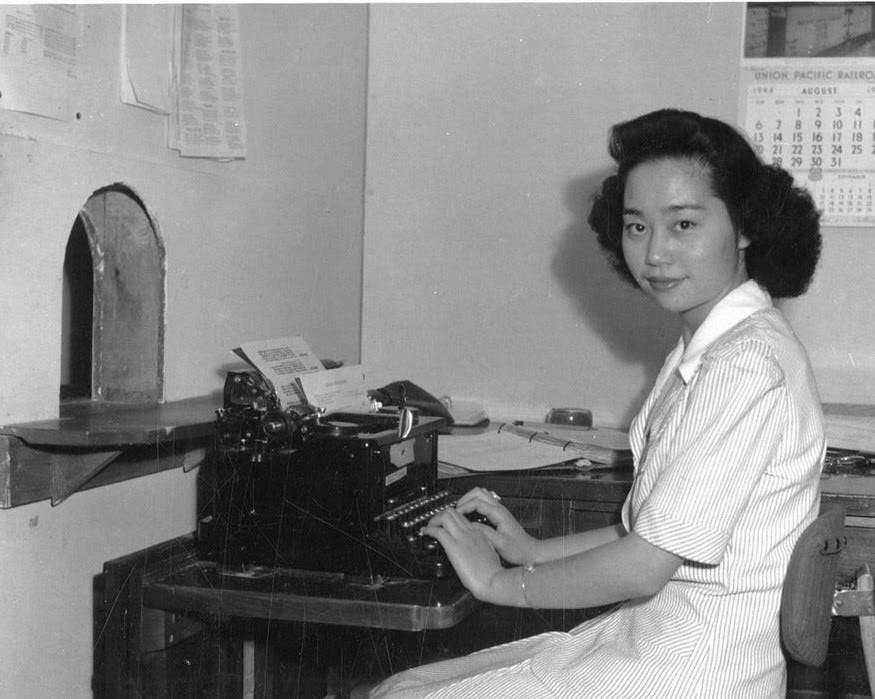
But the Justices fully understood that their bottom line—that the government had no statutory authority to intern “concededly loyal” citizens like Endo—would close the camps. Even if the government could have made different arguments about Japanese nationals, or about individual internees about whom it did have security concerns, the camps were based on a suspicion-less model that the Supreme Court in Endo categorically repudiated. Before the Battle of the Bulge in Europe or the Battle of Leyte Gulf in the Pacific, the Court was ready to put an end to internment as a policy.
And when the decisions in Korematsu and Endo were finally handed down on December 18, Endo even came first—since its author, Justice Douglas, was junior to Korematsu’s author, Justice Black. Given all of this, why wasn’t (and why isn’t) Endo a bigger deal?
The answer is because the Roosevelt Administration beat the Court to the punch. On Sunday, December 17—just one day before the Court would hand down Korematsu and Endo—the government issued Public Proclamation No. 21, announcing the closure of the camps as of January 2, 1945. Thus, it wasn’t Endo that closed the camps; it was the beneficence of the Executive Branch.
Of course, this timing was no coincidence. In a fantastic 2003 essay in the Harvard Law Review, “Remember Endo?,” my former University of Miami colleague Patrick Gudridge surveys the copious evidence that the White House had been tipped off about the forthcoming ruling in Endo, whether by Justice Frankfurter (who continued to serve as an informal advisor to the President once he was on the Court); or by Chief Justice Stone (or, as is most likely, both). Indeed, Justice Douglas had grown so impatient with the Court’s delay in handing down Endo (which had been ready to go before Thanksgiving) that he sent several angry memos to the Chief Justice urging the release of the ruling.
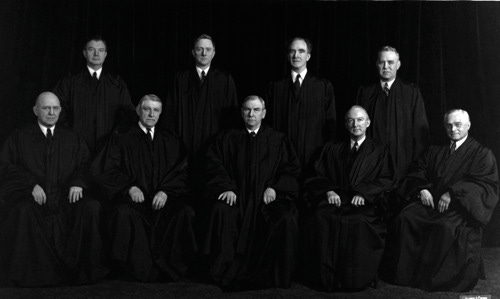
Whether Stone was stalling to give the government the chance to go first, or whether the government rushed into action (announcing the closure of the camps on a Sunday?) once the date for the rulings was finally set, it seems clear that the December 17 announcement was meant so that the camps would be closed “voluntarily,” and not by judicial decree.
As Gudridge’s essay notes, it’s fascinating to imagine what would have happened if history had gone a different way—if the decision in Endo had directly closed the camps. Would we look back on Korematsu differently? Would the Court have shown more of a backbone during later wars (especially Vietnam) if it had received broad acclaim for such a meaningful pro-civil-liberties ruling while the Second World War still raged (versus the celebrated Civil War-era ruling in Ex parte Milligan, which came in April 1866, nearly a full year after the guns had fallen silent). Would it not have taken quite so long to fully tell the story of the nefarious decisions that led more than 120,000 American citizens and Japanese nationals into the camps?
Whatever the answers to these counterfactual questions, it remains the case that, in Ex parte Endo, the Supreme Court tried to close the internment camps. And it is likely that the reason why the Court to this day receives so little credit for that attempt is because some of its members spilled the beans.

No comments:
Post a Comment