https://www.cjr.org/news/
~~ recommended by emil karpo ~~
“None of us are signing this pledge,” said one reporter.
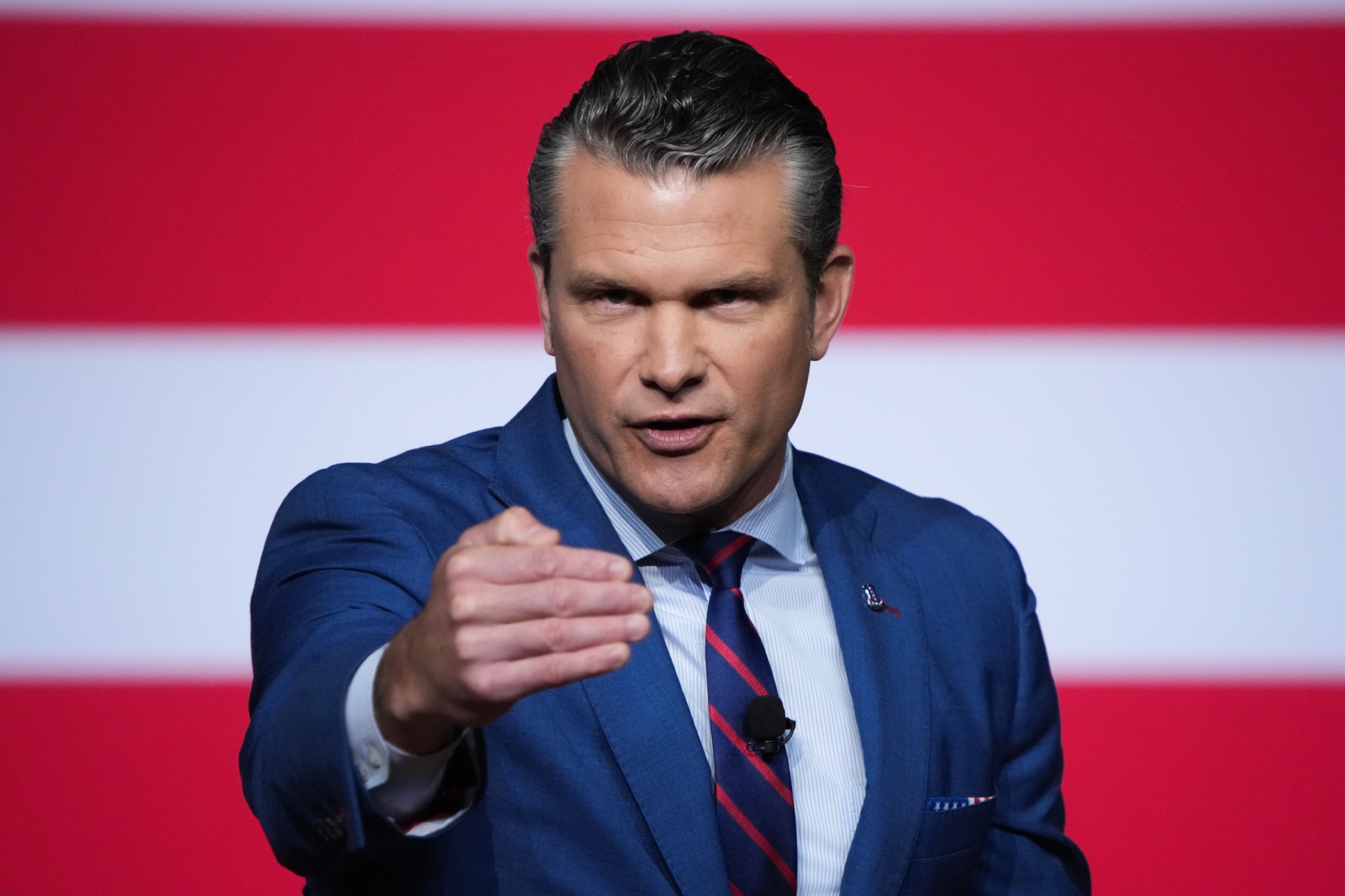
(Andrew Harnik/Pool via AP)A
Pentagon reporters are scrambling to come up with a response to an unprecedented policy restricting how they cover the military, as a deadline to sign a pledge not to report on unauthorized information looms.
The policy, issued by the Department of Defense in a seventeen-page memo on September 18, demands that journalists covering the Pentagon sign a document promising to report only on material “approved for public release by an appropriate authorizing official, even if it is unclassified.” Failure to do so by September 30 would result in the loss of their “hard pass,” the coveted press credential that permits certain reporters regular, unescorted access to the building. Pentagon officials recently told reporters they could request an additional five days to “consult with legal counsel” before the policy would be enforced.
So far, it’s not known if any outlets have agreed to the demands, and news organizations like the New York Times, the Washington Post, and NPR have issued statements criticizing the policy. Some publications have reached out to the Pentagon in an attempt to negotiate, the media newsletter Status reported
One editor of a military-oriented publication told CJR that they had “heard of discussions taking place” about a legal challenge, and noted that their staff was not likely to comply with the new policy if it goes fully into effect. “Securing access to the Pentagon, to the building, is not worth giving up the ability to write more than press releases and official statements,” the editor said. “I think that we’re all kind of expecting to just get kicked out of the building,” said another member of the Pentagon press corps. “None of us are signing this pledge.”
The restrictive policy is not the first time Secretary of Defense Pete Hegseth, a former television commentator, has wrestled with the press. In January, Hegseth ordered a reshuffling of the long-standing arrangements of the Pentagon press offices, evicting the Times, NPR, and Politico from their dedicated workspaces and replacing them with Breitbart News and the One America News Network. He’s also struggled to contain leaks and critical reports about his leadership, including his own private Signal chats—inadvertantly shared with the editor of The Atlantic—and a recent report in the Daily Mail accusing him of “manic” behavior. (“This story is complete & total bullshit,” Parnell wrote on X, of the Daily Mail story.)
Reporters who cover the Pentagon describe an atmosphere of tension and anxiety throughout the building, with normally talkative sources afraid to speak. “The fear is palpable,” said Thomas Brennan, the founder and executive director of the military-focused site The War Horse. “I would say the resistance to talk is stronger than it’s ever been before, at least in my thirteen years. There’s a real fear of retaliation.” The member of the Pentagon press corps agreed: “I don’t really expect to have good conversations on the phone anymore, especially with people who are in the building, because there’s a fear that people could be listening. There’s definitely a culture of fear.”
Seth Stern, the director of advocacy at the Freedom of the Press Foundation, says the Pentagon’s new policy looks like a classic case of unconstitutional prior restraint, and should therefore be vulnerable to legal challenge. “Usually, prior restraints are aimed at a particular document,” he said. “So this is broader than you would typically see.” The policy also fundamentally warps the role of journalism in covering government agencies, Stern added. “It’s not the journalists’ burden to keep the government’s secrets for it,” he said. “That is the opposite of the press’s job, which is to tell the public what the government doesn’t want the public told. The government cannot condition a benefit on forfeiture of First Amendment rights.”
Barbara Starr, who spent more than two decades as CNN’s correspondent in the Pentagon, added that “information comes from everywhere, not just from the Pentagon. You could write an entire story about something the Pentagon is doing and have every source not be a Pentagon source.”
Kevin Baron, a journalist and strategist who was the founding executive editor of Defense One, and spent fifteen years covering the Pentagon, noted that it has historically never had a problem with unfriendly press inside the building: during the Cold War, even the Russian state news outlet had a correspondent there. “The idea was, let them in. It doesn’t mean you have to call on them in the briefing room. It doesn’t mean they get a seat on the plane. Let them see all the information that we’re giving the rest of the world,” he said. “I believe [the new policy is] only meant for one purpose, and that’s to protect the senior Trump administration officials from embarrassment.”

No comments:
Post a Comment