1). “Putin, China & Iran SHOCK Trump: This War Ends in TOTAL US DEFEAT w/ Brian Berletic & Carl Zha”, May 3, 2025, Danny Haiphong interviews Brian Berletic & Carl Zha, Danny Haiphong, duration of video 24:52, at < https://www.youtube.com/watch?
2). “Trump’s Middle East Gamble Just Blew Up | Larry C. Johnson & Col. Larry Wilkerson”, May 4, 2025, Danny Haiphong interviews Larry Johnson & Col. Larry Wilkerson, Danny Haiphong, duration of video 40:33, at < https://www.youtube.com/watch?
3). “NO ONE Saw This Coming: Yemen’s SHOCKING Power Move vs. U.S. Navy! | Scott Ritter & Andrei Martyanov”, May 3, 2025, Nima Alkhorshid interviews Andrei Martyanov & Scott Ritter, Dialogue Works, duration of video 44:27, at < https://www.youtube.com/watch?
4). “China Smells Blood: U.S. Weakness Exposed in Ukraine and the Middle East | Mark Sleboda”, Apr 26, 2025, Nima Alkhorshid interviews Mark Sleboda, Dialogue Works, duration of video 25:53, at < https://www.youtube.com/watch?
5). “U.S. Is Fueling Its Own Decline, Iran Will Bury the Western Empire – History Repeats? | Alex Krainer”, Apr 13, 2025, Nima Alkhorshid interviews Alex Krainer, Dialogue Works, duration of video 37:24, at < https://www.youtube.com/watch?
6). “Pepe Escobar: Yemen Hits Back, China's Response, Iran’s Resolve, Russia’s Strategy — U.S. on Alert”, Apr 30, 2025, Nima Alkhorshid interviews Pepe Escobar, Dialogue Works, duration of video 44:29, at < https://www.youtube.com/watch?
7). “Mohammad Marandi & Amb. Chas Freeman: Ticking Toward War? U.S. & Iran at a Dangerous Crossroads”, May 2, 2025, Nima Alkhorshid interviews Mohammad Marandi & Amb. Chas Freeman, Dialogue Works, duration of video 1:06:06, at < https://www.youtube.com/watch?
8). “USS Harry Truman Was Evading Houthi Attack When F/A-18 Super Hornet Rolled Off Its Deck: The F/A-18E's loss is the latest in a string of incidents to befall the Truman, including a collision and friendly fire shootdown, as combat ops grind on”, Updated Apr 28, 2025, Joseph Trevithick, The War Zone, at < https://www.twz.com/news-
9). “F-35C Naval Joint Strike Fighters Have Been Shooting Down Houthi Drones: F-35Cs are also striking targets in Yemen, with their stealth being of unique importance as the Houthi air defense threat comes into the spotlight”, Apr 25, 2025, Joseph Trevithick, The War Zone, at < https://www.twz.com/air/f-35c-
10). “Iran Shocked: US B-52 Bombers, Fighter Jets Destroy Enemies in Seconds”, May 5, 2025, anon, U.S. Air Defense, duration of video 11:30, at < https://www.youtube.com/watch?
~~ recommended by dmorista ~~
Introduction by dmorista: The internal struggle in the U.S. Ruling Class and in their operative cadres over whether or not to wage war, and where and when to do so, continues. For decades the U.S. surrounded China with a ring of bases, this strategy became most acute during the past 10 - 15 years. The change in U.S. based Capital's outlook began when the Capitalists, who rule the U.S., came to the realization that the palmy days of making massive fortunes in China, without any serious GeoStrategic consequences, were coming to an end; China has now emerged as a powerful “peer competitor” to the U.S.; challenging U.S. dominance over a wide range of economic, cultural, political, scientific, industrial, and military fields of endeavor.
In a move that did not surprise anybody who has been paying attention, Yesterday the Israeli political & military leadership declared they will continue to bomb and attack Gaza to drive out the 2 million people who live in the ruins and, having been cut off from all supplies for 2 months, are actually starving. The calls for overt U.S. military involvement with Israel fits in with the observation; made by James Petras that:
“War and violent regime change are the exclusive means through which the US now advances its foreign policy. However, the various Washington war-makers among the power elite do not form a unified bloc with common priorities. Washington provides the weapons, soldiers and financing for whichever power configuration or faction among the elite is in a position, by design or default, to seize the initiative and push their own war agenda.” (Emphasis added) (See, “Wars: US Militarist Factions in Command”, Nov 19, 2015, James Petras, James Petras Website, at < https://petras.lahaine.org/
And the most successful faction that has more often than any other seized control of the U.S. military's considerable resources; are the Zionists and Israel Firsters. A long term perspective demonstrates that the Israelis want a couple of things from the U.S. right now. To start Netanyahu himself, along with many hard-liners, has wanted to involve the U.S. Military in an attack on Iran, supporting and filling in for the Israeli Defense Force (IDF) as much as possible. At this point Iran is the most important “enemy” of Israel and its expansionist agenda. During the Global War on Terror (GWOT) wars that followed the extremely fishy 9-11 events the U.S. smashed Iraq and began to pressure Syria. Libya was smashed by NATO forces of French & British and other warplanes supported by U.S. logistical and surveillance capabilities. Horrific civil wars and militia movements destroyed Somalia and much of Sudan, the role of U.S. and Israeli covert operations in these events is undoubted. Trump has pretended to be opposed to the Neo-Con Endless War Agenda, but his regime finished the destabilization of Syria and the installation of Salafist fanatics to rule the shattered country. He has also whole heartedly used U.S. forces to implement a massive increase in the bombing campaign against the Houthi Movement of Yemen.
The “hot war” at the current moment is the struggle by U.S. forces to smash the Houthi campaign to keep Israeli owned or Israel-bound ships from transiting the Suez Canal. The Houthis have essentially achieved their goal, shipping passing through the Suez Canal in 2024 was down 75% when compared to 2023. The main military force the U.S. has to counter the Houthis are the ships of the U.S. Navy that are, to say the least, not really all that well suited to the job. The U.S. won the Pacific War against Japan by building larger numbers of fleet aircraft carriers, the planes to fly from them, and the wide assortment of support equipment needed. That was 80 years ago but the top admirals in the U.S. Navy (USN) keep building more giant nuclear-powered aircraft carriers and as some wag commented they were still sailing around the Pacific looking for the Japanese fleet. While the cutting edge of Naval Warfare moved on to the Nuclear Submarine (that in event of war would launch tactical nuclear weapons in missiles guided by GPS to take out any Carrier Battle Groups), it turned out that the giant aircraft carriers were useful in attacking peasant and worker movements in the Third World.
When operating against people's movements that did not control high end modern strategic armaments, but rather used small arms and up to shoulder launched ground to air rockets to shoot down planes, an aircraft carrier or two could stand off just a few miles from the ground battles and launch air strikes unimpeded. No problems with operating air bases in hostile territory and contending with employees whose loyalties were neither understood nor likely to be sincerely affixed to the imperialist power. This happy state of affairs, for the USN, lasted for several decades but seems to be coming to an end now. Miniaturization and other technological advancements continue apace and now relatively cheap drones can easily fly out over near-shore ocean waters and attack USN ships there.


It is a fact that places like that, where the Houthis sent a barage of drones in to attack the U.S.S. Harry S. Truman, a giant Nimitz Class Nuclear-Powered Aircraft Carrier, are considered to be “Confined Seas” where the USN knows it is dangerous for these “blue-water” ships to operate. These areas around the Levant and the Horn of Africa include the Red Sea, the Persian Gulf, the Black Sea, and the Mediterranean Sea. U.S. Aircraft Carriers have operated for the past few years by going out into the “Open Seas” including the Indian Ocean to the south of the Arabian Penninsula and to the east of the African Mainland. This takes them farther out where they have more room for maneuver and are harder to find; particularly for the military operations of the Houthis that do not have sophisticated search equipment or access to satellite data to find naval task forces that operate farther offshore.
The Houthis serve as a proxy for the Iranians. They use similar tactics and have had training and support from Iran. Despite a large number of bombing raids using B-52s, B-1s, F-15s, F-16s, and even the B-2s the raids have not seriously harmed the Yemeni capabilities to keep up the interdicition operations against Red Sea / Suez Canal shipping traffic. In fact, the US Air Force has moved 6 of its 21 B-2s to Diego Garcia a relatively remote base in the Indian Ocean.

The various discussions included in Items 1 – 7 all include a strong skeptical attitude towards the ability of the U.S. military, particularly the USN, to cope with a war with Iran. In several places in those videos the discussion points out that the USN cannot even cope with the Houthis and that an attack on Iran would likely be disastrous. Items 8 – 10 are from much more sanguine sources that look at the U.S. military and how it is functioning in the struggle against the Houthis. Included in these discussions are some consideration of the fact that an F-18 was lost a few days ago; falling off the deck of the USS Harry S. Truman as it engaged in high speed manuevers to avoid drone attacks. That was the second F-18 lost in operations in the Houthi interdiction campaign. Earlier one was shot down by friendly fire during an air operation over the U.S. ships. Some commentators have noted that the U.S. has spent a Billion Dollars in the last month in an unsuccessful attempt to defeat the Houthi operations in the Red Sea.
The U.S. ruling class is likely to embroil us in another war to pull Israel's Chestnuts out of the Fire. It would be a great thing if the American people let it be known they don't want any more wars and will oppose yet another war.
xxxxxxxxxxxxxxxxxxxxxxxxxxxxxxxxx
“Putin, China & Iran SHOCK Trump: This War Ends in TOTAL US DEFEAT w/ Brian Berletic & Carl Zha”,
Trump’s Middle East Gamble Just Blew Up
USS Harry Truman Was Evading Houthi Attack When F/A-18 Super Hornet Rolled Off Its Deck
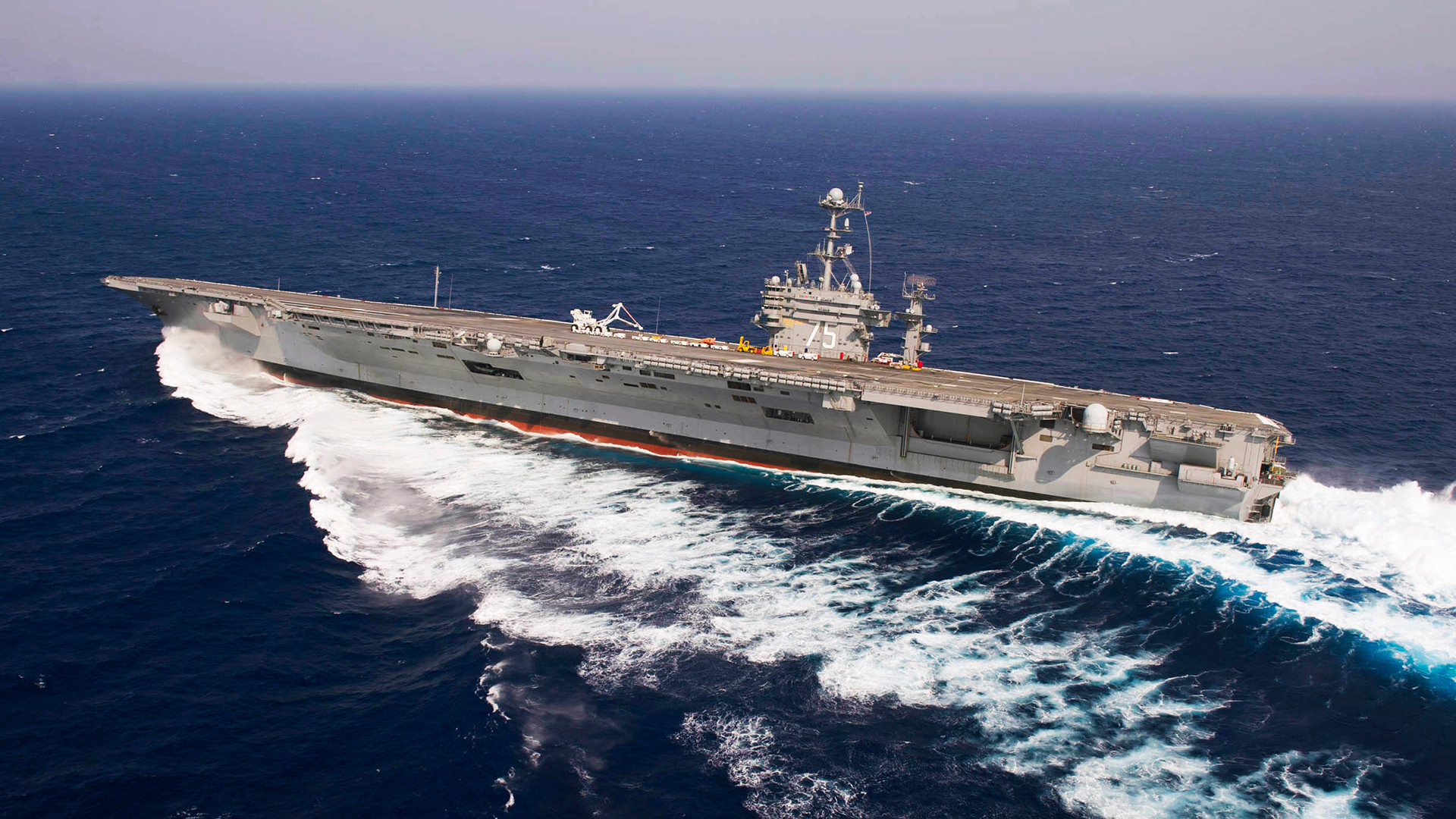
A U.S. Navy F/A-18E Super Hornet fighter fell off the side of the aircraft carrier USS Harry S. Truman while the ship was conducting evasive maneuvers in response to incoming Houthi threats earlier today, a U.S. official has told TWZ. A tow tractor that had been moving the aircraft at the time also went over the side in the incident, in which thankfully only a single sailor suffered minor injuries.
CNN‘s Natasha Bertrand was first to report that the Truman making a hard turn in response to incoming Houthi fire may have been a contributing factor in the incident, citing an unnamed U.S. official. Military.com‘s Konstantin Toropin also subsequently reported this detail, again citing an anonymous U.S. official.
Navy supercarriers like Truman are capable of making very sharp and high-speed turns for ships of their size, including an evasive tactic, as seen in the video below.

A full statement on today’s incident from the Office of the Navy Chief of Information (CHINFO), the Navy’s top public affairs office, which does not mention any incoming Houthi threats at the time, reads:
“USS Harry S. Truman (CVN 75) lost an F/A-18E Super Hornet assigned to Strike Fighter Squadron (VFA) 136 and a tow tractor as the aircraft carrier operated in the Red Sea, April 28. All personnel are accounted for, with one Sailor sustaining a minor injury.
The F/A-18E was actively under tow in the hangar bay when the move crew lost control of the aircraft. The aircraft and tow tractor were lost overboard.
Sailors towing the aircraft took immediate action to move clear of the aircraft before it fell overboard. An investigation is underway.
The Harry S. Truman Carrier Strike Group and embarked air wing remain fully mission capable.
The strike group consists of flagship Harry S. Truman, the nine squadrons of Carrier Air Wing 1, three guided-missile destroyers of Destroyer Squadron 28, and the Ticonderoga class cruiser USS Gettysburg (CG 64).“
Whether any weapons or other stores were loaded on the aircraft at the time is unknown. Whether or not the Navy is already planning to try to recover the jet is also not known.
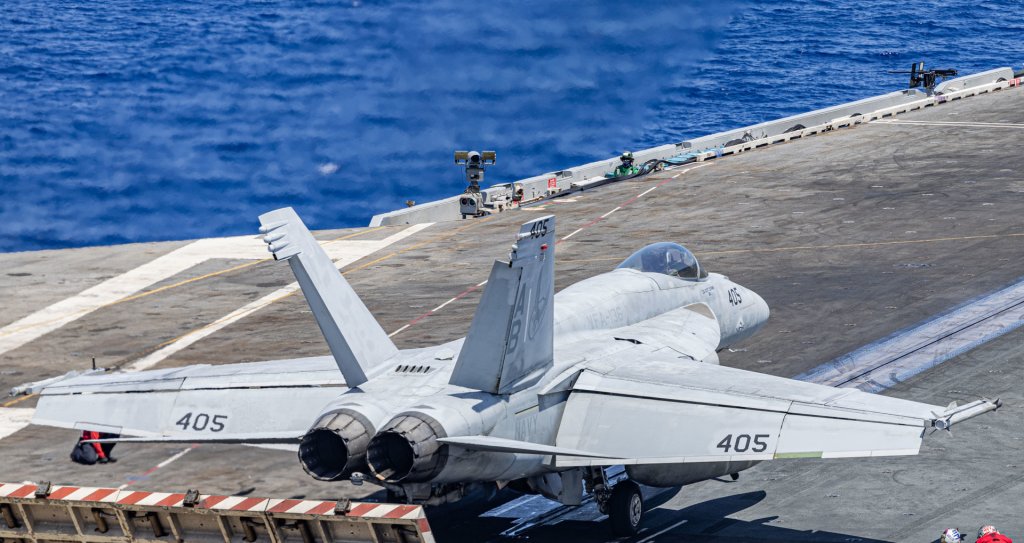
The exact scale and scope of the threats that the Truman and the rest of its carrier strike group were facing when the Super Hornet and tow tractor went off the side are unknown, but the Houthis have been actively targeting American warships in the region for months. Though the Yemeni militants have been unsuccessful in hitting U.S. naval vessels so far, the group has an arsenal of anti-ship ballistic and cruise missiles, as well as kamikaze drones, that present real threats, especially when employed in large volume complex attacks.
Incoming Houthi kamikaze drones may have been a factor in a friendly fire incident last December in which Truman’s air wing lost an F/A-18F to a missile fired by the strike group’s cruiser USS Gettysburg. Sustained combat operations, in general, present a higher-risk environment in various ways.
Truman and the rest of its strike group departed on their current cruise in September 2024, and have spent much of the subsequent time conducting combat operations in and around the Red Sea. Those operations have been focused primarily on responding to threats emanating from Houthi militants in Yemen, but have also included strikes on ISIS-linked terrorists in Somalia. In March, the Pentagon extended Truman‘s deployment as part of a new and expanded campaign against the Houthis, which you can read more about here.
Truman had only returned to sea on Feb. 16 after repairs in Greece following a collision with a commercial ship in the Mediterranean Sea off the coast of Egypt’s Port Said earlier in the month. Though the ship suffered damaged, none of the aircraft onboard were damaged and none of the crew were injured as a result.
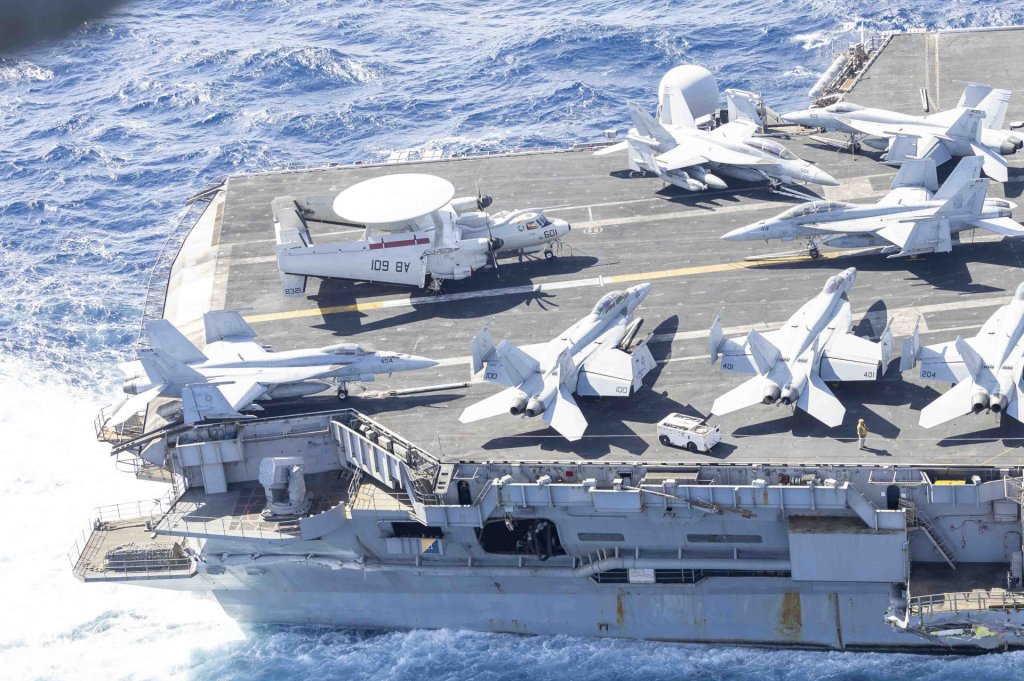
Both the collision and the friendly fire incident remain under investigation. Capt. Christopher “Chowdah” Hill replaced Capt. Dave Snowden as Truman‘s commanding officer after the collision. Hill had previously commanded the aircraft carrier USS Dwight D. Eisenhower during a deployment that also included months of intense combat in the region, as you can learn more about in our exclusive interview with “Chowdah.”
Again, thankfully, in this latest incident, none of Truman‘s crew suffered serious injuries.
xxxxxxxxxxxxxxxxxxxxxxxxxxxxxxxxxxx
F-35C Naval Joint Strike Fighters Have Been Shooting Down Houthi Drones
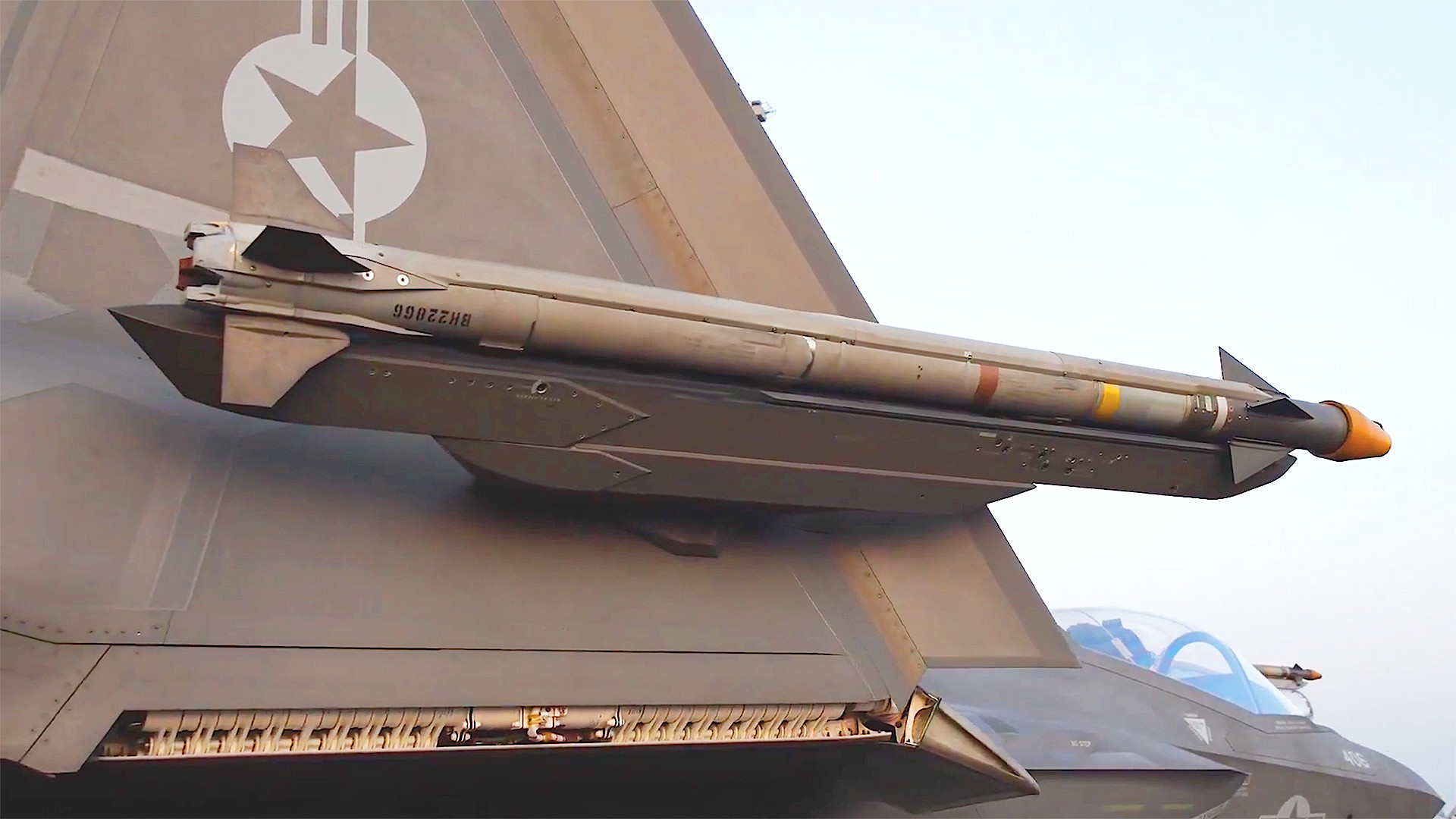
U.S. carrier-based F-35C Joint Strike Fighters have been shooting down Houthi drones in the course of recent operations over and around the Red Sea, in addition to striking targets in Yemen, according to a U.S. official. The disclosure comes amid an evolving U.S. aerial campaign in the region, in which the threats posed by the Yemeni militants’ air defense capabilities have become an increasingly pronounced factor, as TWZ just explored this week in a highly detailed feature.
TWZ had first reached out about the possibility of F-35Cs being employed against Houthi drones after the Pentagon released a video, seen below, showing one of the jets aboard the supercarrier USS Carl Vinson with a live AIM-9X Sidewinder missile loaded on its right wing.
The U.S. official told TWZ that F-35Cs assigned to Navy carrier strike groups have downed Houthi drones at least since the beginning of this month, when the supercarrier USS Carl Vinson arrived in Middle Eastern waters. A Navy F-35C squadron – Strike Fighter Squadron 97 (VFA-97), the “Warhawks” – is part of the air wing currently embarked on Vinson. A second carrier, the USS Harry S. Truman, is also operating in the region, but its air wing does not contain F-35Cs.
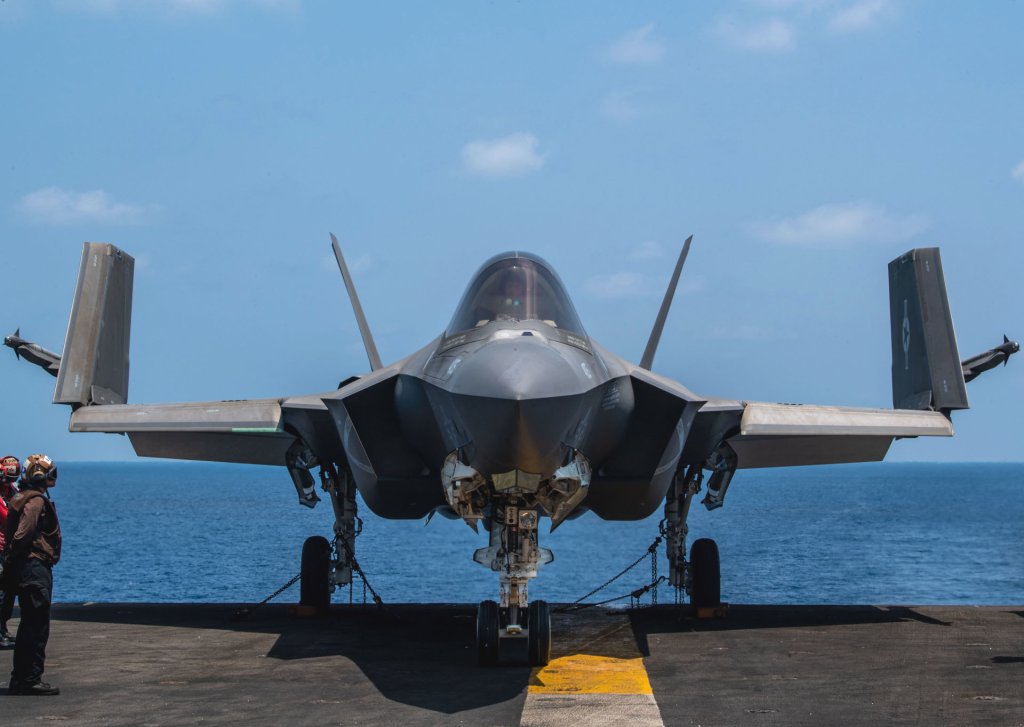
Whether or not Marine F-35Cs assigned to the USS Abraham Lincoln shot down any drones while that carrier was deployed in and around the Red Sea last year is unknown, and TWZ has reached back out for more information. Imagery released at the time showed some F-35Cs from Marine Fighter Attack Squadron 314 (VMFA-314), the “Black Knights,” flying combat sorties with underwing launch rails for AIM-9Xs installed, but without any missiles loaded on them. Though not conclusive, this could be a clue to the Marine jets having participated in counter-air duties.
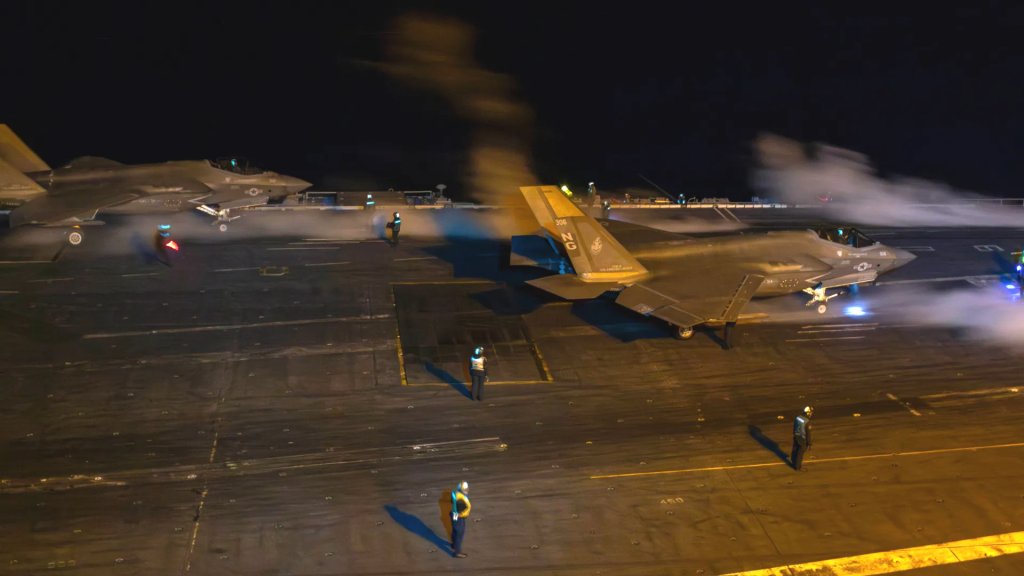
F-35Cs, like all other Joint Strike Fighter variants, can also carry AIM-120 Advanced Medium-Range Air-to-Air Missiles (AMRAAM), as well as various air-to-ground munitions, in their internal weapons bays. The F-35C and the F-35B can also be equipped with gunpods containing a single four-barrelled 25mm Gatling-type GAU-22/A cannon, which can be employed against aerial targets and ones down below. F-35As have built-in GAU-22/As, a configuration that has suffered significant issues over the years, as you can read more about here.
The U.S. official also reconfirmed that carrier-based F-35Cs have been participating in strikes on Houthi targets in Yemen, something the Pentagon first disclosed in November 2024.
It is also not known whether or not F-35Cs shooting down Houthi drones represent the first air-to-air victories for U.S. Joint Strike Fighters of any type. Israeli F-35Is have already been downing drones, as well as cruise missiles, for years now.
Carrier-based F/A-18E/F Super Hornets and EA-18G Growlers belonging the Navy, as well as U.S. Air Force F-16C Vipers flying from bases on land in the region, have also downed drones, as well as cruise missiles, in the course of ongoing operations against the Houthis. The Navy jets have also sometimes been tasked to perform counter-air duties even when it’s not their primary mission.
The basic fact that U.S. F-35Cs are now being regularly employed on combat missions in the Red Sea is an important milestone for the type. The F-35C was the last of the Joint Strike Fighter variants to reach initial operational capability, with the Navy announcing it had done so in 2019. The jets only began deploying on Navy carriers in 2021.
It’s also worth noting here that work is ongoing to enable F-35Cs, as well as A variants, to carry six AIM-120s internally, rather than just four, with the help of a device called Sidekick. The system, unfortunately, will not work with the internal bays on the F-35B variant, which are smaller due to the large lift fan behind the cockpit, one of several features unique to the short takeoff and vertical landing-capable jets.
Plans have also been laid out in the past to allow for all versions of the Joint Strike Fighter to carry additional AIM-120s on their underwing pylons, but it is unclear whether or not that is an operational loadout option now. An F-35 carrying any stores under its wings does come at the cost of some of the jet’s low-observability (stealthiness).
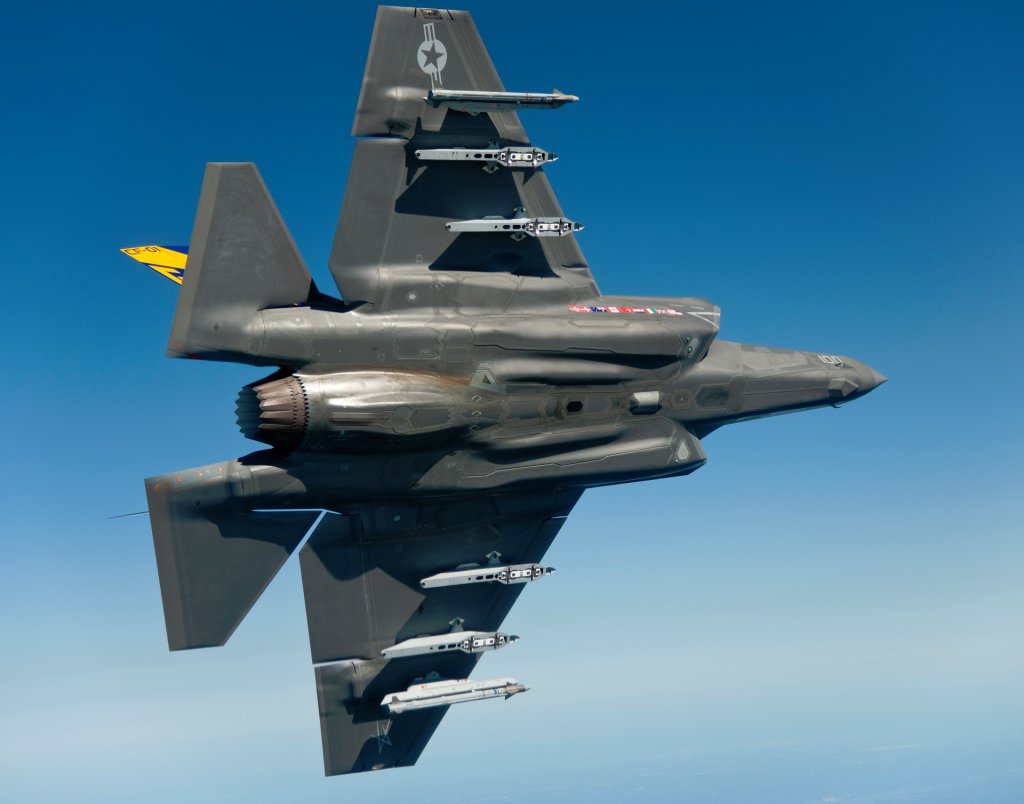
Ongoing operations against the Houthis, as well as U.S. participation in the defense of Israel against multiple rounds of large-scale Iranian missile and drone attacks last year, have highlighted the value of additional magazine depth. The crew of at least one Air Force F-15E Strike Eagle switched to guns after running out of missiles while responding to Iran’s missile and drone barrage in April 2024, but was unsuccessful in bringing anything down.
Starting last year, U.S. Air Force F-16C Vipers have notably been using 70mm laser-guided Advanced Precision Kill Weapon System II (APKWS II) rockets to down drones on missions over and around the Red Sea, which TWZ was first to report on. We have also now seen Vipers flying in the region with loadouts that include two seven-shot 70mm rocket pods on a single pylon, which more than triples the number of total engagement opportunities for the aircraft on a single sortie.
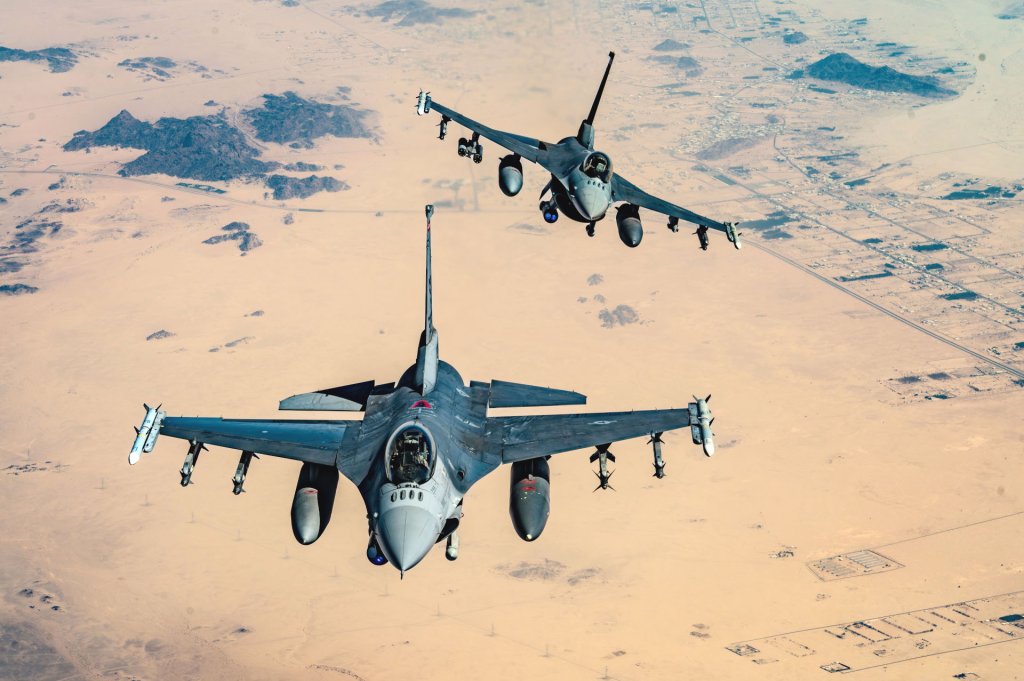
APKWS II rockets, which have unit costs in the low tens of thousands of dollars, depending on their configuration, also offer a valuable lower-cost option for engaging less dynamic targets like drones and cruise missiles. Current generation versions of the AIM-9X and AIM-120 each cost around $450,000 and $1 million, respectively. APKWS II is not currently cleared for use on any F-35 variant, even from external underwing pylons, and it is unclear whether the Navy may be moving to integrate it onto its Super Hornets.
A new dual-mode version of the APKWS II with an additional infrared seeker is now in development, which will further expand its capabilities, especially in the air-to-air role. Demand for cheaper anti-air munitions is growing across the U.S. military, in general, due in large part to drone threats.
As for the F-35Cs downing Houthi drones, the news comes amid an expanded aerial campaign against the Yemeni militants that President Donald Trump’s administration kicked off last month and that has been exposing some hard truths. This includes the real threats posed by the air defense capabilities available to the Yemeni militants, which TWZ just explored in great detail in a feature published this week. The United States looks to have lost at least 18 MQ-9 Reaper drones to the Houthis so far, and possibly more, including seven downed just since the beginning of March.
Houthi air defenses have been “hindering the US’ ability to move into ‘phase two’ of the operation,” according to a report from CNN just today, citing unnamed U.S. officials. “The US was hoping to achieve air superiority over Yemen within 30 days, officials said, and degrade Houthi air defense systems enough to begin a new phase focusing on ramping up intelligence, reconnaissance, and surveillance of senior Houthi leaders in order to target and kill them.”
TWZ has previously noted how an uptick in the use of standoff munitions against targets in Yemen, as well as the employment of stealthy aircraft like F-35s and B-2 bombers, has also pointed to Houthi air defense capabilities presenting greater challenges than have been widely appreciated. Another video that U.S. Central Command (CENTCOM) released on Monday notably showed a U.S. Navy EA-18G Growler armed with a rare load of four AGM-88 anti-radiation missiles, highlighting ongoing efforts to suppress and destroy the Yemeni militants’ anti-air assets.
The F-35C could be proving particularly valuable in the current campaign, given their unique survivability among aircraft in the Navy’s current carrier air wings. The naval Joint Strike Fighters could be used to launch direct attacks in areas that might otherwise require the use of standoff munitions to reduce risk. At the same time, sending F-35s into more heavily defended areas could create different risks, especially if one of the aircraft were to go down for any reason. Launching a combat search and rescue mission to recover the pilot in that scenario would require sending significant resources into that same more contested environment.
Regardless, U.S. officials have contended that operations against the Houthis have still been able to significantly degrade the group’s ability to launch drone and missile attacks, including against commercial vessels and warships sailing in and around the Red Sea, per reports from CNN and Fox News.
“Since the start of operations against the Iranian-backed Houthi terrorists, USCENTCOM has struck over 800 targets. These strikes have destroyed multiple command-and-control facilities, air defense systems, advanced weapons manufacturing facilities, advanced weapons storage locations, and killed hundreds of Houthi fighters and numerous Houthi leaders,” Dave Eastburn, a spokesperson for the command, told Fox News. “Credible open sources report over 650 Houthi casualties to date. Additionally, Houthi ballistic missile launches have dropped by 87% while attacks from their one-way drones have decreased by 65% since the beginning of these operations.”
Separately, Air Force Maj. Gen. Joseph Kunkel said during a virtual talk that the Air & Space Forces Association (AFA) hosted yesterday that his service is already learning important lessons from the air campaign against the Houthis. Kunkel is currently the director of Force Design, Integration, and Wargaming within the office of the Deputy Chief of Staff for Air Force Futures at the Pentagon.
“The fight in Yemen right now, that is an air campaign. It is an air campaign,” Kunkel stressed. “How we conduct that air campaign, with a set of capabilities that are performing interdiction, that are performing counter-air, that are performing this counter-IADS-like mission – we need to think differently about how those things are coming together.”
IADS here refers to integrated air defense systems typically associated with the armed forces of nation states rather than non-state actors like the Houthis.
The Navy has also made clear that it has been seeing significant lessons learned, including when it comes to maritime operations, from operations against the Houthis, something TWZ predicted would be the case more than a year ago. The issues that the current campaign has highlighted, including around magazine depth and air defense threats, would be even more pronounced in a future high-end fight against a near-peer competitor like China.
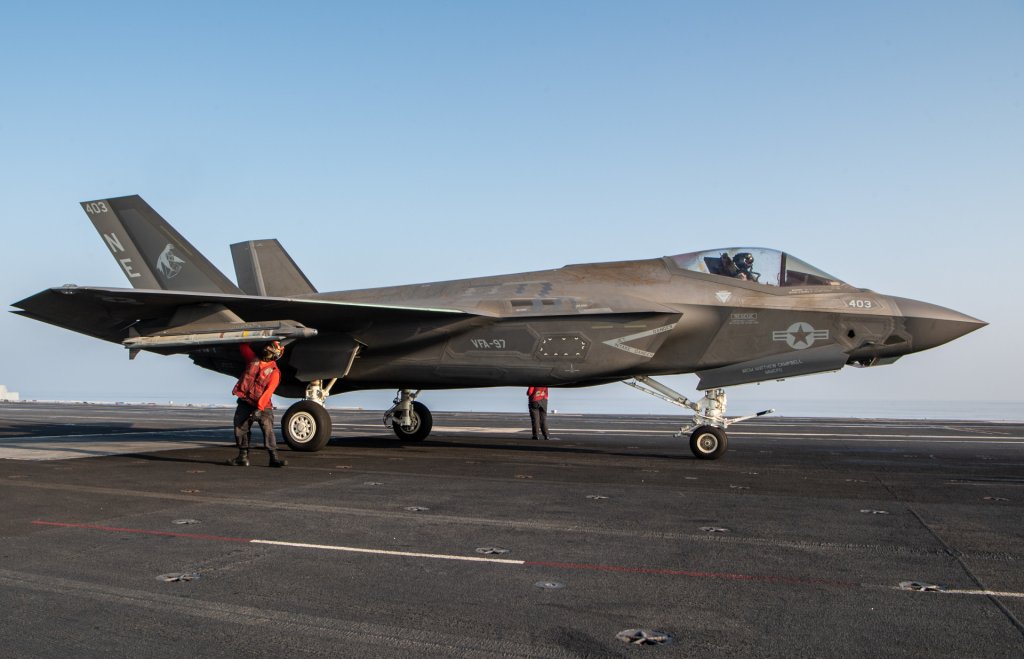
If nothing else, we have now been told that the role of carrier-based F-35Cs in the current campaign against the Houthis has expanded to shooting down the group’s drones, as well as targeting its assets on the ground in Yemen.
xxxxxxxxxxxxxxxxxxxxxxxxxxxxxx
“Iran Shocked: US B-52 Bombers, Fighter Jets Destroy Enemies in Seconds”, May 5, 2025, anon, U.S. Air Defense, duration of video 11:30, at <

No comments:
Post a Comment