If the workers of the world want to win, all they have to do is recognize their own solidarity. They have nothing to do but fold their arms and the world will stop. The workers are more powerful with their hands in their pockets than all the property of the capitalists. --Joe Ettor (IWW labor organizer)
https://www.youtube.com/watch?v=IASdERt3-m0
Tuesday, April 15, 2025
The Forced-Pregnancy / Forced-Birth Far-Right Theocratic Juggernaut Continues to Scheme to Force their Hated Agenda on American Women.
5). “Texas Republican lawmakers unwilling to change abortion laws to address doomed pregnancies: For the first time since Texas outlawed nearly all abortions, lawmakers are clarifying the 'life of mother' exception. But they don’t plan to address cases where the fetus won’t survive”, Apr 11, 2025, Eleanor Klibanoff, Texas Tribune, at < https://www.texastribune.org/2025/04/11/texas-abortion-law-lethal-fetal-anomalies/ >.
Introduction by dmorista: Three States have become the “leaders” in the Forced-Pregnancy / Forced-Birth Movement's machinations to force their unwanted pseudo-Christian sexual and reproductive agenda on American Women. Texas, Florida, & Missouri have become the Big Three pushing their twisted vision of life on the majority of women.
Jessica Valenti in Item 1)., “Texas Wants to Test ….”, points out that a notorious right-wing State Senator in Texas is now introducing legislation in the Texas Senate: “ …. a bill that would force wastewater treatment plants to test for abortion medication and hormones found in birth control.” (Emphasis in original). This is none other than Bryan Hughes who worked on the original SB 8 that outlawed abortion in Texas before Roe was overturned, using vigilantes and bounty hunters who can try to collect $10,000 bounties from Texas citizens. This is from a bogus campaign by Students for Life claiming that mifepristone was poisoning ground water. There are certainly at least a thousand other toxins that are actually hazards, but we will never see any sort of control exercised over the chemical plants and other industries that dump them in Texas.
In Item 2)., “Ohio Republicans Want ….”, Valenti posted a discussion of various attacks on the rights of teenaged women to obtain the sort of medical attention they need and the typical bogus “parental rights” arguments used to justify laws that keep women under the age of 18 from obtaining care without notifying their parent(s). A very difficult and sometimes dangerous or even deadly situation for many young women.
Item 3)., “BIRTH CONTROL ….”, reviews the developing situation in the U.S. that threatens to end ready access to contraception. A long time cherished goal of the Forced-Pregnancy / Forced-Birth Movement. American women have children at below the replacement rate, but the U.S. ruling class has absolutely no intention of providing the desperately needed support for young families; and the Fanatical Theocratic Forced-Pregnancy / Forced-Birth Movement wants to fill the vacuum with coercive social policies.
Items 4 – 7 all discuss specific aspects of the ongoing struggle for Abortion Access and Reproductive Healthcare Rights in Missouri, Texas, and Florida. The Trump Regime has worked in quiet ways to make accessing an abortion more difficult for poor and working class women. The U.S. is one of only 4 countries to make accessing abortions more difficult, while over 100 have made it easier. The U.S. in general, and the Dark Ages Red States in particular, have worsening levels of maternal and infant mortality. Georgia and Texas, among other places, are trying to hide this fact by not even reviewing the mortality statistics for the period from 2021 – 2024.
Another issue, taken up in Item 7)., “Bill could open door ….”, is that Dark Ages Red States are now losing OB/GYNs who are moving away to other states or even overseas. Also upper and upper middle class income women, of reproductive ages, are increasingly reluctant to study or take jobs in the Dark Ages Red States. This became evident first in Idaho, a state with a relatively small population that previously was able to recruit OB/GYNs who wanted to live in beautiful places. But since the overturning of Roe, and the harsh state laws quickly passed, Idaho has lost nearly 25% of its OB/GYNs who either left the state or retired early. And of 11 difficult pregnancy experts 8 have retired or left. Idaho is unable to recruit qualified replacemdents. Florida, Texas, and Missouri, with much larger populations took longer for the OB/GYN and highly skilled female worker “brain drain” to become obvious, but it is now undeniable. The general migration into Texas and Florida also masked the trend for upper and upper middle income reproductive age women to refuse to move to Dark Ages Red States, but the people moving into those states are less able to insist on the protections that upper and upper middle income reproductive age women can insist on.
xxxxxxxxxxxxxxxxxxxxxxxxxxxxx
Legislation Watch
Have a bit of breaking news for you today, but first—some context:
For over two years, I’ve been tracking the absurd anti-abortion lie that mifepristone is poisoning our groundwater. The claim—pushed primarily by Students for Life (SLF)—is that when people self-manage abortions at home and flush fetal tissue, they’re somehow contaminating the environment with dangerous chemicals.
The idea isn’t just to paint abortion pills as toxic, but to shame patients: SFL has been lobbying the FDA to force women to bag up their blood and return it to a doctor as medical waste. One of the reasons conservatives hate abortion medication so much is that it robs them of the ability to harass patients outside of clinics. At least this way, they could punish and humiliate those who have the audacity to end their pregnancies in the comfort and privacy of their own homes.
Of course, Republicans won’t admit this is about finding new ways to ban abortion or punish patients. Instead, they insist they’re just trying to protect the environment. (Suddenly they care about clean water?!) We’ve seen so-called “Clean Water” legislation introduced in Oklahoma, Montana, Wyoming, Arizona, Maine, Idaho, and West Virginia.
You may remember that while tracking these bills last year, I warned that they would never stop with abortion medication:
“If they are somehow successful in this nightmare, how long do you think it will be before they start arguing that hormonal birth control is poisoning the planet?”
Well—here we are. Today, the Texas Senate Committee on Water, Agriculture, and Rural Affairs heard from Sen. Bryan Hughes on SB 1976, a bill that would force wastewater treatment plants to test for abortion medication and hormones found in birth control.
And while the bill doesn’t say ‘birth control’ or ‘contraception’ outright—instead just listing the hormones associated with contraception—Hughes told the committee outright today that he wants to test for “contaminants of emerging concern (CECs)…found in medications such as birth control pills.”
The Republican senator, who crafted the state’s abortion ban, told the committee that the medication poses a potential risk to “human and wildlife” health, “especially for pregnant women and children.”
“This is a growing concern around the country, and it’s not a left or right issue—it’s a health issue,” Hughes said. (This, from a man responsible for the deaths of countless Texas women.)
Something else important: In addition to mandating testing for abortion medication and birth control pills, SB 1976 may also be targeting gender affirming care. The legislation would require certain wastewater plants to test for testosterone and estrone. These are naturally-occurring hormones, but conservatives could argue that an increase in either is proof that more people are getting gender-affirming treatment—or that the hormones are harming the environment.
The bill also calls for testing for pregnanediol—the main urinary byproduct of the hormone progesterone, which is associated with pregnancy. I don’t know why Republicans would want to test the water for increases in a pregnancy hormone, but I can’t imagine it’s good!
Finally, in an effort to make their bizarre surveillance effort seem more credible, Republicans are also asking for the testing of real environmental contaminants (like BPA and benzophenone), along with abortion medication, birth control pills, and other hormones. Not only does this give their legislation the veneer of environmental concern, it normalizes treating abortion and birth control as ‘pollutants’.
Why advance this particular strategy right now? Well, it has no small part to do with the rise of RFK, Jr—the baby bear-killing maniac who leads the HHS and is obsessed with water ‘contaminants’. SFL is even calling the legislation part of a “Make America Healthy Again” initiative.
They’re also trying to reach young people—who hate abortion bans, but care deeply about the environment. Anti-abortion groups decided to hone in on the fake issue after doing polling that found messaging about “environmental justice” and clean water would appeal to a younger demographic—one conservatives are desperately trying to appeal to.
They’re not even trying to hide the cynicism. Here’s what SFL vice president Kristi Hamrick told a conference audience earlier this year:
“This is not because the environment was my first weapon of choice—it’s because it’s the one we have now…Environmental law has teeth. It already exists. And, frankly, I’m for using the devil’s own tools against them.”
I’ll keep you updated on the Texas bill as I find out more, but please keep an eye out for others like it in your state. They really do think they’re going to be able to pass these without anyone noticing.
In the States
In related news, let’s talk about the Nebraskabill that would require abortion clinics to dispose of fetal remains by “cremation or interment by burial.” LB632 states that burial or cremation is necessary to “protect public health,” and bill sponsor Sen. Ben Hansen claims that “improper disposal” of fetal remains could put “toxic pollutants” in the groundwater.
That’s right—this stupid fucking argument is everywhere!
But here’s what’s really telling: I flagged last month that the bill only requires fetal remains to be buried or cremated if they’re from an “elective abortion.” If this legislation were really about ‘dignity’ for the fetus or the environment—why wouldn’t it apply to all pregnancy losses? Could they be any clearer that this is about punishing ‘bad’ women who seek out abortions?
Sen. Ashlei Spivey of Omaha, who has been leading a filibuster against the legislation, noted the same thing—arguing that if the intent was anything other than increasing abortion stigma, Hansen would have ensured the bill covered all pregnancy tissue.
Nebraska Sen. Megan Hunt also pointed out during the floor debate today that the bill could allow for conservative lawsuits targeting abortion clinics.
I’ll keep you updated on this one as it advances—or hopefully, doesn’t.
In better news, Colorado’s Senate Judiciary Committee advanced a bill today to ensure emergency abortion remains available regardless of what bullshit the Trump administration tries to pull. SB 130 would protect abortion and miscarriage care in emergency rooms regardless of what happens at the federal level, creating state protections that: require emergency abortion care be provided to all patients; prohibit discrimination in emergency rooms based on a patient’s ability to pay; ensure patients get stabilizing care to preserve not just life but health, and more.
You can always count on Colorado to lead the way on proactive abortion rights issues. Thanks especially, to Cobalt, COLOR (Colorado Organization for Latina Opportunity and Reproductive Rights), and the Interfaith Alliance of Colorado for their advocacy on this one.
“Judge Jason Scott issued the ruling broadening the medical exception to the ban, allowing doctors to perform an abortion if ‘good faith medical judgment’ shows a patient with an existing medical condition or pregnancy complication faces a risk of dying at some point without an abortion.”
Essentially, that means you don’t have to be dying right now in Idaho to get an abortion. Thanks, I guess?
I don’t know—I get that this is good news, truly. And I’m so grateful for the plaintiffs who shared their stories. But it’s increasingly difficult for me to muster up optimism for yet another court ruling reminding us that a state had to be forced by a judge not to slowly kill women.
The Center for Reproductive Rights, which fought the case, tells the AP that the ruling doesn’t broaden access to women carrying doomed pregnancies, or those who are suicidal. Remember, Idaho is also the state that went all the way to the Supreme Court to fight for its right to deny patients life-saving abortions in hospital emergency rooms.
A small media coverage gripe: This Reuters headline that says a judge “relaxed” Idaho’s abortion ban seriously rubbed me the wrong way. While technically correct, can we ease off words like ‘relaxed’ when writing about women going septic, losing organs, and dying?
Quick hits:
Ms. magazine on how anti-abortion activists stopped a clinic from opening in California;
Congratulations to Northeastern University students in Massachusetts, who can now get abortion medication from the student health center;
And in a moment when Texas Republicans are pretending to ‘soften’ their abortion ban, a reminder that women are forced to carry doomed pregnancies to term.
Attacks on Democracy
Let’s catch up on Missouri, where Republicans are trying to overturn the will of voters and trick them into supporting an abortion ban. (I know, just your normal Monday around here!)
It was only this past November that Missouri voters passed Amendment 3, protecting abortion rights until ‘viability’. And they did it despite Republicans’ unprecedented attacks on democracy: lawsuits to keep the measure off the ballot, a biased ballot summary by the Republican Secretary of State, and the Attorney General slow-rolling the signature process by refusing to sign off on a cost estimate. Anti-abortion groups even sent voters text messages claiming pro-choice petitioners were trying to steal their identities.
In other words, anti-abortion activists and lawmakers pulled every dirty trick to stop voters from having a say. Now that Amendment 3 has passed, Republicans want to put abortion back in front of voters again in an attempt to repeal the protection and ban abortion.
At first, conservative lawmakers couldn’t agree on how extreme to go—some wanted a total abortion ban invoking fetal personhood, others pushed for legislation with so-called ‘exceptions.’ But their most recent iteration is especially insidious: an amendment to ban abortion crafted to sound pro-choice.
Seriously, here’s the first sentence of the ballot summary that Missouri voters would see:
“Shall the Missouri Constitution be amended to: Guarantee the right to reproductive freedom, which shall include a woman's right to health care for miscarriages, ectopic pregnancies, and medical emergencies.”
Guarantee the right to reproductive freedom?! If you’re not reading carefully enough, you’d have no idea that Joint Resolution 73 would ban abortion. In fact, the legislation doesn’t even explicitly say when abortion would be banned—just that there would be exceptions for rape and incest victims before 12 weeks of pregnancy who reported their attacks.
We know what’s happening here. Republicans are well-aware that Missouri voters want abortion to be legal, so they’re deliberately trying to be as vague as possible. As Kylie Cheung at Jezebel points out, conservatives are actually reviving a tactic we’re pretty familiar with: claiming their abortion ban isn’t a ban at all.From the Kansas City Star:
“[State Rep. Brian] Seitz repeatedly deflected questions about at what point in a pregnancy his proposed amendment would ban abortion, saying, ‘we’re going to get this before the people.’ Both Seitz and Riley rejected framing the legislation as an ‘abortion ban,’ saying that it would allow for exceptions.”
This is exactly what Abortion, Every Daywarned about in the lead-up to November: Republicans quietly redefining what counts as a ‘ban.’ By pretending that only a total prohibition—with no exceptions, not even to save a woman’s life—qualifies, they’ve been able to claim that their 12- and 15-week bans aren’t bans at all, but just ‘reasonable restrictions.’
It’s the rhetorical equivalent of crossing their fingers behind their backs. (Remember when JD Vance claimed he didn’t support a national abortion ban, but a ‘minimum national standard’?)
Now Missouri Republicans are doing the same—claiming that their ban is about “protecting women.” If you want to know what Seitz really thinks of women, consider that he suggested a patient might obtain an abortion while in labor under Amendment 3:
“[She could be] in very much pain, as I’m sure most women are when they’re about to give birth, and declare, ‘I want to have an abortion. I want to have an abortion. I just can’t take it. I cannot go through with it. I cannot have a baby. I cannot financially care for the baby. My boyfriend’s disappeared. I want an abortion.’ I think Amendment 3 opened that door to that possibility at nine months.”
The other important thing to know about House Joint Resolution 73? It would ban gender affirming care for those under 18 years old. Because of course it would.
Republicans want the amendment to go in front of voters in November 2026—or earlier, if there’s a special election. For more info on what’s happening in Missouri—and the broader fight over Amendment 3 and its ‘viability’ restriction—read a bit of background here and check out What’s Next For Missouri.
Hypocrisy Alert
You’re going to love this: A Catholic hospital in Iowa is arguing that damages in a pregnancy loss lawsuit should be capped—because the fetus isn’t a person.
The Iowa Capital Dispatch reports that Catholic Health Initiatives (CHI) is being sued for medical malpractice after discharging a woman with preeclampsia symptoms. Miranda Anderson was 34 weeks pregnant when she went to Pella Regional Health Center, but the hospital sent her home rather than inducing early labor. Anderson’s fetus died several days later, and she had to undergo a c-section to deliver her dead daughter.
CHI argues that Anderson’s fetus shouldn’t be considered a patient when the court calculates damages, and that “there is no statute or binding case law finding an unborn child to be a ‘patient’ under the law.” What’s more, attorneys say that “finding an unborn child to be a ‘person’ would lead to serious implications in other areas of the law.” You don’t say!
Essentially, Catholic hospitals want to claim that fetuses are ‘people’ when patients need health- and life-saving care—but abandon that belief if they might lose money.
A little bit of background you might find interesting, especially in light of the conversations we have here about how conservatives are trying to change the definition of ‘abortion’:
CHI’s hospitals, like other Catholic health systems, adhere to the Ethical and Religious Directives for Catholic Health Care Services (ERDs) issued by the U.S. Conference of Catholic Bishops—which bans abortion in all cases.
The only time doctors at Catholic institutions are allowed to intervene is when a patient’s life is at risk. Even then, they don’t permit ‘abortion’—but “operations, treatments, and medications” to save women’s lives that may indirectly “result in the death of the unborn child.”
This is pretty much the same thing as the anti-abortion obsession with calling for ‘maternal fetal separation,’ or doing away with the word ‘abortion’ when it comes to life-saving care. They’re doing anything they can to divorce abortion from healthcare.
MSNBC and POLITICOon how RFK Jr’s cuts will stop data collection on abortion, cancer, HIV, and more;
Rewire with “5 Things You Should Know to Safely Access Abortion Care in 2025”;
And Students for Life is dispatching provocateurs to college campuses, but the students at USC had the best response possible: ignoring them.
xxxxxxxxxxxxxxxxxxxxxxxxxxxxxx
Ohio Republicans Want an Online Dashboard of Abortion Patient Info
Click to skip ahead: Pushing Personhood has the latest on fetal personhood efforts in Florida and Kansas. Canaries in the Coal Minelooks at legislation attacking Florida teens. Abortion Surveillance flags a move in Ohio to put abortion patients’ information on a publicly available website. In the States, news from Texas and Louisiana. In the Nation, the Trump administration pulled funding for key abortion research, and post-Roe advice for business leaders. Finally, Keep An Eye On looks the rise of ‘Baby Olivia’ bills (again).
Pushing Personhood
When a young woman in Georgia was arrested for how she disposed of her miscarriage this month, it was the state’s fetal personhood law that allowed prosecutors to charge her with ‘concealing a death’ and ‘abandoning a dead body.’ State Sen. Sally Harrell, who called on her colleagues to reverse the personhood component of Georgia’s abortion ban, called the policy “idiocy.”
“It is the criminalization of women’s bodies,” she said. And that’s exactly right: Since Roe was overturned, fetal personhood policies like the one in Georgia have allowed for hundreds of other pregnancy-related arrests across the country.
But Republicans don’t want voters to know that ‘fetal personhood’ is all about punishment and control—so they’re pushing for it under the auspices of protecting women and families.
In Kansas, for example, Gov. Laura Kelly just vetoed legislation that would mandate child support payments for women begin at the date of conception. Republicans claimed that HB 2062 is just their way of helping pregnant women and holding “deadbeat dads” accountable. From Gov. Kelly:
“At first glance, this bill may appear to be a proposal to support pregnant women and families. However, this bill is yet another attempt by special interest groups and extremist lawmakers to ignore the will of Kansans and insert themselves into the lives of those making private medical decisions.”
Kansas voters rejected an anti-abortion measure in 2022—a message that conservative lawmakers have refused to accept. Republicans say they will override Kelly’s veto.
Florida lawmakers are using a similar approach, rapidly advancing a fetal personhood bill they insist has nothing to do with abortion. HB 1517/SB 1284—which passed the Florida House this week and advanced out of a Senate committee yesterday—would allow people to sue over the “wrongful death” of a fetus.
Bill sponsor Rep. Sam Greco says, “When a terrible tragedy like the loss, the wrongful loss, of an unborn child occurs because of wrongfulness, because of a wrongful act, mothers, parents, should have the ability to seek to be made whole in those circumstances.”
Under the bill, people could sue over mental pain, and be awarded damages based on the salary their fetus would have earned over its lifetime.
Florida Republicans tried to pass a similar bill last year—an effort that failed in large part because of an Alabama Supreme Court decision that said frozen embryos were “extrauterine children.” The national outrage and backlash against that ruling forced Florida Republicans to reconsider their legislation—until now, that is.
Once again, Republicans are loathe to admit what their real goal is. But as Democratic Rep. Ashley Gantt said this week, “This is about establishing that life begins at conception, so let’s clear the air, and let’s just say the thing that’s what it’s about, because if it wasn’t, there wouldn’t have been so much avoiding the questions or the answers to direct questions.”
The consequences of Florida’s legislation goes beyond the potential for criminalization: Experts warn that the law will scare doctors out of treating pregnant women—especially those with high-risk pregnancies. Essentially, the women who need care most would be the least likely to be able to find it.
And Kara Gross, legislative director at the ACLU of Florida, writes at the Florida Phoenix that the bill would result in fewer OBGYNs being willing to practice in the state. There’s already an OBGYN exodus out of anti-abortion states—imagine what that would look like if doctors knew they could be sued in this way.
If you’re reading this newsletter, you’re already well-aware that the push for fetal personhood has nothing to do with protecting women. But it’s vital we keep repeating that anyway—pointing out what the actual, real life consequences of personhood already look like.
Canaries in the Coal Mine
Let’s stick with Florida for a moment, and talk about another troubling bill making its way through the legislature: SB 1288 would require parental consent for birth control and STI treatment—a direct attack on young people’s health and safety.
Right now, Florida doctors can treat minors for STIs or prescribe them contraception without involving their parents if they believe the teen will “suffer probable health hazards if such services are not provided.” This bill would gut that protection. It would also require parental consent for any kind of risk assessment or health survey, effectively ending doctor-patient confidentiality for young people.
As Dr. Amy Weiss, who leads Adolescent and Young Adult Medicine at the University of South Florida, put it: “We're not going to know when they're in dangerous situations, because they're not going to be completely honest with us.”
Naturally, Republicans are calling this a ‘parental rights’ bill—one of their favorite post-Roe talking points. We’ve seen them use it to fight abortion rights ballot measures, arguing that pro-choice amendments would allow children to get abortions or gender-affirming care without their parents’ knowledge. And it was their go-to message when lawmakers in Idaho and Tennessee made it a crime to help a teenager get an abortion.
We knew this would happen. In fact, I warned in my 2025 predictions that Republicans would start slapping ‘parental rights’ on anything and everything.
But what’s happening in Florida isn’t just about conservatives using ‘parental rights’ to strip health access and rights from young people—it’s that they’re using young people as a testing ground for stripping health access and rights from all of us. There’s a reason I have a chapter in my book titled, “Teens are the Canaries in the Coal Mines.” What happens to young people today comes for the rest of us tomorrow.
Let’s be very, very clear: Republicans want to ban contraception, and they don’t need to pass a law to do it. In fact, it’s easier for them if there is no law. No headlines, no voter backlash—just relentless restrictions until birth control is impossible to get.
That’s exactly what they’re doing right now: Chipping away at access bit by bit. Whether it’s targeting teens, like Florida Republicans are doing, or low-income Americans, like Trump did with his cuts to Title X, the end goal is the same: contraception out of reach for anyone who needs it most.
You all know I’ve been tracking “abortion reporting” as a key part of the anti-abortion strategy for years now. Republicans figured out a long time ago that they don’t need facts to pass abortion bans—just data they can twist, weaponize, or flat-out make up.
We’ve seen it in Texas, where lawmakers passed laws allowing conservatives to skew or fabricate abortion “complication” data. We’ve seen it in Indiana, where Republicans have tried to make private abortion reports public records.
And now it’s Ohio’s turn. Republicans there just added a new provision to the state House budget that would massively expand what kind of information is collected about abortion patients—and then make that information publicly available.
Right now, the state health department publishes an annual abortion report that provides pretty basic details: like how many weeks into pregnancy a patient was, what county they lived in, and how old they are.
As WOSU reports, the new reporting mandates would be much broader:
“It would require providers to list each patient’s education level, zip code, number of previous abortions, menstrual history, Rh factor in blood, and the method of contraception used at the time of conception, if any.”
Other information collected includes a patient’s marital status, their education level, race, number of “living children,” and more.
Here’s where it gets extra shitty: The health department would also have to create a publicly available “electronic dashboard” that publishes this abortion data every month.
And while a patient’s name wouldn’t be available, people could reverse engineer someone’s identity using the other information provided. Think about it: the number of children they have, the date of their last birth (aka their kid’s birthday), plus their zip code. In a low-population, rural area? That’s practically a roadmap to someone’s front door.
As Jaime Miracle from Abortion Forward told WOSU, “If you are reporting the number of abortions per county by month, that could be an individual person.”
We’ve seen something similar play out in Indiana, where Attorney General Todd Rokita has been in an all-out war to make individual abortion reports public records in the same way birth and death certificates are. Even the state health department there fought back over how dangerous and invasive that would be.
That invasion of privacy is exactly the point. And as was the case in Indiana, I’m betting the anti-abortion activists in Ohio want this information public for two reasons: First, so they can comb through patient data looking for anything they can frame as “wrongdoing.” And second, to terrify people out of getting care in the first place.
Because who’s going to seek an abortion if they know their personal medical information will be plastered all over a public website?
I’ll keep you posted on what happens next—but it’s worth noting that Ohio voters codified abortion rights in the state constitution a few months ago, protecting access until ‘viability’. As Miracle points out, that includes a ban on discriminating against abortion patients—like, say, forcing them to be the only patients whose medical data gets reported and published for the world to see.
In the States
Okay, let’s talk about Texas—where lawmakers and activists are still in the middle of a fight over the Trojan Horse legislation that Abortion, Every Day exposed last month.
As you might remember, this bipartisan bill (HB 44/SB 31) was introduced with a lot of fanfare, framed as a way to help doctors provide life-saving care without fear of prosecution or civil lawsuits.
The reality? The bills would revive a century-old abortion ban—opening the door to prosecute abortion funds, helpers, and potentially even patients themselves. We even came to find out that the legislation was crafted by Texas Right to Life—an organization that doesn’t believe abortion is ever necessary, even to save a patient’s life.
Over the last few weeks, abortion rights groups, abortion funds, doctors, and pro-choice activists have come out hard against the legislation—warning just how dangerous it really is.
Today, more than a dozen women and families who were denied life- and health-saving abortion care—the plaintiffs in Zurawski v. Texas—sent Texas lawmakers a letter, urging them to oppose the legislation:
“We understand why some lawmakers feel compelled to support these bills and pass them quickly—because the chance to save even one life feels like enough. But we must urge you to take your time and get it right so that these well-intentioned bills don’t have catastrophic unintended consequences.”
And yesterday in The Nation, Dr. Ghazaleh Moayedi—one of the handful of physicians in Texas who applies these laws in real life—wrote that the bill “will not help me save additional lives.”
Dr. Moayedi suggests something that a few of my sources say is a possibility: an amendment stating that the legislation can’t be used to revive the 100-year-old abortion ban.
Still, the best case scenario is that this bill dies. Not just because of the harm it could cause to abortion patients, providers, and funds—but because Texas women deserve better. I think Dr. Moayedi put it best:
“Some will say, ‘we should take what little we can get’ because we are in Texas, which was one of the first states in the country to begin fully banning abortion, in 2021. But I’m an ob-gyn who has dedicated my career to providing abortion care for Texans: I don’t beg for crumbs at the expense of my community.”
In other Texas news, the state House approved a massive $70 million funding boost for anti-abortion crisis pregnancy centers—bringing the total funding to over $200 million. These are groups that don’t just lie to women about their pregnancies and the supposed risks of abortion: They also collect clients’ personal private data, telling them that it’s protected by HIPAA. It’s not.
For more on that, read Abortion, Every Day’s investigation into Heartbeat International—the largest network of crisis pregnancy centers in the country:
Meanwhile, Louisiana Democrats are trying to pass legislation that would allow child rape victims to access abortion care. Right now, Louisiana has one of the strictest abortion bans in the country, with no exceptions for rape or incest. HB 215 would change that—however slightly—adding an exception for rape victims under 17 years old.
Rep. Delisha Boyd made a smart move: She spelled out exactly what crimes would qualify a young victim for care. The list is horrifying: rape, first-degree rape, second-degree rape, third-degree rape, sexual battery, felony carnal knowledge of a juvenile, molestation of a juvenile or a person with a physical or mental disability, crime against nature, aggravated crime against nature.
Why list them all? Because it forces Republicans to confront exactly what they’re voting for. It forces them to admit that it doesn’t matter how brutally a child has been abused—they still don’t care. Let them put that vote on the record.
Quick hits:
Planned Parenthood of Northern New England (PPNNE) is permanently closing a Vermont clinic;
More on the lawsuit against a Catholic hospital in California that denied a woman miscarriage treatment;
And Tanya Atkinson, president of Planned Parenthood Advocates of Wisconsin,says voters “understood the assignment” when they elected Susan Crawford to the state Supreme Court.
In the Nation
Chances are, you’ve heard about the Turnaway Study—one of the most important pieces of abortion research out there. This decade-long study followed people who were either able to get the abortion they wanted or were denied care—and tracked the consequences. (Spoiler: They were devastating. Women denied abortions were more likely to end up in poverty, stay in abusive relationships, and struggle to bond with their children.)
The researcher behind the study, Diana Greene Foster, even won a MacArthur “genius grant” for her work. But apparently that wasn’t good enough for the Trump administration—The 19th reports that they pulled her NIH funding anyway.
I know—we shouldn’t be surprised. But this line from the letter NIH sent Foster gave me an immediate rage migraine:
“Research programs based on gender identity are often unscientific, have little identifiable return on investment, and do nothing to enhance the health of many Americans.”
Fuck. You.
Women are dying. They’re developing sepsis and losing vital reproductive organs. But studying that “does nothing to enhance the health of many Americans”? This isn’t just contempt for science—it’s contempt for our lives.
To learn more about the Turnaway Study, watch Foster’s TED Talk below:
Nancy Northup, president of the Center for Reproductive Rights, wrote this week about how bans are pushing workers out of anti-abortion states—and what business leaders can do in response. We really do need more pieces like this: clear, actionable advice for employers on how to support their workers. (Which, as a result, will also help their own companies.)
Northup, for example, advises employers to stay up-to-date on changes in reproductive healthcare laws; to ensure they’re covering reproductive healthcare, including travel and paid leave for abortion care; and to consider allowing employees to work remotely.
I get that may seem obvious to those reading this newsletter; but it’s worth remembering that not everyone follows this issue closely, or understands the best way to help. That’s especially true in a country where so many business leaders are men.
Quick hits:
States Newsroom on how Trump’s anti-DEI initiatives are already impacting maternal healthcare for Black women;
Mother Jones on Democrats’ efforts to hold anti-abortion crisis pregnancy centers to account;
Ms. magazine on the rise of ‘equal protection’ bills that want to charge abortion patients with murder;
And did you know there’s a pro-natalist conference called “NatalCon”?? I’m about to go down a rabbit hole that I just know will ruin my weekend.
Keep An Eye On
Kansas Gov. Laura Kelly vetoed a ‘Baby Olivia’ bill this week—legislation that would force public schools to show an anti-abortion propaganda video disguised as a fetal development lesson. Republicans promised to override this veto (along with the veto of the fetal personhood bill I mentioned earlier in the newsletter).
The ‘Baby Olivia’ video—produced by the radical anti-abortion group, Live Action—is now mandatory viewing in North Dakota, Tennessee and Idaho schools. Similar bills are being considered in Florida, Kentucky, Iowa, Missouri, Nebraska, Oklahoma, South Carolina, and West Virginia. A bill in Arkansas failed to pass committee.
I’ve been keeping a close eye on these bills because they’re part of a broader strategy to indoctrinate young people, build an anti-abortion electorate, and change national educational guidelines around science and fetal development.
Birth Control Under Threat: How Birth Control Rights and Access Are Being Undermined Since Roe v. Wade Was Overturned - National Women's Law Center
In June 2022, the National Women’s Law Center published “Don’t Be Fooled: Birth Control Is Already at Risk,” the first comprehensive accounting of policymakers’ attacks on birth control in recent years.1 In addition to identifying the range of ways anti-reproductive health lawmakers were already threatening birth control, the Law Center warned that attacks on birth control would only escalate if the Supreme Court overturned the right to abortion. Unfortunately, those were prescient warnings.
Both the Court’s decision to unjustly overturn Roe v. Wade as well as Justice Clarence Thomas’ explicit call for overturning the constitutional right to birth control in Dobbs v. Jackson Women’s Health Organization2 have made the threat to birth control more real and the consequences more dire.
This report outlines how contraception has been targeted in the years after the Dobbs decision. Birth control was initially swept up in some of the vague, misleading, and confusing abortion bans passed by states, and there was an initial burst of anti-contraception sentiment from a few politicians. Those sentiments were met with quick and outraged backlash and so anti-contraception lawmakers appear to have purposely changed their strategy. Rather than attacking the right to contraception head on, they are instead starting to use the anti-abortion playbook to chip away at it.
As this report describes, those strategies include targeting access for communities already pushed to the margins and continuing to engage in purposeful misinformation and false narratives about birth control, including in social media. These are efforts that birth control opponents hope will lay the groundwork for further attempts to undermine the right to birth control and people’s access to it. For example, there have been efforts to pass Right to Contraception Acts in state legislatures and Congress. In many states where those measures have been introduced, and in Congress, anti-reproductive health policymakers have also blocked measures that would codify a right to contraception.
It is crystal clear that reproductive health opponents want to eliminate both the right to contraception and people’s ability to access the birth control that they need and want.
The Dobbs decision put the right to contraception at risk.
The Supreme Court’s June 2022 decision in Dobbs v. Jackson Women’s Health Organization not only took away people’s constitutional right to abortion, but also posed a clear threat to the constitutional right to contraception. Although the majority opinion written by Justice Alito takes pains to assert that the rationale it uses to strike down Roe does not affect the right to contraception,3 that assertion is cold comfort. As the dissent points out, the reasoning in the Alito majority opinion could apply equally to the constitutional right to birth control,4 especially because the right to abortion that was established in Roe stems from the same constitutional right that protects the right to birth control.5
At the very moment when the ability to access birth control is even more consequential because the Court allowed lawmakers to outlaw abortion, the Court effectively created a road map to undermine the right to contraception.
In addition, Justice Thomas makes it crystal clear that he is inviting a challenge to the constitutional right to birth control. In his concurrence in Dobbs, he specifically states that the Court “should reconsider” its past cases that are aligned with Roe v. Wade, including the Griswold v. Connecticut decision that first recognized the constitutional right to birth control. He says the Court should “overrul[e] these demonstrably erroneous decisions.”6
The initial fallout from Dobbs was swift, and it confused and scared patients and providers about their right and ability to access or provide contraception.
The initial fallout from the Dobbs decision for contraceptive access was swift: individuals were confused about their rights, including the right to contraception.7 Many people looked to secure contraception, especially longer-acting methods, to prevent pregnancy because of the fear—or reality—of losing abortion as a safeguard.8 It was a stark reminder of how people had planned their lives around the ability to obtain an abortion and how the decision by the Alito-majority Court to take away the constitutional right to abortion is upending society.
Because a direct consequence of overturning Roe v. Wade was allowing extremist policymakers to ban critical health care overnight, health care providers had to contend with new laws governing—and criminalizing—their provision of care. Existing laws about abortion, contraception, and other reproductive health care were reassessed, some long-dormant bans on care were revived,9 and new laws with convoluted and unclear language were introduced.10
This led to a chilling effect on health care providers who provide contraceptive care, to confusion as health care providers tried to navigate this new world, and to some institutions banning the provision of contraception. For example:
The University of Idaho in September 2022 issued a memo saying that—to ensure it did not run afoul of various state laws in the wake of the Dobbs decision—the university would not provide standard birth control or provide information about birth control.11
Luke’s hospital system in Missouri said it would stop providing emergency contraception, worried that it would run afoul of the Missouri abortion ban.12
Nurses who work with sexual assault survivors wrote the Mississippi attorney general to ask whether emergency contraception is considered an abortion under the state’s abortion ban.13 They did not receive a response.
This has continued beyond those immediate months after Dobbs: for example, a bill banning abortion that was introduced in South Carolina in February 2025 included a medically inaccurate definition of “contraceptives” and amended the definition of “contraception” in existing South Carolina law, leading to significant confusion about whether the proposed abortion ban would also criminalize certain forms of birth control.14
Some politicians discussed banning contraception outright.
Within months of the Dobbs decision, policymakers began to openly express an interest in banning access to some forms of contraception.
A nominee for Michigan attorney general, Matt DePerno, likened emergency contraception to fentanyl, a frequently abused opioid medication, and said emergency contraception should be stopped at the state border and banned from the state.15
Georgia Governor Brian Kemp was asked in a conversation during his campaign for re-election if he was open to banning emergency contraception. His response, recorded by a participant in the conversation, indicated openness to the idea. He said that the state legislature could take the matter up and that he would need to investigate the legality of banning emergency contraception.16
Just days after there was a leak of the Supreme Court’s draft opinion overturning Roe v. Wade, Governor Tate Reeves of Mississippi was asked specifically whether he intended to ban certain methods of birth control. He refused to rule it out, instead replying, “That is not what we’re focused on at this time.”17
These remarks faced significant backlash, and it quickly became clear to politicians that talking openly about banning or restricting contraception was not a winning strategy. Then-candidate Donald Trump learned this lesson during the 2024 presidential campaign; after initially indicating openness to restrictions on birth control, he backtracked on social media, claiming that he would never impose such restrictions.18
Anti-contraception policymakers and advocates began hiding their intent and changing their strategy.
In part because of the significant backlash to any obvious efforts to go after contraception in the wake of Dobbs, anti-reproductive health activists and policymakers adopted less visible tactics. This demonstrates that popular support for birth control is not enough to protect birth control from attacks. Birth control opponents appeared to strategically delay frontal attacks on contraception, hiding their true intent and biding their time. This strategy was explicitly named by some anti-abortion lobbyists in a call with Tennessee legislators in the fall of 2022. ProPublica reported that a Tennessee legislator asked leading anti-abortion lobbyists how to respond to questions about “the morning after pill.”19 Those lobbyists encouraged Tennessee legislators to remind people that contraception is currently legal in the state and to defer legislative attacks on birth control for the next two to three years.20 It appears that these lawmakers and others heeded this advice. In 2024, only one bill, Oklahoma HB 3216, was introduced in state legislative sessions with a purported purpose of restricting access to contraception.21 And only one bill, in Arkansas, appeared to be an attempt to sweep contraception into an abortion ban.22
This strategy appeared to be adopted at the federal level as well. Some of the members of Congress who launched overt attacks on birth control in years past were noticeably quieter in the wake of the public outrage over Dobbs. For example, prior to the Dobbs decision, Representatives Taylor Green, Boebert, and Rosendale each proposed appropriations amendments in the 117th Congress to restrict access to contraception.23 And yet, in the 118th Congress, those same lawmakers did not propose similar provisions.
In 2025, shortly after taking office, President Trump hid an attack on birth control within a broader executive order issued just days after taking office.24 The executive order purported to enforce the federal Hyde Amendment, a harmful ban on insurance coverage of abortion in federal programs like Medicaid.25 This was a cynical ploy—Trump’s executive order actually rescinded two executive orders issued by the Biden administration that directed agencies to take a range of actions to expand and protect access to reproductive health care. In issuing this executive order, Trump stopped federal agency efforts to increase access to a range of reproductive health care services, including birth control, and to provide public education and awareness, including informing people how to obtain birth control.26
Rather than attacking birth control overtly, then, anti-reproductive health activists and policymakers appear to be taking lessons from the anti-abortion playbook, turning to stealth tactics that are not as public but still damaging—and that proved successful in chipping away at abortion access and eventually the right itself.
Opponents of birth control are using the anti-abortion playbook to undermine birth control rights and access.
Restricting contraceptive access for communities that are pushed to the margins
Restricting access to communities who already face barriers to care—such as young people, people with disabilities, people with low incomes, or LGBTQI+ individuals—is a tried-and-true tactic of the anti-abortion movement. It was used to chip away at abortion rights and access under the insulting idea that people will not care about these communities, and it was a way to make inroads in undermining fundamental rights.
Attacks on contraception are following this same strategy, with a particular focus on young people and people with low incomes.
Anti-reproductive health advocates went to court to dismantle a long-standing birth control protection for young people.
In Deanda v. Becerra,27 a Texas father sued the federal government over Title X, the nation’s longstanding family planning program. One of the father‘s attorneys was Jonathan Mitchell, the architect of the Texas anti-abortion vigilante law SB8—the first-of-its-kind abortion ban that relied on private citizens instead of the government for enforcement.28 Title X provides grants for family planning services, including birth control, across the country.29 The Title X program guarantees privacy and confidentiality, including providing confidential contraceptive care to minors. As research has demonstrated, requiring parental involvement deters young people from seeking or obtaining birth control, which can harm their health and ability to prevent unintended pregnancy.30 Title X encourages family involvement but does not require it.
The Texas father sued, arguing that even though his children have never sought Title X services and he does not think they will—the mere fact that his daughter could possibly access birth control without his knowledge was a violation of Texas and U.S. constitutional law.31
Jonathan Mitchell and the team of lawyers representing this Texas father brought the case before a notorious anti-reproductive health care Trump-appointed judge, Matthew Kacsmaryk.32 They sought to block the program nationwide from allowing any Title X clinics from providing confidential contraceptive care to minors. In a legally flawed opinion, Judge Kacsmaryk ruled that the Title X program infringed on this parent’s rights,33 and the Fifth Circuit of Appeals agreed that Title X violates this father’s rights under Texas state law.34 As a result of the case, the federal government will not enforce the confidentiality requirement in Texas.35 In other words, young people in Texas are now unable to access confidential contraceptive care at Title X clinics. This is a major blow to their health and well.36
State legislators are targeting young people’s contraceptive rights and access.
The strategy to go after young people’s right to contraception was not limited to litigation. Anti-reproductive health state legislators also focused contraception restrictions on young people, often under the guise of protecting parental rights. In the 2024 legislative session, eight states introduced bills that would require young people to get parental consent or notification to obtain birth control, with Tennessee enacting such a bill.37
Attacks on contraception are devastating to young people, who widely cite pregnancy prevention as a priority.38 Young people value pregnancy prevention because not being pregnant allows them to focus on other areas of their life, such as education. Even though young people want to avoid pregnancy, only about half of sexually active high school students use condoms and only one-third of sexually active students use hormonal birth control.39 Young people face unique barriers to accessing birth control—including not wanting their parents to find out and lack of income to pay for birth control. Any additional barriers on young people’s access to contraceptive information or care, including parental involvement requirements, will further deter and block their ability to get the care they want and need.
State legislators continue to limit birth control options available to individuals with low incomes.
Medicaid provides critical health insurance to over 72 million people, including 16 million women of reproductive age, in the United States40 and is administered by each state. Since the Dobbs decision, state lawmakers have targeted contraception restrictions toward those who are eligible for and enrolled in Medicaid. For example:
In 2024, an Indiana state representative introduced a bill that would actually expand contraceptive access to individuals enrolled in Medicaid. It requires hospitals to stock long-acting reversible contraceptives (LARCs) as an option for provision to postpartum Medicaid enrollees before they are discharged from the hospital after giving birth.41 But the bill was amended after a concerted effort by the Indiana Right to Life to carve out IUDs, based on the false claim that IUDs cause abortions.42 The bill was signed into law in March 2024 with that carveout, limiting access to a critical method of safe, highly effective birth control for Medicaid enrollees.43
In 2025, a bill was again introduced in the Indiana legislature to increase access to birth control for people with low incomes, and it again was a target for restrictions. An amendment to that bill reduced the eligibility of who would qualify for the program to just those individuals who are eligible for Medicaid, and limited the forms of birth control available through the program by removing condoms, emergency contraception, implants, and IUDs, while adding so-called “fertility-based awareness methods.”44
Using purposeful misinformation and false narratives to undermine birth control
Opponents of birth control face a major hurdle: the overwhelming popularity and nearly universal use of birth control.45 So they have turned to pumping out misinformation and false narratives in order to lay the groundwork for further restrictions on birth control.
Opponents continue to make false claims that contraception is the same as abortion.
One strategy birth control opponents have adopted is to argue or imply that birth control causes abortions—which is inherently false. They do this to try to use the stigma around abortion to drive hostility toward birth control. Since the Dobbs decision, there have been notable instances of conflating birth control and abortion:
Project 2025 outlines a goal of removing the emergency contraceptive ella from the Affordable Care Act’s birth control benefit, making the false claim that it is a “potential abortifacient.”46
As noted above, some state legislators have relied on false claims that certain methods of birth control are abortifacients, targeting bills that otherwise expand contraceptive access.47
In 2023, opponents of birth control in the House of Representatives targeted a bipartisan appropriations amendment that would have funded a study of why so many service women do not receive their preferred birth control.48 The amendment was withdrawn after they conflated birth control and abortion, suggesting that the amendment sought to increase access to abortion.
In February 2023, the National Catholic Bioethics Center (NCBC) issued a report contesting the FDA’s decision to clarify the label for Plan B emergency contraception.49 (In December 2022, the FDA had updated the label for Plan B emergency contraception, to make clear what has been known for years: Plan B prevents ovulation.).50 As set out in this report, NCBC’s position is that Plan B can cause abortions and should not be administered to anyone, including survivors of sexual assault.51 This has potentially wide-reaching harm because NCBC consults with Catholic hospitals in setting their policies.52
In an interview about retail pharmacies stocking mifepristone, a medication used for abortions, U.S. Representative Matt Rosendale responded not by talking about mifepristone, but about Plan B, an emergency contraceptive, falsely saying it is dangerous.53 Rosendale’s response indicates that he either does not understand the difference between birth control and abortion or is purposefully conflating the two to obscure his efforts to block access to birth control, like when he previously offered an amendment during appropriations to add Plan B to the ban on federal funding for abortions.54
Influencers are falsely asserting that birth control is dangerous.
False claims about birth control are increasingly being pushed in popular culture and social media. Across social media platforms, a false narrative is emerging that birth control is harmful to your health and that people should pursue “natural” birth control. The claims about harms are unfounded and false.55 but they are convincing people to avoid using birth control.56 One study of TikTok posts related to DepoProvera (injectable birth control) showed that videos that go viral are more likely to be produced by laypeople than medical professionals and more likely to contain negative portrayals of birth control compared to videos that do not go viral, and that the majority of videos made by laypeople contain nonfactual claims.57 This strategy spans a wide range of content, from Bachelor-contestant Instagram influencers,58 to a niche corner of TikTok where conservative Christian women promote subservience and traditional gender roles,59 to anti-reproductive health organizations with large social media followings, like Students for Life, that target young people. Students for Life presents some of the most extreme anti-birth control perspectives, stating that they are opposed to all forms of birth control, including any method that uses hormones, such as pills, patches, or rings, and claiming that such hormonal birth control are of the “abortifacient variety.”60
The falsehoods about birth control are dangerous for two key reasons: (1) people may rely on them when making individual health decisions, and (2) they seed the ground for anti-reproductive health lawmakers to justify restrictions on birth control.
Nearly one third of Gen Z-ers receive medical information from social media, with TikTok being the preferred platform for medical advice.61 Young people should have access to comprehensive, accurate information about contraception so that they can make contraceptive decisions that meet their needs. Misinformation spread through social media undermines this informed, thoughtful decision-making, potentially coercing young people into making decisions about contraceptives—choosing a method that does not meet their needs or shunning contraception altogether—that they otherwise would not make. The perpetuation of falsehoods through social media is particularly concerning in light of other attempts, like the ones described above, to restrict minors’ access to birth control and comprehensive reproductive health care. If minors cannot turn to Title X clinics and other trusted entities, they will be increasingly forced to turn to unreliable sources like social media.
If false narratives about birth control take hold with enough of the public, anti-contraception policymakers could point to the misinformation that contraception is “dangerous” or “unhealthy” to justify “reasonable” restrictions on birth control. Moreover, they could potentially face less pushback from a misinformed public. This connection has been articulated by the very anti-birth control advocates who have been spreading these lies. The founder of the Alliance Defending Freedom, an organization that has been behind a number of attacks on reproductive health care, has expressed the hope that “[i]t may be that the day will come when people say the birth-control pill was a mistake.”62 When policymakers, social media influencers, and anti-reproductive health organizations use their platforms to advance false claims that birth control is harmful or causes abortion, it is not innocuous; it is a concerted effort to soften the ground for future restrictions or bans on contraception.
Legislators refuse to codify the right to contraception.
Attempts to enshrine a right to contraception in law at the state and federal levels have revealed the true goal of anti-reproductive health lawmakers. Right to Contraception Acts have been considered at both the state and in Congress, and anti-reproductive health lawmakers have consistently voted against these efforts.
In Nevada and Virginia, where Right to Contraception Acts passed the state legislatures in 2023 and 2024, Governor Lombardo and Governor Youngkin, respectively, vetoed the legislation. Governor Lombardo vetoed the bill on a Friday night,63 trying to hide his actions, while Governor Youngkin relied on false claims about the bill to justify his decision.64
In Alabama, Arizona, Florida, Georgia, Iowa, Louisiana, Mississippi, North Carolina, Tennessee, and Wisconsin, anti-reproductive health lawmakers blocked Right to Contraception Acts.65
In Arizona, when a Right to Contraception Act was considered in 2024, Senate Majority Leader Sonny Borreli was asked about his position on limiting access to emergency contraception. He refused to answer the question, saying instead: “Bayer Company invented aspirin. Put it between your knees,” insinuating that access to contraception would not be an issue if women were not having sex.66
A national Right to Contraception Act has been introduced in the U.S. House of Representatives and the U.S. Senate.67 The House passed the bill in July 2022, but all three times the Senate has taken up the bill, in 2022, 2023, and 2024, anti-birth control legislators have blocked the bill from passing.68
*****
It would be misguided to believe that extremists stopped their assault on reproductive health once the Supreme Court overturned the right to abortion in Dobbs. In fact, the Dobbs decision laid out a path to restrict and even ban contraception, and extremists have started to move down that path. Some of their recent efforts to undermine contraception have strategically avoided the spotlight and focused on utilizing some of the same tactics to attack contraception that were successfully used to undermine—and then overturn—the constitutional right to abortion.
Everyone deserves the freedom to decide when or whether they want to grow a family. And everyone should have access to the birth control they want and need, when they want and need it, without any barriers in their way. It is essential that advocates, policymakers, and the public are alert to the growing threats to contraception and continue efforts to protect contraceptive access and the right to birth control.
Acknowledgements
This issue brief was written by Kimi Chernoby, Mara Gandal-Powers, and Gretchen Borchelt. The authors would like to thank Kelsey Grimes and Armi Mosavian for their contributions, Emily Martin and Hilary Woodward for their review, and Beth Stover for design.
(see link number 3 above for all of the references)
xxxxxxxxxxxxxxxxxxxxxxxxxxxxxxxxxxxxxxxxx
Missouri GOP Rolls Out Underhanded Effort to Overturn Abortion Rights Amendment
State Rep. Brian Seitz says his proposal to put a new, anti-abortion amendment on the ballot isn’t an abortion ban… even though it would quite literally ban abortion.
Around 70% of voters support a right to abortion, and even in an ostensibly deep-red state like Missouri, a majority of voters voted in November to repeal the state’s abortion ban and enshrine bodily autonomy in the state’s constitution through a ballot measure known as Amendment 3. But proving yet again that the anti-abortion movement is inherently at odds with democracy, Republican lawmakers in the state have taken a chilling first step to repeal the measure. Last week, State Rep. Brian Seitz (R) introduced a bill—House Joint Resolution 73—that would put forth a new ballot measure to repeal Amendment 3, either on the November 2026 ballot or earlier, if Gov. Mike Kehoe (R) calls a special election. It’s a direct affront to what Missouri voters made clear they want just five months ago.
The language of Seitz’s bill is ambiguous by design. The ballot measure he’s proposing would repeal Amendment 3, but doesn’t specify when abortion would be banned; if Missouri’s previous total abortion ban would simply take effect again; or whether the amendment would simply open the door for Missouri lawmakers to pass new restrictions on abortion. Seitz refused to specify any of this to the Kansas City Star.
Instead, he wielded the insultingly manipulative language that’s become characteristic of the anti-abortion movement lately. Seitz’s bill offers some limited exceptions (prior to 12 weeks) for medical emergencies like ectopic pregnancies and miscarriages, as well as fetal anomalies, rape, and incest. Consequently, he argued to the Star that this isn’t an “abortion ban” because of its extremely narrow exceptions—all, again, before 12 weeks. This is the playbook that Republicans spent the 2024 campaign trail wielding: refusing to call their policies abortion bans, even though they ban abortion, because they know how unpopular abortion bans are. So, instead, they play up their exceptions that don’t actually work in practice, or they refer to their bans as “reasonable limits” or a “minimum standard.”
“We put emphasis on protecting women,” Seitz told the Star. He continued to spout almost indecipherable but wildly insulting nonsense: “It also allows for the rape and incest if the woman decides to do something about that up [until] 12 weeks. And I think that’s what most of the people voted for when they voted for Amendment 3.”
Seitz’s bill and characterizations of it are “incredibly deceptive,” Maggie Olivia, the policy director for Abortion Action Missouri, told the Star. Jaeda Roth, an abortion rights advocate who volunteered extensively in support of Amendment 3, said lawmakers like Seitz “are going against that choice that their own constituents made. So it’s really just a slap in the face to democracy.”
The proposed ballot measure comes after months of foreshadowing and inner conflict among Missouri Republicans, who made clear from the get-go that they were going to fight Amendment 3—it was only a matter of how, and what they want their new, proposed abortion ban to look like. Even after Amendment 3 passed in November, for months, courts weighed the question of abortion access, and abortion providers’ hands remain tied. By February, clinics were permitted to perform abortions again. But Emily Wales, president of Planned Parenthood Great Plains, told the Star that through all the push-and-pull, Missourians remain confused about what care is actually available to them.
“They don’t realize that procedural care has been restored in three different cities in the state,” Wales said. “And they definitely don’t understand why an issue that they thought was resolved last fall is already up for debate once again, because the legislature is not willing to listen to the people.”
Disinformation defined Missouri Republicans’ approach to trying to stop Amendment 3. First, throughout 2023, they tried to stop the measure from even getting on the ballot at all, repeatedly pushing the baseless claim that it would cost the state $12 billion. Then, they wrote an absurd summary of the proposed measure that claimed it would allow abortion “up until birth,” and repeatedly delayed when organizers could begin collecting signatures for months. And then, throughout the signature collection period, anti-abortion activists inundated voters with disinformation, in one instance sending mass texts that lied, saying: “Out-of-town strangers are trying to collect your sensitive personal data for extremist groups. … Don’t give them your personal info on a petition. Protect yourself from fraud & theft!” (They were referring to routine signature collection from abortion rights organizers who were gathering signatories’ names and registered addresses as voters.)
Seitz and Missouri Republicans are wielding these same underhanded tactics this time around, too. The Starreports that after a state House committee approved the legislation, the committee declined to make a copy of it available online for the public until the next day. The House also offered little notice about the bill. Dozens of protesters attended the Capitol on Wednesday for the bill’s first hearing, but they were kicked out of the hearing room, the Star reports, in what House Minority Leader Ashley Aune (D) called “unprecedented, unwarranted and, frankly… undemocratic,” adding, “I’ve never seen anything like that in my time here.” Even after being removed from the hearing room, protesters shared testimony and speeches against Seitz’s bill for about two hours.
The protesters’ removal was, in some ways, symbolic of Missouri Republicans’ approach to all of this: As Wales put it, “They’re elected by Missourians to go and represent the people’s interests. And still, they blatantly refuse to implement or follow what the people have asked for.”
xxxxxxxxxxxxxxxxxxxxxxxxxxxx
Texas Republican lawmakers unwilling to change abortion laws to address doomed pregnancies
For the first time since Texas outlawed nearly all abortions, lawmakers are clarifying the “life of mother” exception. But they don’t plan to address cases where the fetus won’t survive.
Taylor Edwards poses for a portrait in the Texas Capitol on April 7. At 17 weeks, Edwards' pregnancy had started showing signs of a severe brain abnormality. She was one of 22 plaintiffs who sued Texas as a part of Zurawski vs. State of Texas in an effort to restore abortion rights in the state. Credit: Lorianne Willett/The Texas TribuneAudio recording is automated for accessibility. Humans wrote and edited the story. See our AI policy, and give us feedback.
Sign up for The Brief, The Texas Tribune’s daily newsletter that keeps readers up to speed on the most essential Texas news.
For the first time since Texas banned nearly all abortions, Republican lawmakers are considering tweaking the language of the law to protect the lives of pregnant women.
But this much-lauded bipartisan effort will offer no reprieve for women carrying doomed pregnancies diagnosed with lethal fetal abnormalities.
At a House committee meeting this week, Austin resident Taylor Edwards tried to convey how it felt to carry a pregnancy with no chance of survival. She learned at 17 weeks that her much-wanted pregnancy was developing in such a way that her daughter’s “brain was coming out of the back of a hole in her skull,” Edwards said.
For years, abortions for a “severe and irreversible abnormality” were allowed at any point in pregnancy in Texas. But that exception was yanked away in 2021, when Texas started down the path of banning all abortions except those to save the life of the pregnant patient.
“Our so-called representatives instead prefer to force these women to carry to term a baby who would never survive outside the womb,” Edwards said, “and allow a mother and child to suffer agonies of a life that's not meant to be lived for the sake of their own comfort.”
Almost three-quarters of Texas voters, and 63% of Republicans, believe abortion should be legal in cases where “there is a strong chance of a serious birth defect,” according to a Texas Politics Project poll.
But Republican lawmakers have shown no willingness to expand the abortion law to include these cases. Even this effort to clarify the existing exceptions required strict negotiations with anti-abortion groups to ensure there was no inadvertent widening of access.
At the hearing Monday, Fort Worth Democrat Rep. Nicole Collier said she was sympathetic to stories like Edwards, and wished there could be an exception for these cases.
“But the way we’re made up, the makeup of the body, this is what we have,” she said.
Rep. Jolanda Jones, a Houston Democrat, was more straightforward about the odds of expanding abortion access, for these or other cases.
“I bet people in hell want cold water,” she said. “But they don’t have it.”
‘Go get an exception’
Kaitlyn Kash’s first pregnancy was “textbook,” she said. So when the Austin-area got pregnant again in 2021, she expected a similarly standard journey. But at her 13-week anatomy scan, her doctor noticed that the fetus’ limbs were extremely underdeveloped.
“That’s not something you usually measure at that appointment,” she told The Texas Tribune. “That’s how severe it was, they could see it that early.”
A maternal-fetal medicine specialist diagnosed her baby with osteogenesis imperfecta, or brittle bones. Kash risked breaking the baby’s developing bones every time she leaned over, she said.
Kaitlyn Kash poses for a portrait in the Texas Capitol on April 7. Kash received a fatal fetal diagnosis shortly after Texas enacted its six-week abortion ban, forcing her to travel out of the state to receive care. Credit: Lorianne Willett/The Texas Tribune
“The baby would obviously have a very rough delivery, and then if the baby survived, most likely in these cases that are so extreme, the rib cage will not develop large enough to support lung function,” she said. “The baby would suffocate after being born without extreme medical intervention.”
Lethal fetal abnormality is a term used to describe a range of diagnoses, conditions and malformations that can be diagnosed before birth that will, with reasonable certainty, result in a non-viable pregnancy or death shortly after birth. Congenital abnormalities affect 2 to 3% of pregnancies worldwide, although not all of those diagnoses are so severe as to be fatal.
Kash has worked in the maternal health field, so she knew she couldn’t get an abortion in Texas. But so many other people in her life assumed there would be a carve-out for cases like hers. Her father told her to “go get an exception,” and having to repeatedly explain why she didn’t qualify for this medical care in-state only exacerbated her grief.
One in four Texas women of reproductive age believe the law allows for abortions in cases of lethal fetal anomalies, a March 2024 survey found. Many don’t find out the nuances of the law until they need to call on it themselves.
Heightened risks
Lauren Hall wasn’t thinking about the state’s abortion laws when she got pregnant in 2022. But she got very familiar, very fast after learning that her fetus was developing without a skull. Her doctor told Hall that she would likely miscarry, deliver a stillborn, or her daughter, whom she’d named Amelia, would live mere hours.
“I knew the best case scenario was that I would miscarry, because otherwise I’d be carrying to full term just for my baby to die,” she told the Tribune. “But I was also worried about miscarrying, because we’ve seen now stories of women who start to miscarry and were left to go septic with no intervention, and even die. It was putting me at risk either way.”
Pregnancy is not a benign condition, especially in a state like Texas, where maternal mortality and morbidity is on the rise, said Dr. Leilah Zahedi-Spung, a maternal-fetal medicine specialist in Colorado. Pregnant women can develop preeclampsia, are at high risk of hemorrhage, and often must undergo physically intensive surgery to deliver.
These are risks many women are willing to take to have children, but, she said, “when we talk about lethal anomalies, that is a risk without any benefit.”
Lauren Hall stands for a portrait in the room that would have been her child’s in her home on September 10, 2022. Hall had a non-viable pregnancy and had to leave the state in order to terminate, revealing gaps in the state's miscarriage exception after Roe v. Wade was overturned. Credit: Shelby Tauber for The Texas Tribune
Some fetal anomalies increase the risk to the pregnant patient — trisomy 13, for example, increases the risk of preeclampsia, and since anencephalic fetuses can’t swallow, there is often a build-up of fluid that can lead to placental abruption and hemorrhage, medical experts told the Tribune.
If there is an extreme threat to the pregnant patient’s life, they may qualify for an abortion under the law. But there is no exception for mental distress, so when Hall felt herself crumbling under the grief of carrying this pregnancy to term, she got on an airplane and traveled to Washington state to have an abortion.
In late 2023, Kate Cox, a Dallas mother of two, tested the legal limits of these exceptions as they apply to lethal fetal anomalies. After receiving a diagnosis of full Trisomy 18, a lethal chromosomal anomaly, she sued for the right to terminate her pregnancy.
Her doctor attested that she needed the abortion to protect her health and future fertility, and a judge granted the abortion. Attorney General Ken Paxton appealed to the Texas Supreme Court and, in the meantime, threatened three Houston-area hospitals with fines and criminal charges if they allowed the abortion to take place at their facilities.
The Texas Supreme Court barred Cox from having an abortion, saying that “some difficulties in pregnancy … even serious ones, do not pose the heightened risks to the mother the exception encompasses.”
Cox traveled out of state to terminate her pregnancy.
Perinatal palliative care
Anti-abortion groups argue these diagnoses are not always a death sentence, and doctors are often too quick to offer abortion as an option.
“Abortion is going out of your way and causing the death of the child,” said John Seago, president of Texas Right to Life. “That is not a treatment for a disability. That is not a treatment for a mom. That’s unnecessary.”
Their solution is to better fund and raise awareness about perinatal palliative care, programs that support families as they navigate a life-limiting or lethal fetal diagnosis. Texas Right to Life has endorsed two bills that would require health care providers to offer patients information about these programs after they receive a lethal fetal diagnosis.
These programs offer families care coordination between medical teams, emotional and spiritual guidance, childbirth planning that takes into account the patient’s wishes around life-extending measures, and bereavement support.
Perinatal palliative care is a wonderful option for families that choose to continue a pregnancy despite a lethal fetal anomaly, said Dr. Justin Lappen, an Ohio maternal-fetal medicine specialist who chairs the Reproductive Health Advisory Group at the Society of Maternal Fetal Medicine.
But it’s not a substitute for abortion access for families that want to make the choice to terminate instead, he said.
“Sometimes another mechanism for compassionate care is to provide abortion care, rather than going the perinatal palliative care route,” he said. “For pregnant patients facing these really significant diagnoses, It’s critically important … to have that choice, and it shouldn’t be taken away.”
For now, at least, perinatal palliative care is the only path available to Texans with lethal fetal diagnoses who can’t leave the state. Lawmakers have made it extremely clear that there will be no effort to expand access in the push to clarify the existing exceptions.
Rep. Charlie Geren, the Fort Worth Republican who is carrying the clarifying bill in the House, said at the hearing that he wished they were adding an exception for lethal fetal anomalies.
“But that’s not what this bill is about,” he said.
xxxxxxxxxxxxxxxxxxxxxxxx
Fetuses could have the same legal protections as children under bill the House has passed • Florida Phoenix
Fetuses could have the same legal protections as children under bill the House has passed
Abortion and IVF access dominated the April 9, 2025, House floor debate on the proposal allowing for wrongful death suits of fetuses. (Photo by Joe Raedle/Getty Images)
After stalling last year, a bill allowing parents to claim damages in the wrongful death of a fetus received approval in the House on Wednesday, with Democrats raising opposition over reproductive rights.
Under the bill, HB 1517, parents could claim damages for mental pain and loss of support from the fetus at any stage of development, meaning jurors could determine the salary the fetus could have earned over its life as part of the money parents could be entitled to in wrongful-death suits. It cleared the chamber along party lines.
Robin Bartleman via Florida House
The proposal clarifies that suits couldn’t be brought against mothers or medical providers abiding by the standard of care, but some Democratic lawmakers raised concerns about abortion and IVF access and pregnant people trying to escape abusive relationships.
Weston Democratic Rep. Robin Bartleman said the bill angered her.
“Everyone can get sued now because of this bill. This is not about justice, it’s about cruelty,” she said, pointing out that the bill doesn’t provide protections for IVF clinics and hospitals.
However, Democrats’ attempts to allow only the pregnant person to bring suits and to shield people helping someone secure an abortion from the wrongful death suits failed.
“This is about establishing that life begins at conception, so let’s clear the air, and let’s just say the thing that’s what it’s about, because if it wasn’t, there wouldn’t have been so much avoiding the questions or the answers to direct questions,” Miami Democratic Rep. Ashley Gantt said.
Not about abortion?
St. Augustine Republican Rep. Sam Greco, the House sponsor, said the bill was not about abortion.
“This is about a loss that that is is so hard to understand and so hard to believe that money or anything is never going to make one whole,” Greco said. “But when a terrible tragedy like the loss, the wrongful loss, of an unborn child occurs because of wrongfulness, because of a wrongful act, mothers, parents, should have the ability to seek to be made whole in those circumstances.”
The Senate companion, which Vero Beach Republican Sen. Erin Grall is sponsoring, is up for its second of three committee hearings Thursday. But other Republicans’ support for the bill is faltering, with former Senate President Kathleen Passidomo also expressing hesitancy about opening medical providers up to lawsuits over the death of a fetus, even at one month of gestation.
“We’re losing OBGYNs. Who’s gonna wanna come to Florida?” Passidomo said during the April 1 Senate Judiciary Committee hearing of SB 1284. Passidomo, who also criticized the proposal last year, is chair of the Rules Committee, which Grall’s proposal must go through before reaching the Senate floor.
xxxxxxxxxxxxxxxxxxxxxxxxxxxxxxxxxxx
Bill could open door to civil lawsuits over abortions and drive away OB/GYNs • Florida Phoenix
Bill could open door to civil lawsuits over abortions and drive away OB/GYNs
Kara Gross
April 11, 2025 7:00 am
State Sen. Erin Grall sponsored Florida’s tight abortion restriction and now wants to allow wrongful-death claims for fetal death. (Photo via Ron DeSantis Facebook page)
This Florida Legislature continues its all-out attack on reproductive freedom. A near-total ban was not far enough for this extreme anti-abortion Legislature.
Although the majority of Floridians — 57% — voted to limit government interference with abortion, Florida’s extreme anti-abortion politicians are ignoring the will of the people and seeking to further restrict abortion access in Florida. Now they are seeking to open the door to civil lawsuits for money damages against doctors — and even the friends, family, and clergy members who help individuals seeking abortion care obtain the care they need.
Senate Bill 1284, by Sen. Erin Grall, and its House companion, HB 1517, by Rep. Sam Greco, purport to be about ensuring that grieving expectant mothers injured by a third party can recover for their loss of pregnancy. However, this type of recovery already exists under current law. (See Tanner v. Hartog, 696 So.2d 705 (1997)). This bill is unnecessary for that stated purpose.
The Senate Appropriations Committee on Criminal and Civil Justice approved the bill on Thursday, the second committee to do so. Its next stop, if taken up, will be the Senate Rules Committee. The legislation has already cleared the House.
So, what are these bills really about?
You guessed it: abortion. These bills will make it harder for pregnant patients to access abortions by threatening their healthcare providers and support systems with civil lawsuits for damages. These are not hypothetical situations — we have seen dangerous wrongful death cases like these brought in Texas and Arizona. In Texas, a man sued three friends of his now ex-wife for $1 million each for helping his then-wife access abortion pills. In Arizona, a man accompanied his former wife to her abortion appointment, then, two years later following their divorce, filed a wrongful death suit against the clinic.
It is worth noting that this bill’s Senate sponsor is the same senator who brought us the extreme six-week abortion ban and who has made clear her opposition to abortion.
These deceptive bills make it more difficult for Floridians to access the care they need by threatening litigation against loved ones and healthcare providers. They incentivize and encourage civil lawsuits for money damages for abortions against doctors providing essential health care and against the friends, family members, and support systems who help their loved ones access the care they need. This could lead to doctors denying necessary healthcare and delaying treatment for pregnancy complications.
Additionally, the threat of having to defend against lawsuits and having to pay money damages will likely result in fewer OB/GYNs willing to practice in Florida or provide care to Floridians. As more and more OB/GYNs leave Florida for states where they are not subject to civil lawsuits, the quality of prenatal care in Florida will suffer.
Because these bills also encourage lawsuits against the friends, family, and support systems of pregnant Floridians, they will result in pregnant patients being more isolated and afraid to seek help from friends and family members for fear of exposing them to potential lawsuits.
‘Any stage of development’
Under these bills, civil lawsuits for damages could be brought by any person who impregnates someone else, including an abusive ex-partner, a rapist, or an uncommitted partner. Additionally, the bills would broadly define “unborn child” as including “any stage of development,” thus treating a fertilized egg the same as an actual child.
In the vast majority of states that allow for similar wrongful death lawsuits, the “unborn child” must have reached the developmental stage of viability in order to bring a wrongful death action. This overly broad bill would allow for wrongful death civil lawsuits with regard to fertilized eggs and embryos.
The bill sponsors disingenuously claim that these bills are necessary to support grieving families, but current law already allows expectant parents to seek compensation for their pain and suffering after the loss of a pregnancy. Do not let yourselves be duped. If these bills have nothing to do with restricting abortion access, the bill sponsor would simply amend the bill to state that “no cause of action shall be brought against anyone in connection with an abortion.”
The devastating impact of these bills on abortion access in Florida is clear. Treating fertilized eggs the same as actual human beings could lead to dangerous cascading restrictions on fertility services like IVF, as well as patient access to emergency care and cancer treatments.
Anti-abortion politicians aren’t satisfied with criminalizing abortion after six weeks. They won’t stop until they abolish all access to abortion and there are no OB/GYNs left in the state to provide such care.



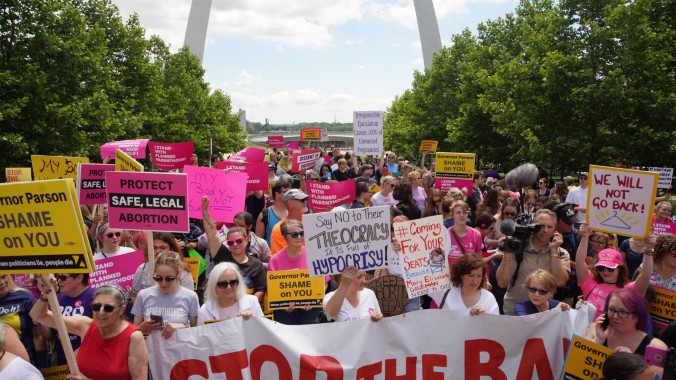
:quality(75)/https://static.texastribune.org/media/files/36fecc7871aca432d6d451b3e24dd817/0407%20Lethal%20Fetal%20Anomalies%20LW%2002.jpg)
:quality(75)/https://static.texastribune.org/media/files/4dbec2e2138d3402258564e71dc91a9d/Nursing%20Shortage%20JV%20TT%2013.jpg)
:quality(70)/https://static.texastribune.org/media/files/ec42483fc916e8e29fa336155ffa95f4/0407%20Lethal%20Fetal%20Anomalies%20LW%2004%20CROPPEDjpg.jpg)
:quality(70)/https://static.texastribune.org/media/files/31689ad730fe384674a385525b277111/Non-Viable%20Pregnancies%20ST%20TT%2001.jpg)


No comments:
Post a Comment